The Closest You'll Get to a Hypercar at the Limit: Inside the Sim.Racing Center Mallorca
In the Motorworld Mallorca, a fleet of professional direct-drive simulators lets drivers feel what a hypercar does at the limit, braking, cornering, downforce, without the consequences of getting it wrong.
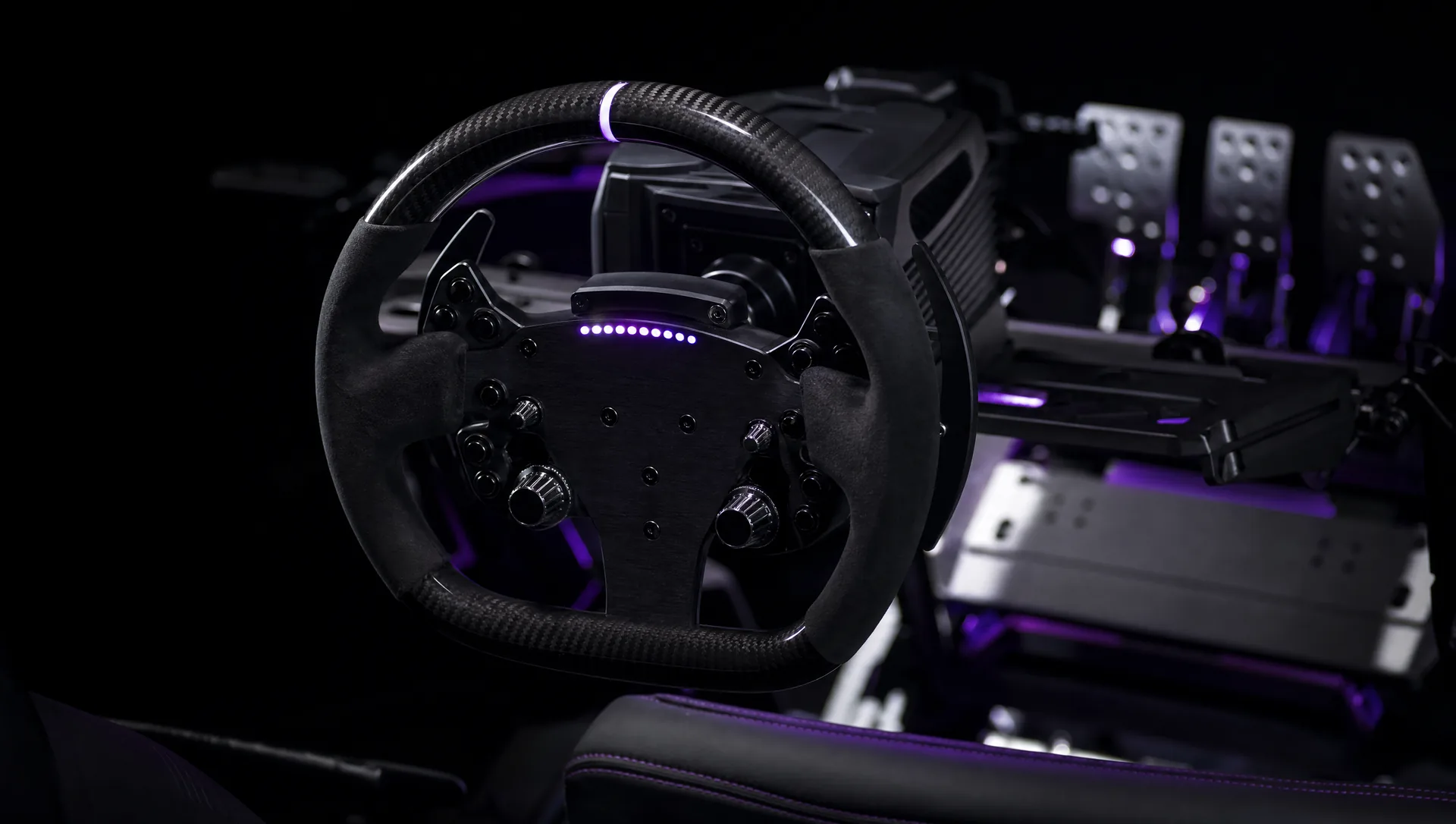
Very few hypercar owners ever find out what their car can actually do. Between traffic, insurance risk, wet tarmac and the simple math of a public road, most machines capable of well over 300 km/h spend their lives being driven at a fraction of their potential. Track days help, but they are rare, weather-dependent, and still carry real consequences if a braking point is misjudged. On Mallorca, there is a different way to explore that gap between what a hypercar can do and what most people ever experience: the Sim.Racing Center Mallorca, inside the 80,000 m² Motorworld Mallorca complex on the MA-19 between the airport and Palma. Its professional motion simulators are built to recreate the physics of extreme performance, braking, cornering load, downforce, closely enough that the sensation, not just the visuals, becomes real.
Where a Hypercar's Real Limits Live
A hypercar's most interesting behaviour rarely shows up at legal road speeds. It happens under trail-braking into a hairpin, when downforce builds hard enough to shift the car's balance, or in the half-second after turn-in when the front tyres decide whether they will hold or wash wide. These are the moments most owners never get close to, and precisely the moments a well-built simulator can isolate and repeat, corner after corner, without tyre wear, brake fade, or risk to a seven-figure machine.
Direct-Drive Steering and Motion Rigs: Making the Forces Real
What separates the Sim.Racing setups from an arcade machine or a home rig is the hardware chain behind the wheel. Direct-drive steering couples the wheel straight to a servo motor, with no belt or gearing to soften the signal, so the loading of the front tyres, the moment they let go, and the kickback through a kerb arrive in the hands almost instantly. Motion rigs add the other half of the sensation: hydraulic or electric actuators tilt and push the seat under braking and cornering load, translating longitudinal and lateral g into something the body actually feels. Together, steering and motion form a feedback loop that lets a driver learn where a car's limit sits, rather than simply guessing at it from a screen.
A Garage Built for Extremes
Feeling the physics is one thing; having the right car under you is another. The centre's catalogue of 150+ cars spans current GT machinery, open-wheel single-seaters, rally cars and classics, each with its own balance of weight, aerodynamics and power delivery. Switching from a heavy, torque-driven GT car to a featherweight, downforce-hungry single-seater changes everything about how a corner has to be approached, and having that range in one place makes it possible to compare, back to back, exactly what separates a fast road car from something built purely to be pushed to its limit.
Laser-Scanned Circuits: The Detail That Makes the Limit Real
None of that hardware means much on a generic, flat digital track. The circuits loaded into the simulators are laser-scanned from the real asphalt, curbs, camber changes, bumps and surface transitions are captured down to the centimetre. That detail matters most exactly where a hypercar is being pushed hardest: a compression under braking, a slightly banked apex, an uneven curb that unsettles the car mid-corner. Drivers who already know a circuit in real life tend to notice the accuracy immediately; for everyone else, it is as close as a simulator gets to a genuine track day.
Triple-Screen or VR: Two Ways to See the Limit Coming
Reading a corner at speed depends heavily on peripheral vision, which is where the setup offers two distinct options: curved triple-screen rigs for a wide, sharp field of view, ideal for precise braking points, or VR headsets for full depth perception and total immersion. Neither is objectively better, serious sim racers are split on the question, but having both available means a driver can choose whichever helps them read an apex, or a downforce-loaded high-speed kink, more clearly.
From First Laps to Track-Honed Reflexes
None of this requires prior experience. Assistance levels, traction control, braking aids, reduced motion intensity, can be dialled in for a first attempt at a GT car's limit, while experienced drivers can switch everything off and work the same corner until the braking point stops moving. The centre runs individual and group sessions, corporate and team-building events, and sessions built around bachelor parties or family visits, open year-round, Monday to Friday from 11:00 to 20:00 and weekends from 10:00 to 21:00. For anyone who has ever wondered what their car is holding back on a public road, it is a rare chance to find out, safely, and as often as it takes to get the corner right. Those ready to feel it for themselves can book a session at the Sim.Racing Center Mallorca.
More from Blog
Hypercar Maintenance Guide: The True Cost of Keeping an Automotive Masterpiece on the Road
Hypercar maintenance guide: real annual service costs from Bugatti and Koenigsegg to Pagani and Rimac, plus tire, brake and resale-value insights for …

Hypercar Events Worldwide: The Ultimate Calendar for Collectors and Enthusiasts
Hypercar events worldwide: a collector’s calendar from Monterey Car Week and Goodwood to Villa d’Este, Top Marques Monaco, elite rallies a…

Most Expensive Hypercars in the World: The Ultimate List of Automotive Opulence
The most expensive hypercars in the world, from the 28 million dollar Rolls-Royce Boat Tail to the F1-powered Mercedes-AMG ONE, with prices and the st…