Hypercar Technology Guide: The Engineering Marvels Powering the World’s Fastest Cars
Hypercar technology guide: how carbon monocoques, active aerodynamics, hybrid and electric powertrains, and predictive suspension power the world’s fastest cars.…
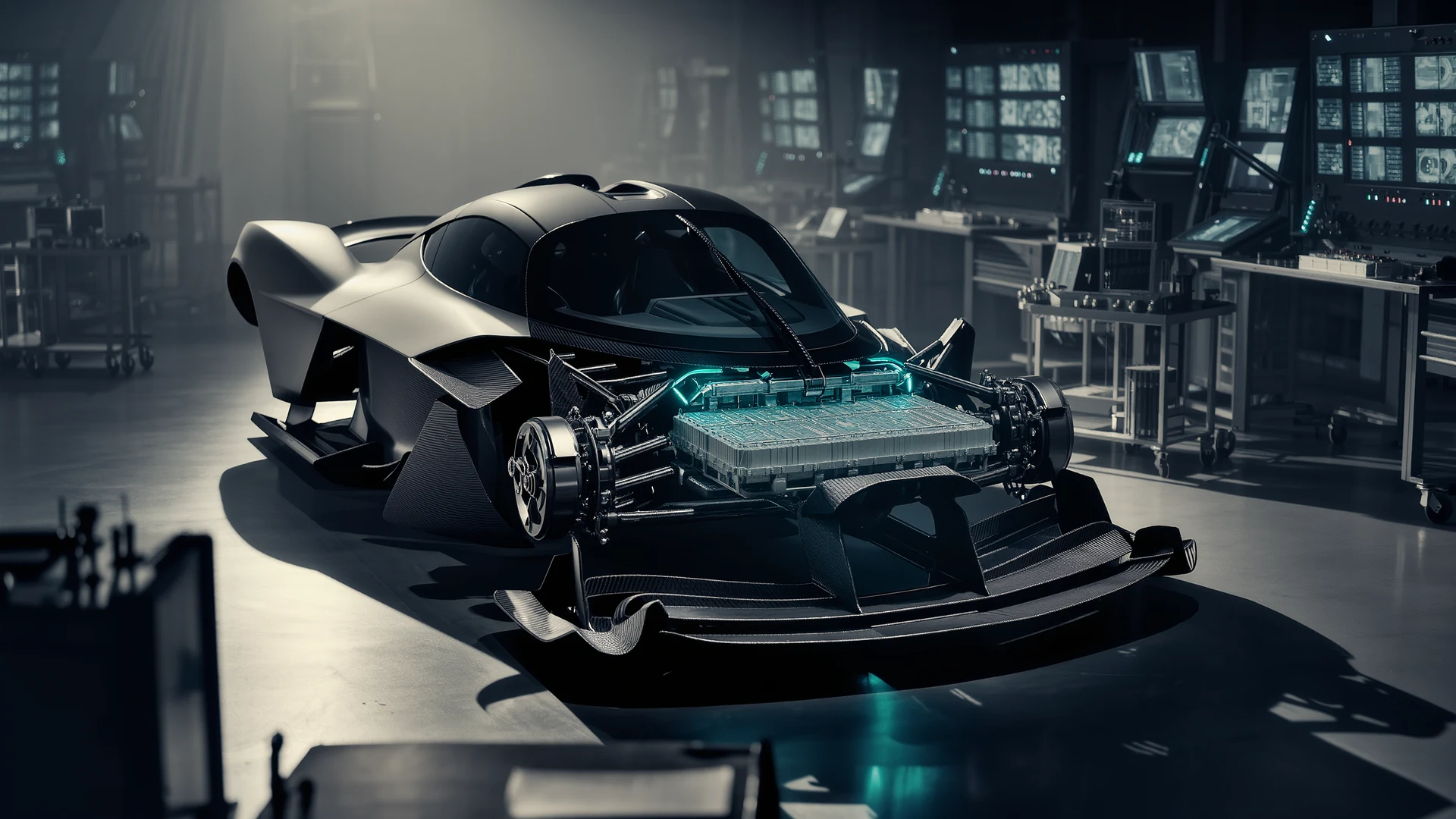
Hypercars are rolling laboratories where technologies like carbon fiber monocoques, active aerodynamics, hybrid powertrains and predictive suspension are pushed to the edge of physics before cascading into everyday cars.
Key Takeaways
- A carbon fiber monocoque can weigh as little as 70 kilograms yet exceed 40,000 Newton-meters per degree of torsional rigidity, comparable to an LMP1 race car; the Aston Martin Valkyrie's tub weighs just 78 kg.
- Pagani's patented Carbotanium weaves 0.1-to-0.2-millimeter titanium wire into carbon fiber so the threads act as crack arrestors, while Lamborghini's forged composite enabled the first production composite con-rods in the Revuelto's V12.
- Active aerodynamics reshape the car in real time: the McLaren P1's rear wing extends 300 millimeters to make 600 kilograms of downforce at 257 km/h, and the Gordon Murray T.50 fan car holds a 0.28 drag coefficient.
- The Bugatti Chiron's 8.0-liter quad-turbo W16 makes 1,500 horsepower from 3,712 hand-tracked components, while Cosworth's naturally aspirated 6.5-liter V12 revs to 11,100 rpm for 1,000 horsepower in the Valkyrie and GMA T.50.
- The all-electric Rimac Nevera uses four motors for 1,914 horsepower and hits 0-100 km/h in 1.81 seconds, drawing from a 120 kWh, 6,960-cell battery that forms part of the monocoque.
- Chassis tech includes magnetorheological dampers that change damping in under 1 millisecond, McLaren's hydraulic Proactive Chassis Control, camera-and-LiDAR predictive suspension on the Mercedes-AMG ONE, and rear-wheel steering up to 3 degrees.
- Koenigsegg innovations include camless Freevalve, giving the Gemera's 2.0-liter three-cylinder 600 horsepower, and the Regera's gearbox-free Direct Drive that reaches 0-400 km/h in under 20 seconds.
Hypercars are the ultimate expression of automotive ambition: machines that operate at the ragged edge of physics, where every component is pushed to its absolute limit. These seven- and eight-figure vehicles are not merely fast cars; they are rolling laboratories where tomorrow’s technologies debut under the most extreme conditions imaginable. From active aerodynamics that reshape the car’s body in milliseconds to hybrid powertrains that harness both combustion fury and electric precision, the innovations developed for hypercars cascade into everyday vehicles over subsequent decades. This guide offers a comprehensive exploration of the technologies that separate hypercars from everything else on the road, covering not just what these systems do, but how they do it and where they are headed next.
1. Carbon Fiber & Advanced Materials
The foundation of every modern hypercar is not metal: it is carbon fiber composite, a material that delivers Formula 1 levels of structural performance at a fraction of the weight of steel or aluminum. The pursuit of ever-lower mass has driven an arms race in materials science, with manufacturers investing hundreds of millions of dollars into proprietary composite technologies that redefine what is structurally possible in a road car.
1.1 Monocoque Construction
A monocoque, French for “single shell”, is a structural tub that forms the passenger cell of a hypercar. Unlike traditional body-on-frame or unibody construction where a separate chassis supports bolt-on body panels, a carbon fiber monocoque integrates the passenger survival cell into a single cohesive structure. The result is a tub that can weigh as little as 70 kilograms yet deliver torsional rigidity figures exceeding 40,000 Newton-meters per degree, comparable to an LMP1 race car.
1.1.1 Manufacturing Process
Monocoque production remains a labor-intensive craft performed largely by hand. Pre-impregnated carbon fiber sheets, known as “pre-preg”, are cut, oriented, and laid into precision aluminum molds by skilled technicians. The orientation of each carbon ply is critical because carbon fiber’s strength is directional: fibers aligned along the load path provide maximum stiffness, while off-axis plies manage torsional and shear loads. Once the layup is complete, the entire assembly is vacuum-bagged and cured in a high-pressure autoclave at temperatures exceeding 120 degrees Celsius for several hours. The McLaren Speedtail’s monocoque is so over-engineered that it requires no additional roll structure to meet FIA safety standards, while the Aston Martin Valkyrie’s tub, developed in collaboration with Red Bull Advanced Technologies, weighs just 78 kg and is homologated for road use despite being effectively a Le Mans prototype chassis.
1.2 Carbon-Titanium and Carbotanium
Pure carbon fiber excels in stiffness-to-weight ratio but can exhibit brittle failure modes under extreme load. To address this, manufacturers have developed hybrid materials that combine carbon fiber’s stiffness with metal’s ductility.
1.2.1 Carbotanium
Pioneered by Pagani Automobili and protected by patents, Carbotanium is a proprietary composite that weaves titanium wire into carbon fiber fabric before resin infusion. The titanium threads, typically 0.1 to 0.2 millimeters in diameter, act as crack arrestors: when the carbon matrix begins to fracture under impact, the ductile titanium strands stretch and absorb energy rather than allowing catastrophic failure. The Pagani Huayra’s monocoque uses Carbotanium throughout, giving it a unique combination of weight, stiffness, and crashworthiness that Pagani founder Horacio Pagani describes as offering “the best of both worlds.” The material is also visually distinctive, with a characteristic bluish-silver shimmer visible through the clear-coated carbon weave.
1.3 Forged Composites
Traditional carbon fiber manufacturing is slow: hours of layup, plus autoclave curing. Forged composite, developed by Lamborghini in partnership with Callaway Golf and the University of Washington, takes a fundamentally different approach. Instead of long continuous fibers arranged in precise orientations, forged composite uses short, randomly oriented carbon fiber strands mixed with resin and pressed into a heated mold under extreme pressure. The process takes minutes rather than hours, and the resulting material has near-isotropic properties (similar strength in all directions) unlike traditional laminates. Lamborghini’s first application was the Huracán Performante’s forged composite front splitter and rear wing, and the technology has since spread to connecting rods in the Revuelto’s V12 engine, the first production application of composite con-rods in automotive history.
1.4 Recycled Carbon Fiber
The environmental cost of virgin carbon fiber production is substantial, with energy-intensive precursor manufacturing and the challenge of end-of-life disposal. Recycled carbon fiber, recovered from manufacturing scrap or end-of-life components through pyrolysis (thermal decomposition in the absence of oxygen) or solvolysis (chemical separation), retains approximately 90 percent of virgin fiber’s mechanical properties at a fraction of the cost and carbon footprint. The McLaren Artura uses recycled carbon fiber in non-structural applications, while Alpine’s Alpenglow hydrogen hypercar concept incorporates recycled carbon panels throughout. As regulatory pressure on lifecycle analysis intensifies, recycled carbon is transitioning from a sustainability checkbox to a genuine engineering material.
1.5 3D-Printed Metals
Additive manufacturing has transformed hypercar component design, enabling geometries impossible to achieve through traditional casting, forging, or machining. Selective laser melting (SLM) and electron beam melting (EBM) build components layer by layer from metal powder, allowing engineers to create organic, topology-optimized structures that place material only where stress analysis dictates it is needed.
1.5.1 Applications
The Czinger 21C, itself a showcase for additive manufacturing, uses 3D-printed aluminum alloy suspension uprights, brake calipers, and exhaust components. Bugatti prints its eight-piston brake calipers in titanium alloy (Ti-6Al-4V) using an SLM process that takes 45 hours per caliper but produces a component 40 percent lighter than the forged aluminum equivalent with double the strength. The Koenigsegg Gemera’s turbocharger housings are 3D-printed in Inconel, a nickel-chromium superalloy that maintains strength at temperatures exceeding 700 degrees Celsius where conventional metals would soften and deform.
2. Active Aerodynamics
Aerodynamics is the invisible force that keeps hypercars glued to the road at triple-digit speeds, and the battleground where modern hypercars distinguish themselves. The challenge is profound: a car must be stable at 400 kilometers per hour yet compliant over speed bumps, generate enormous downforce on track yet slip through the air efficiently on the autobahn. Active aerodynamics solves this contradiction through moving surfaces that reshape the car’s aerodynamic profile in real time.
2.1 Drag Reduction System (DRS)
Borrowed directly from Formula 1, DRS in hypercars operates on similar principles: reduce drag on straights, maximize downforce in corners. The McLaren P1’s rear wing extends by 300 millimeters in Race mode, deploying upward and rearward to increase the wing’s angle of attack while simultaneously increasing its effective span. In this configuration, the P1 generates 600 kilograms of downforce at 257 km/h, enough to theoretically drive upside down in a tunnel. When DRS is activated, the wing flattens to a near-zero angle of attack, reducing drag by 23 percent and enabling the car’s top speed.
2.2 Active Wings and Flaps
Beyond simple deploy/retract mechanisms, the most sophisticated hypercars use continuously variable aerodynamic surfaces governed by control algorithms that process dozens of sensor inputs.
2.2.1 Pagani Huayra’s Active Flaps
The Pagani Huayra features four independently actuated aerodynamic flaps, two at the front, two at the rear. Each flap is driven by a dedicated electric actuator capable of moving from zero to full deflection in under 100 milliseconds. The control computer processes throttle position, steering angle, lateral and longitudinal acceleration, brake pressure, and vehicle speed to determine optimal flap positions. During heavy braking, all four flaps deploy to maximum angle, functioning as air brakes while simultaneously shifting aerodynamic balance rearward to counteract forward weight transfer and maintain stability.
2.2.2 Hennessey Venom F5’s Active Rear Wing
The Hennessey Venom F5 takes a different approach with a hydraulically actuated rear wing that deploys at 80 km/h and adjusts continuously up to its 311 mph (500 km/h) design target. Because the wing’s hydraulic system operates at over 200 bar of pressure, it can hold any intermediate position against aerodynamic loads exceeding 500 kilograms, a feat impossible with lighter electric actuators alone.
2.3 Blown Diffusers
A blown diffuser routes exhaust gases into the rear diffuser to energize the airflow and increase the diffuser’s effective expansion ratio. First seen in Formula 1 during the 2010-2013 “exhaust-blown diffuser” era, the technology has migrated to hypercars. The Czinger 21C uses a blown diffuser combined with active side skirts, vertical panels that deploy downward from the side sills to seal the underbody airflow from ambient crosswinds and turbulence, dramatically increasing the pressure differential between the flat underbody and the road surface. The result is ground-effect downforce that increases with speed without the drag penalty of a large rear wing.
2.4 Active Grille Shutters
Aerodynamic efficiency demands that air be directed around the car rather than through it, but powertrain cooling requires substantial airflow through heat exchangers. Active grille shutters resolve this tension: motorized vanes in the front grille open when cooling demand is high and close when aerodynamic efficiency takes priority. At highway cruising speeds, closed shutters can reduce aerodynamic drag by up to 10 percent on some hypercars. The Ferrari SF90 Stradale uses active shutters in both the front grille and the side intakes that feed the intercoolers, managed by a thermal model that predicts cooling demand based on navigation data, driver behavior, and ambient conditions rather than simply reacting to coolant temperature.
2.5 Ground Effect and Fan Cars
The most radical aerodynamic hypercars generate downforce not through external wings but through the underbody, and one takes this principle to its logical extreme.
2.5.1 Gordon Murray T.50 Fan Car
The Gordon Murray Automotive T.50 is the spiritual successor to Murray’s legendary Brabham BT46B “fan car” Formula 1 design and the McLaren F1 road car. A 400-millimeter-diameter electric fan mounted at the rear of the car accelerates air through ducted underbody channels, actively controlling the boundary layer, the thin layer of slow-moving air that clings to surfaces and causes aerodynamic separation. By managing boundary layer behavior, the T.50’s fan system increases underbody downforce without the drag penalty of external wings. The T.50 generates 340 kilograms of downforce at 250 km/h while maintaining a drag coefficient (Cd) of just 0.28, comparable to a Tesla Model 3. The fan also serves as a functional styling element, with the T.50’s rear profile defined by the prominent fan outlet.
2.5.2 Standard Ground Effect
More conventional ground-effect implementations use sculpted underbody profiles and rear diffusers to create a low-pressure region beneath the car. The Aston Martin Valkyrie’s entire underbody is a carefully shaped venturi tunnel that accelerates airflow, reducing pressure and effectively sucking the car onto the road. The Valkyrie’s underbody alone generates over 1,800 kilograms of downforce at top speed, more than some entire hypercars produce through all their aerodynamic surfaces combined.
3. Powertrain Technology
The heart of any hypercar is its powertrain, and the current era represents the most diverse and technologically sophisticated period in the history of high-performance propulsion. Internal combustion engines are reaching their thermodynamic zenith just as electrification opens entirely new performance frontiers.
3.1 Internal Combustion Engine Evolution
Despite the march toward electrification, the internal combustion engine remains central to the hypercar experience, and the engines powering today’s ultimate machines represent the pinnacle of piston-engine development.
3.1.1 Bugatti W16
The Bugatti Chiron’s 8.0-liter quad-turbocharged W16 is arguably the most extraordinary mass-production engine ever created. Effectively two narrow-angle VR8 engines sharing a common crankshaft, the W16 produces 1,500 horsepower (1,600 PS in the Chiron Super Sport 300+) while meeting global emissions standards and delivering the refinement expected of a multi-million-euro luxury product. The engineering challenges are staggering: four turbochargers operating in a two-stage sequential configuration manage boost across the rev range, while a cooling system requiring 10 separate radiators and 40 liters of coolant manages the thermal output of 1,500 horses running at full gallop. A single W16 engine takes approximately one week to assemble by hand, with each of the 3,712 individual components tracked throughout the manufacturing process.
3.1.2 Cosworth V12
Cosworth’s naturally aspirated 6.5-liter V12, purpose-built for the Aston Martin Valkyrie and GMA T.50, produces 1,000 horsepower at a dizzying 11,100 rpm. With no turbochargers to mute the exhaust note or add latency to throttle response, the Cosworth V12 delivers the most visceral combustion engine experience available in a road car. The engine serves as a stressed member of the chassis, meaning it carries suspension loads directly, eliminating the weight of a rear subframe. Titanium connecting rods, a billet-machined crankshaft, and Inconel exhaust valves enable the 11,100 rpm redline, while a dry-sump lubrication system ensures oil supply during sustained cornering loads exceeding 2g.
3.1.3 Koenigsegg Freevalve (Camless Engine)
Koenigsegg’s Freevalve technology, also known as the camless engine, eliminates camshafts entirely. Instead, each valve is controlled by a pneumatic-hydraulic-electronic actuator that can open and close valves independently, at any point in the piston cycle, with infinite variability of lift and duration. The Gemera’s 2.0-liter three-cylinder “Tiny Friendly Giant” (TFG) engine uses Freevalve to produce 600 horsepower and 600 Nm of torque, 300 horsepower per liter, a specific output unmatched by any production engine. Freevalve enables cylinder deactivation, Atkinson-cycle operation for cruising efficiency, and even the ability to run as a two-stroke under certain conditions. The technology eliminates the camshaft, timing chain, cam phasers, and all associated friction and inertia, opening a new chapter in combustion engine design.
3.2 Hybrid Systems
Hybridization in hypercars is not about fuel economy: it is about performance. Electric motors fill torque gaps during gearshifts, provide instant response from zero rpm where even the most responsive combustion engines hesitate, and enable all-wheel drive without the weight and packaging constraints of mechanical driveshafts.
3.2.1 KERS and E-Axles
The original hypercar “Holy Trinity”, Ferrari LaFerrari, McLaren P1, and Porsche 918 Spyder, each approached hybridization differently. The LaFerrari used a Formula 1-derived HY-KERS (Hybrid Kinetic Energy Recovery System) with a single electric motor mounted to the rear of the dual-clutch transmission, providing 163 horsepower in addition to the 800-horsepower V12. The McLaren P1 used a lighter, less powerful motor (177 hp) but paired it with a more advanced control strategy. The Porsche 918 Spyder was the most sophisticated of the three, with two electric motors, one driving the front axle, one assisting the rear, enabling true torque-vectoring all-wheel drive while the naturally aspirated V8 drove the rear wheels through a separate transmission.
Today’s hybrid hypercars refine these concepts. The Lamborghini Revuelto mounts one electric motor on each front wheel and a third integrated into the rear dual-clutch transmission, enabling all-wheel drive and torque vectoring without any mechanical connection between the front and rear axles. The Ferrari SF90 XX Stradale uses a similar three-motor layout and delivers 1,030 horsepower, 0 to 100 km/h in 2.3 seconds and 0 to 200 km/h in 6.7 seconds, figures that were Formula 1 territory just two decades ago.
3.2.2 Koenigsegg Direct Drive
Koenigsegg’s Regera discards the conventional transmission entirely in favor of Direct Drive, a system where the combustion engine’s crankshaft connects directly to the rear axle through a hydraulic coupling and a torque converter, with three electric motors filling in torque at low speeds and managing the power split. There is no gearbox, no shifting, no interruption in power delivery. At speeds above about 50 km/h, the hydraulic coupling locks up for a direct mechanical connection with essentially zero drivetrain loss. The Regera accelerates from 0 to 400 km/h in under 20 seconds, an experience unlike any other car, with the uninterrupted surge of an electric motor backed by the fury of a twin-turbo V8.
3.3 Full Electric Hypercars
While most hypercars retain combustion engines, a vanguard of fully electric hypercars is proving that electrification alone can deliver world-beating performance.
3.3.1 Rimac Architecture
The Rimac Nevera’s powertrain consists of four surface-mounted permanent magnet motors, one per wheel, producing a combined 1,914 horsepower and 2,360 Nm of torque. Each motor is oil-cooled and drives its wheel through a single-speed reduction gearbox. The motors draw power from a 120 kWh, 6,960-cell lithium-manganese-nickel battery pack shaped into an H-structure that forms a structural part of the carbon fiber monocoque. This arrangement gives the Nevera a center of gravity lower than any combustion hypercar can achieve, while the individual wheel control enables torque vectoring at frequencies beyond the capabilities of any mechanical differential. The Nevera’s performance statistics, 0-100 km/h in 1.81 seconds, 0-300 km/h in 9.22 seconds, a quarter-mile in 8.25 seconds, have reset expectations for what a road car can achieve.
3.3.2 Solid-State Battery Potential
Current lithium-ion batteries represent a compromise: liquid electrolytes enable high energy density but limit charge rates and introduce thermal management challenges. Solid-state batteries, which replace the liquid electrolyte with a solid ceramic or polymer separator, promise to overcome these limitations while improving safety. Toyota has publicly stated its intention to introduce solid-state batteries with 1,200-kilometer range and 10-minute fast-charging capability by 2027-2028. For hypercar applications, solid-state batteries could reduce pack weight by 30-40 percent while increasing power density, directly addressing the weight penalty that currently limits electric hypercar cornering performance relative to their combustion counterparts.
4. Suspension & Chassis Dynamics
Hypercar suspension systems must reconcile contradictory demands: supple compliance for road use and millimeter-precise body control at cornering loads exceeding 2g of lateral acceleration. The solutions deployed represent the most advanced chassis technologies ever fitted to road cars.
4.1 Magnetorheological Dampers
Magnetorheological (MR) dampers contain a suspension fluid infused with microscopic iron particles. When an electromagnetic coil in the damper piston is energized, the particles align into chains, instantaneously increasing the fluid’s viscosity and thus the damper’s resistance to movement. The transition from minimum to maximum damping occurs in under 1 millisecond, faster than the suspension can physically move. Ferrari’s “MagneRide” system, developed in partnership with Delphi (now BWI Group), adjusts damping forces at each corner 1,000 times per second based on inputs from accelerometers, suspension position sensors, and the car’s dynamic control algorithms. The result is a ride quality that can transition from luxury-car compliance to race-car stiffness within the span of a single wheel rotation.
4.2 Cross-Linked Hydraulic Suspension
McLaren’s “Proactive Chassis Control” (PCC) takes a fundamentally different approach, using hydraulically interconnected dampers to replace conventional mechanical anti-roll bars. In a traditional suspension, anti-roll bars resist body roll by transferring force from the compressed side of the car to the extended side, but they also reduce independence between left and right wheels, degrading ride quality on uneven surfaces. PCC’s hydraulic cross-linking provides roll resistance when needed (cornering) while allowing independent wheel movement when beneficial (straight-line ride comfort). The system’s hydraulic accumulators can also actively adjust ride height at each corner, and the interconnected circuits allow PCC to resist pitch under braking and squat under acceleration without the stiffness penalty of stiff springs.
4.3 Predictive Suspension
The next frontier in chassis control is prediction rather than reaction. Forward-facing stereo cameras and LiDAR sensors scan the road surface ahead, identifying imperfections before the wheels reach them. The Mercedes-AMG ONE uses this technology, derived from the automaker’s “Magic Body Control” system but accelerated to hypercar timescales. When the system detects a bump or pothole, it pre-adjusts damping forces at each corner milliseconds before impact, reducing the disturbance transmitted to the chassis. Similarly, the system can stiffen the outside dampers before corner entry, pre-loading the chassis for the anticipated lateral load rather than waiting for body roll to begin.
4.4 Rear-Wheel Steering
Rear-wheel steering addresses the fundamental tension between high-speed stability (which favors a long wheelbase) and low-speed agility (which favors a short wheelbase). At low speeds, the rear wheels steer in the opposite direction to the fronts, typically up to 3 degrees, effectively shortening the wheelbase and reducing the turning circle. At high speeds, the rear wheels steer in the same direction as the fronts, effectively lengthening the wheelbase and increasing stability. The Lamborghini Revuelto’s rear steering system is capable of 3 degrees in either direction, while the Ferrari SF90 XX’s system applies up to 2.5 degrees. Integrated with the car’s stability control and torque vectoring systems, rear-wheel steering transforms the dynamic behavior of mid-engine hypercars, making them feel telepathically responsive at all speeds.
4.5 Active Anti-Roll Bars
Where magnetorheological dampers control wheel movement velocity and cross-linked hydraulics replace passive anti-roll bars, active anti-roll bars attack body roll at its source. A rotary electric or hydraulic actuator mounted in the center of each anti-roll bar can apply torque in either direction, actively twisting the bar to push down on the inside wheel (reducing roll) or releasing tension to improve ride comfort. The system can completely decouple the anti-roll bars on straight roads for optimal ride quality, then apply maximum roll stiffness the instant the steering wheel turns. The Porsche 911 GT3 RS and Ferrari Purosangue SUV both use active anti-roll bar systems that can generate more roll resistance than the stiffest passive bar while weighing less.
5. Thermal Management
Hypercars generate enormous heat: a Bugatti Chiron at full throttle converts over 3,000 horsepower worth of fuel energy into thermal energy, only a third of which becomes useful motive power. Managing that heat without compromising aerodynamics, adding excessive weight, or occupying packaging space needed for other components is one of the hardest engineering challenges in hypercar design.
5.1 Heat Exchanger Architecture
The Chiron employs 10 separate radiators, each serving a dedicated cooling circuit: engine coolant, charge air (intercoolers for four turbochargers), engine oil, transmission oil, differential oil, power steering fluid, air conditioning condenser, and auxiliary circuits. Each radiator is positioned to receive clean, high-energy airflow, with ducting designed using computational fluid dynamics (CFD) to minimize aerodynamic drag while maximizing heat rejection. The total coolant volume exceeds 40 liters, and the water pump can circulate the entire volume in under 30 seconds at maximum engine speed.
5.2 Liquid Cooling Strategies
Water-to-air intercoolers have largely replaced air-to-air designs in hypercar applications because they offer superior packaging flexibility and more consistent charge air temperatures. In a water-to-air system, the turbocharger’s compressed (and therefore heated) charge air passes through a compact heat exchanger cooled by a dedicated liquid circuit, which in turn rejects heat to ambient air through a front-mounted low-temperature radiator. This two-stage approach allows the charge cooler to be placed anywhere in the engine bay, critical in mid-engine hypercars where packaging space is at a premium, and decouples charge cooling performance from vehicle speed.
5.3 Battery Thermal Management
Electric and hybrid hypercars introduce an entirely new thermal challenge: battery cells must be maintained within a narrow temperature window (typically 20-40 degrees Celsius) for optimal performance and longevity. The Rimac Nevera’s 6,960-cell battery pack uses a liquid cooling system that circulates a dielectric coolant through channels integrated into the cell holders, with each cell individually monitored for temperature. During repeated launch control starts, where the pack can discharge at over 1.2 megawatts, the thermal management system must dissipate heat at a rate comparable to a small industrial chiller. Rimac’s system can condition the battery to optimal temperature before a performance run using GPS data and driver behavior prediction, pre-cooling or pre-heating the pack as needed.
5.4 Brake Cooling
Carbon-ceramic brake discs, standard equipment on virtually all hypercars, operate optimally between 400 and 800 degrees Celsius. Below this range, friction is reduced; above it, oxidation accelerates disc wear. Dedicated brake cooling ducts channel high-pressure air from the front fascia or underbody directly onto the disc face and into the disc’s internal ventilation channels. The Porsche 918 Spyder’s front brake ducts are among the most sophisticated ever fitted to a road car, with NACA-style inlets in the underbody feeding air through carbon fiber ducts to the disc center, where the disc’s internal vane design pumps air outward through the ventilation channels. At sustained track speeds, these ducts can reduce disc temperatures by over 200 degrees Celsius compared to un-ducted installations.
6. Electronics & Software
Modern hypercars are defined as much by their software as their hardware. The control systems that manage powertrain output, torque distribution, aerodynamic surfaces, and suspension behaviour are among the most complex real-time embedded systems in any consumer product.
6.1 Torque Vectoring
Torque vectoring distributes power not just between axles but between individual wheels, using the differential in drive torque to create a yaw moment that helps rotate the car into a corner. Electric hypercars have an inherent advantage: with one motor per wheel (as in the Rimac Nevera) or per axle (as in the Lotus Evija’s twin rear motors), torque vectoring becomes a software function rather than a mechanical one. The control algorithms can apply differential torque at kilohertz frequencies, far beyond the capability of any mechanical limited-slip differential, and can recover energy through regenerative braking while simultaneously vectoring torque on the opposite side of the car. The Rimac Nevera’s “R-AWTV” (Rimac All-Wheel Torque Vectoring) system processes over 100 sensor inputs and can adjust torque distribution 100 times per second.
6.2 Traction Control and Stability Systems
Hypercar traction control has evolved from crude spark-cut or throttle-close interventions into predictive, model-based systems that maintain optimal slip ratios across all four tires simultaneously. Modern systems use a real-time vehicle dynamics model, essentially a digital twin of the car running on a dedicated processor, to predict tire behavior and adjust torque delivery before slip occurs rather than reacting once it is detected. The Ferrari Side Slip Control (SSC) system, now in its seventh generation, combines data from accelerometers, gyroscopes, steering angle sensors, and wheel speed sensors to estimate the car’s slip angle and yaw rate, then actively manages engine torque, differential lock, magnetorheological damping, and brake pressure to maintain the driver’s intended trajectory.
6.3 ECU Integration
Where a conventional car might have dozens of separate electronic control units (ECUs) communicating over CAN bus, hypercars increasingly consolidate control functions into high-performance domain controllers. The Koenigsegg Regera’s central control architecture reduces latency by eliminating inter-ECU communication for time-critical functions. The Rimac Nevera’s central vehicle controller runs on a real-time operating system and manages powertrain, chassis, and aerodynamic control on a single computing platform, enabling coordinated actions, such as simultaneously adjusting motor torque, damper stiffness, and rear wing angle during a high-speed lane change, that would be impossible with distributed, loosely coupled controllers.
6.4 Over-the-Air Updates
Hypercars increasingly ship with software-defined capabilities that improve over time through over-the-air (OTA) updates. The Rimac Nevera has received OTA updates that improved its 0-100 km/h time, refined its torque vectoring calibration, and added entirely new driving modes, all without the car ever visiting a service center. Lotus has committed to OTA updates for the Evija that will progressively unlock additional performance as the company validates more aggressive calibrations. This model, pioneered by Tesla, is now the standard for high-end performance EVs and is spreading to hybrid hypercars.
6.5 AI-Assisted Systems
The most advanced hypercars use machine learning to adapt to individual drivers and conditions. The McLaren Artura’s “Variable Drift Control” uses a learned model of tire grip to allow the driver to dial in a specific degree of oversteer, with the stability system maintaining that slip angle through a corner. Future systems, previewed by suppliers like Bosch and Continental, use neural networks trained on millions of kilometers of performance driving data to make control decisions that mimic the intuition of a professional racing driver, optimizing the car’s behavior for a given road or track in real time.
7. Future Technologies
The hypercar of 2035 will make today’s machines look primitive. Several emerging technologies are poised to transform the hypercar landscape in the coming decade, addressing current limitations while opening entirely new performance frontiers.
7.1 Solid-State Batteries
As discussed in the powertrain section, solid-state batteries represent the most significant near-term advance in energy storage. For hypercars, the critical metrics are power density (how quickly energy can be extracted) and specific energy (how much energy per kilogram). Current lithium-ion cells achieve approximately 250-300 watt-hours per kilogram; solid-state cells in development promise 400-500 Wh/kg, with laboratory prototypes exceeding 600 Wh/kg. The weight savings alone, potentially 200 kilograms for a 100 kWh pack, would transform electric hypercar dynamics, while the faster charge/discharge rates would enable even more aggressive regenerative braking and launch performance. Toyota, Nissan, and Samsung SDI have all committed to solid-state production within the next 3-5 years.
7.2 Hydrogen Combustion
While hydrogen fuel cells have received most of the attention, hydrogen internal combustion engines (H2-ICE) offer a compelling alternative for hypercars. A hydrogen-burning V8 or V12 retains the sound, vibration, and emotional character of a traditional combustion engine while producing effectively zero CO2 emissions (the primary exhaust product is water vapor). Toyota and Yamaha have jointly developed a 5.0-liter hydrogen-burning V8 producing 450 horsepower, and Alpine’s Alpenglow concept showcases a hydrogen-combustion hypercar. The engineering challenges are significant, hydrogen’s low energy density per unit volume requires high-pressure (700 bar) cryogenic storage, and controlling NOx emissions from high-temperature hydrogen combustion requires advanced after-treatment, but for manufacturers and customers who value the combustion experience, H2-ICE may prove more compelling than battery-electric silence.
7.3 Additive Manufacturing at Scale
The Czinger 21C and Divergent Technologies have demonstrated that additive manufacturing can produce entire vehicle structures. Divergent’s “DAPS” (Divergent Adaptive Production System) uses AI-driven generative design to create components that are 3D-printed in aluminum and assembled by robots, with the entire vehicle structure bonded rather than welded. The system reduces tooling costs by 90 percent compared to traditional manufacturing and enables rapid iteration, a new suspension upright design can go from computer model to track testing in days rather than months. As the technology matures, hypercar manufacturers will be able to produce bespoke, structurally optimized components at costs competitive with mass-production methods, fundamentally changing the economics of low-volume vehicle manufacturing.
7.4 AI-Driven Aerodynamics
Current active aerodynamic systems use rule-based controllers: if speed exceeds X and steering angle exceeds Y, deploy the rear wing to angle Z. The next generation will use reinforcement learning to optimize aerodynamic configuration continuously. Mercedes-AMG’s experimental “AI Aero” system uses a neural network trained on CFD simulation data and real-world telemetry to predict the aerodynamic configuration that maximizes performance for the next few seconds of driving, considering road geometry, driver inputs, and vehicle state. In simulation, the AI-driven system finds aerodynamic configurations that human engineers’ rule-based controllers miss entirely, improving lap times by fractions of a second, the difference between winning and losing in hypercar performance benchmarks.
7.5 Vehicle-to-Grid and Energy Integration
As electric hypercars proliferate, their massive battery packs, the Rimac Nevera’s 120 kWh pack stores enough energy to power a typical European household for a week, become valuable grid assets. Vehicle-to-grid (V2G) technology allows the car to export power back to the electrical grid during peak demand, potentially earning revenue for owners while the car sits parked. For hypercar owners with multiple properties, the car could serve as an emergency power source, or even power a trackside support setup without generators. Rimac has confirmed that the Nevera’s hardware is V2G-capable, requiring only software enablement and regulatory approval.
Hypercar technology is not about gimmicks: it is about solving the hardest problems in automotive engineering at the extreme edge of performance. Every carbon fiber weave, every active aerodynamic surface, every line of control code represents a solution to a problem that lesser vehicles never encounter. As these technologies mature and cascade into more accessible vehicles, the hypercar’s true legacy will not be its top speed or lap time, but the engineering knowledge it contributed to the automotive world. The hypercar is, and will remain, the ultimate expression of what is possible when engineers are unshackled from the constraints of mass-market compromise.
Frequently Asked Questions (FAQ)
What is a carbon fiber monocoque in a hypercar?
A monocoque is a single-shell structural tub that forms the hypercar's passenger survival cell. Unlike body-on-frame designs, it integrates the safety cell into one cohesive carbon fiber structure that can weigh as little as 70 kilograms yet exceed 40,000 Newton-meters per degree of torsional rigidity, comparable to an LMP1 race car.
What is Pagani's Carbotanium material?
Carbotanium is a patented Pagani composite that weaves titanium wire, typically 0.1 to 0.2 millimeters in diameter, into carbon fiber fabric before resin infusion. The titanium threads act as crack arrestors, stretching to absorb energy when the carbon matrix fractures. The Pagani Huayra's monocoque uses Carbotanium throughout for its blend of weight, stiffness and crashworthiness.
How does the Drag Reduction System work on the McLaren P1?
DRS reduces drag on straights and maximizes downforce in corners. In Race mode the McLaren P1's rear wing extends 300 millimeters to increase its angle of attack and span, generating 600 kilograms of downforce at 257 km/h. When DRS activates, the wing flattens to near-zero angle of attack, cutting drag by 23 percent to enable top speed.
What makes the Bugatti Chiron's W16 engine special?
The Chiron's 8.0-liter quad-turbocharged W16 is essentially two narrow-angle VR8 engines sharing one crankshaft, producing 1,500 horsepower while meeting global emissions standards. Four turbochargers run in a two-stage sequential setup, a cooling system uses 10 radiators and 40 liters of coolant, and each engine takes about a week to assemble by hand from 3,712 tracked components.
How fast is the Rimac Nevera electric hypercar?
The Rimac Nevera reaches 0-100 km/h in 1.81 seconds, 0-300 km/h in 9.22 seconds and a quarter-mile in 8.25 seconds. Four oil-cooled permanent magnet motors, one per wheel, produce a combined 1,914 horsepower and 2,360 Nm of torque, drawing power from a 120 kWh, 6,960-cell battery pack that forms part of the carbon monocoque.
What is Koenigsegg's Freevalve camless engine technology?
Freevalve eliminates camshafts, controlling each valve with a pneumatic-hydraulic-electronic actuator that opens and closes independently with infinite variability of lift and duration. In the Gemera's 2.0-liter three-cylinder engine it produces 600 horsepower, or 300 horsepower per liter. It enables cylinder deactivation, Atkinson-cycle cruising and even two-stroke operation while removing the timing chain and cam friction.
How does the Gordon Murray T.50 fan car generate downforce?
The Gordon Murray Automotive T.50 uses a 400-millimeter electric fan at the rear that accelerates air through ducted underbody channels, actively controlling the boundary layer to prevent aerodynamic separation. This increases underbody downforce without the drag of external wings, producing 340 kilograms of downforce at 250 km/h while keeping a 0.28 drag coefficient, comparable to a Tesla Model 3.
What are magnetorheological dampers in hypercar suspension?
Magnetorheological dampers contain fluid infused with microscopic iron particles. When an electromagnetic coil energizes, the particles form chains that instantly raise viscosity and damping resistance, transitioning from minimum to maximum in under 1 millisecond. Ferrari's MagneRide system, developed with Delphi, adjusts damping at each corner 1,000 times per second using accelerometers and suspension sensors.
How light and rigid can a hypercar's carbon fiber monocoque be?
How does active aerodynamics work on a hypercar?
What makes the Rimac Nevera's electric powertrain notable?
More from Blog
The Future of Hypercars: Electrification, Autonomy, and the Next Performance Frontier
The future of hypercars: how electrification, solid-state batteries, hybrid V16 powertrains, 3D printing, active aero, autonomy and eFuels redefine pe…
Hypercar Maintenance Guide: The True Cost of Keeping an Automotive Masterpiece on the Road
Hypercar maintenance guide: real annual service costs from Bugatti and Koenigsegg to Pagani and Rimac, plus tire, brake and resale-value insights for …

Hypercar Events Worldwide: The Ultimate Calendar for Collectors and Enthusiasts
Hypercar events worldwide: a collector’s calendar from Monterey Car Week and Goodwood to Villa d’Este, Top Marques Monaco, elite rallies a…