Hypercar Buyers Guide 2026: Your Ultimate Roadmap to Owning an Automotive Masterpiece
Hypercar buyers guide 2026: master allocations, budget the 25-40% hidden costs, vet pre-purchase inspections, and choose the right Ferrari, Bugatti or McLaren.…
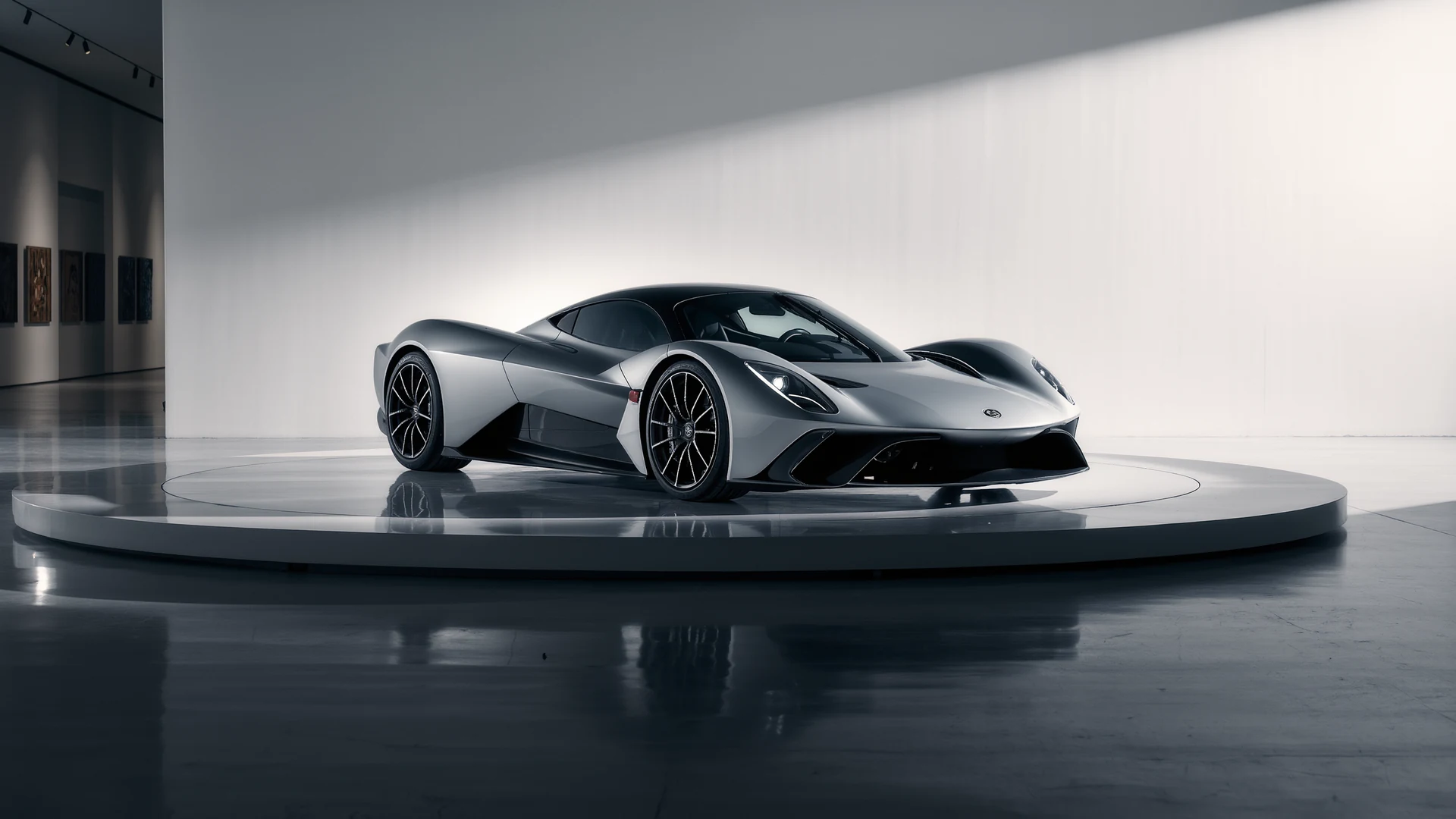
Buying a hypercar in 2026 means budgeting 25-40% above the MSRP yearly, building a multi-year dealer relationship to win an allocation, and inspecting every car before purchase.
Key Takeaways
- Hypercar production runs are often capped below 500 units, with sticker prices regularly above $3,000,000 and waiting lists stretching two to four years.
- The guide defines four buyer profiles: the Track-Focused Purist, the Collector-Investor, the Grand Tourer Enthusiast, and the dual-purpose Hybrid Profile.
- Beyond the MSRP, seven hidden cost categories can add 25-40% annually, including insurance premiums of $20,000-$80,000 and Bugatti Chiron tires at roughly $38,000 per set.
- Allocations for cars like the 799-unit Ferrari F80 are rationed by relationship depth, typically requiring a five-or-more-Ferrari purchase history with that dealership.
- Secondary-market build slots for the Ferrari F80 are reportedly changing hands at $700,000-$1,000,000 over MSRP before production has even begun.
- A specialist pre-purchase inspection costs $3,000-$7,000 and screens for repainted panels, monocoque damage, missed services, and undisclosed track use.
- The 2026 landscape includes the €3,800,000 Bugatti Tourbillon, the $3,900,000 Ferrari F80, the $2,100,000 McLaren W1, and the $608,000 Lamborghini Revuelto.
Introduction: The Hypercar Dream, Demystified
Owning a hypercar in 2026 is not simply a transaction: it is an entry into one of the world’s most exclusive fraternities. With production runs often capped at fewer than 500 units, sticker prices that routinely exceed $3,000,000, and waiting lists that can stretch two to four years, the path from aspiration to garage demands strategy, patience, and an insider’s understanding of how the hypercar economy actually works. This guide is your comprehensive roadmap. Whether you are a first-time buyer eyeing a McLaren 750S as your gateway, or a seasoned collector positioning for a Bugatti Tourbillon allocation, we cover every step, from defining your buyer profile to signing the final paperwork, with the concrete numbers, real-world timelines, and tactical advice that turn ambition into ownership.
Step 1: Define Your Hypercar Profile
Before you write a single check, you must answer one question honestly: what do you actually want from this car? Hypercars are not interchangeable commodities. The experience of owning a track-bred Valkyrie bears almost no resemblance to the experience of owning a grand-touring Chiron. Misalignment here is the single most expensive mistake a buyer can make, it leads to cars that sit unused, sold at a loss within eighteen months. We identify four dominant buyer profiles, each with distinct priorities, ideal models, and ownership economics.
The Track-Focused Purist
You want the closest thing to a racing car with license plates. You have regular track access, likely a membership at Thermal Club, Circuit of the Americas, or a private European facility, and you measure value in lap times, not cupholders. You accept that daily usability will be minimal.
What to Look For
- Power-to-weight ratio above 1.0 hp per kilogram (approximately 2.2 lb). Anything less will feel underpowered on circuit.
- Naturally aspirated engines if throttle response is your priority; twin-turbo hybrids if maximum lap time reduction is the goal.
- Downforce figures exceeding 1,000 kg at speed. The Aston Martin Valkyrie generates over 1,100 kg at 240 km/h.
- Chassis constructed from carbon-fiber monocoque, ideally with integrated roll structures meeting FIA standards.
- Minimal driver aids, or at minimum, fully defeatable stability control.
Key Models
- Aston Martin Valkyrie AMR Pro, 1,000+ hp naturally aspirated V12, fully track-only. Approximately $3,500,000. Only 40 units produced. Laps circuits within seconds of LMP2 prototypes.
- Gordon Murray T.50s Niki Lauda, 725 hp, 852 kg dry weight. Pure analog track weapon with a Cosworth V12 that revs to 12,100 rpm. Approximately $3,100,000. Only 25 units.
- Ferrari FXX-K Evo, 1,036 hp hybrid V12. Corse Clienti program only; Ferrari keeps the car and delivers it to your track events. Program entry approximately $3,000,000.
- McLaren Senna GTR, 814 hp, 1,000 kg of downforce. Track-only evolution of the Senna. Secondary market around $1,500,000, $1,800,000.
The Collector-Investor
You view the hypercar as an asset class. You study auction results from RM Sotheby’s and Gooding & Company with the same rigor you apply to your portfolio. Your cars may accumulate fewer than 500 miles per year. Condition, rarity, provenance, and long-term appreciation potential are your guiding stars. Driving pleasure is secondary, though not irrelevant.
What to Look For
- Production caps below 100 units. Scarcity is the primary driver of hypercar appreciation.
- Brand heritage. Ferrari, Bugatti, and Pagani have the most consistent auction performance over 10-year horizons.
- Special edition status. A standard Aventador depreciates; an Aventador SVJ Roadster Xago Edition (10 units) does not.
- Original delivery specs, bespoke paint-to-sample colors, unique interior configurations through Ferrari Tailor Made or Bugatti Sur Mesure, and documented one-of-one status.
- Complete history file, every service record, window sticker, purchase contract, and correspondence. Provenance gaps destroy collector value.
Key Models
- Bugatti Chiron Profilée. The final W16-powered Chiron variant. One unit built. Sold at RM Sotheby’s Paris 2023 for €9,792,500. The ultimate single-car collection centerpiece.
- Pagani Huayra Codalunga, 5 units worldwide, approximately €7,000,000 each. Long-tail coachwork with 840 hp AMG V12. Prices are already rising in private transactions.
- Koenigsegg CC850, 50 units, approximately $3,650,000. Features the revolutionary Engage Shift System that simulates a manual gearbox on a 9-speed automated transmission. A technological milestone that will age into blue-chip status.
- Ferrari SP3 Daytona, 599 units, approximately $2,300,000 MSRP. Trading at a premium on the secondary market due to the Icona series’ track record. The Monza SP1/SP2 models that preceded it are now trading 40-60% above original MSRP.
The Grand Tourer Enthusiast
You intend to use the car. You want to cross continents, Los Angeles to Monterey, London to Monaco, Dubai to Abu Dhabi, in outrageous comfort and speed. The car must be usable on real roads, not just racetracks. Ride quality, luggage space, and cabin refinement matter as much as horsepower.
What to Look For
- Adaptive suspension with a genuine comfort mode. Hydraulic or magnetorheological systems that transform the car’s character at the press of a button.
- Cargo capacity sufficient for two people and a long weekend. The Bugatti Chiron Super Sport offers surprisingly usable luggage compartments.
- Cabin noise below 72 decibels at 130 km/h cruise. Some hypercars are unbearable after two hours; the best grand tourers are quiet enough for conversation.
- Range exceeding 500 km on a single tank. The Ferrari 12Cilindri manages this comfortably, a critical consideration in regions with sparse high-octane fuel availability.
- Advanced driver assistance, adaptive cruise control and lane-keeping are not standard on most hypercars, but the grand touring models increasingly offer them.
Key Models
- Ferrari 12Cilindri, 819 hp naturally aspirated V12, approximately $425,000. The spiritual successor to the 812 Superfast. All-day comfortable, yet capable of sub-2.9-second 0-100 km/h sprints.
- Bugatti Chiron Super Sport, 1,578 hp, approximately $3,900,000. Designed for sustained 350+ km/h operation with supreme stability. The ultimate expression of the grand touring hypercar.
- Bentley Batur, 18 units, approximately $2,100,000. W12-powered, coachbuilt by Mulliner. Represents the pinnacle of luxury grand touring before Bentley’s full electrification.
- McLaren GTS, 626 hp, approximately $250,000. The accessible entry point. Mid-engine driving dynamics with genuine cross-continent usability and a glass tailgate revealing the engine.
The Hybrid Profile: Track Days and Sunday Drives
Many buyers do not fit neatly into one box. You want a car that can deliver a thrilling lap time at COTA on Saturday and a comfortable drive to wine country on Sunday. This dual-purpose demand has reshaped the 2026 hypercar market, with manufacturers engineering cars that genuinely bridge the gap. The Ferrari SF90 XX Stradale is the benchmark here, 1,016 hp, sub-2.3-second 0-100 km/h, yet with a ride quality that would have been unthinkable in a track-focused Ferrari a decade ago. Approximately $890,000 with 799 coupes and 599 spiders produced. The McLaren 750S ($350,000) offers a similar philosophy at a lower price point. When evaluating dual-purpose cars, prioritize the test drive: a car that impresses on a spec sheet can be punishing on a public road in ways no journalist review will capture.
Step 2: Budget Beyond the Sticker Price
The single most dangerous number in hypercar buying is the MSRP. It is not the purchase price, it is the opening gambit. A comprehensive budget must account for at least seven distinct cost categories that together can add 25-40% annually to the headline figure.
The MSRP Reality Check
MSRPs on current-generation hypercars have surged dramatically since 2020, driven by inflation, supply-chain complexity, and manufacturers’ recognition that their most exclusive clients will pay almost any price for scarcity. Below is the 2026 landscape for key new models:
2026 Price Landscape
- Bugatti Tourbillon, €3,800,000 (approximately $4,100,000). 250 units. 1,800 hp naturally aspirated V16 hybrid. Deliveries begin late 2026.
- Ferrari F80. Approximately $3,900,000. 799 units. 1,200 hp twin-turbo V6 hybrid. The successor to the LaFerrari.
- McLaren W1. Approximately $2,100,000. 399 units. 1,258 hp twin-turbo V8 hybrid. McLaren’s new Ultimate Series flagship.
- Porsche Mission X. Expected $2,000,000-$2,500,000. Limited production. All-electric hypercar with 1,500+ hp. Targeting Nürburgring lap record.
- Lamborghini Revuelto, $608,000 base. 1,001 hp V12 hybrid. Lamborghini’s first series-production hybrid hypercar.
- Aston Martin Valhalla. Approximately $800,000. 999 units. 998 hp twin-turbo V8 hybrid.
The Hidden Cost Cascade
Sales Tax and Registration
At these price levels, sales tax is a material line item. A $3,000,000 hypercar purchased in California will attract roughly $225,000-$300,000 in state and local sales taxes alone. Many buyers register through Montana LLCs to legally minimize this burden, a practice that is well-established but requires proper documentation and genuine business purpose. Consult a qualified exotic-car tax attorney; the savings can exceed $200,000 on a single purchase, but the legal risks of an improperly structured entity are severe.
Insurance Premiums
Insuring a hypercar is an entirely different market from standard auto insurance. Expect annual premiums of $20,000-$80,000 depending on the car’s value, your driving history, storage arrangements, and annual mileage limits. Cars valued above $2,000,000 typically require policies from specialty underwriters such as Chubb, AIG Private Client Group, or Hagerty. Agreed-value policies are essential; do not accept any policy that uses actual cash value for a hypercar, the depreciation methodology is meaningless for vehicles that may appreciate. Multi-car collections can often be insured under a single policy at a reduced per-vehicle rate. We cover this topic in depth in Step 6.
Annual Maintenance
Hypercar maintenance is not oil changes and tire rotations. It is a scheduled program of meticulous, labor-intensive procedures that require factory-trained technicians, specialized tools, and parts that are often manufactured in single-digit quantities. Budget the following annual figures:
- Bugatti Chiron: Annual service approximately $21,000-$25,000. Every fourth year requires a major service that can exceed $50,000. Tires (Michelin Pilot Sport Cup 2, bespoke to Bugatti) cost approximately $38,000 per set and are recommended for replacement every 2,500 miles or 18 months, whichever comes first.
- Pagani Huayra: Annual service approximately $15,000-$18,000. Major service at 5-year intervals approximately $40,000. Clutch replacement (every 10,000-15,000 miles, depending on driving style) approximately $20,000, the engine must be partially dropped.
- Ferrari LaFerrari / F80: Annual service approximately $8,000-$12,000. HY-KERS hybrid system battery inspection every three years, approximately $6,000. Battery replacement, if eventually required, can exceed $100,000, though Ferrari has not published a firm replacement interval and early LaFerraris are still on original packs after 10+ years.
- McLaren P1 / W1: Annual service approximately $6,000-$9,000. Hybrid system checks and fluid changes add approximately $3,000 per cycle.
- Lamborghini Revuelto: Annual service approximately $4,000-$6,000. Brake replacement (carbon-ceramic rotors) approximately $25,000 per axle when track use accelerates wear.
Storage and Climate Control
A hypercar stored in a standard garage is an invitation to deterioration. Leather cracks, rubber seals dry, electronics corrode, and tire compounds age unevenly. Professional storage at a facility like Vault, Autostrada, or Putnam Leasing costs $1,500-$5,000 per month depending on location and service level. At minimum, a climate-controlled home garage setup, dehumidifier, temperature regulation to 18-22°C (65-72°F), battery tender, and flat-stopper tire cradles, costs $5,000-$20,000 to install. If you live in a humid coastal climate, do not skip this. We cover storage in detail in Step 7.
Transport and Logistics
Hypercar transport is not open-carrier shipping. Enclosed, single-vehicle transport with lift-gate loading and GPS tracking costs approximately $1.50-$3.00 per mile domestically. A cross-country shipment from New York to Los Angeles runs approximately $4,500-$8,500. International air freight for a hypercar, necessary for events like the Monterey Car Week or Goodwood Festival of Speed, costs $15,000-$35,000 each way. Factor this into your annual ownership budget if you plan to display the car at international events.
Depreciation vs. Appreciation
Hypercars are not immune to depreciation, but the pattern is different from mass-market vehicles. Limited-production models from marquee brands typically bottom out at 60-80% of MSRP within the first three to five years, then begin a long, gradual appreciation as supply constricts. The Ferrari LaFerrari is the canonical example: MSRP of $1,420,000 in 2013, bottomed around $2,500,000 on the secondary market within three years (because allocations sold at a premium), and now trades at $3,500,000-$4,500,000. The Porsche 918 Spyder ($845,000 MSRP) followed a similar trajectory, now trading at $1,500,000-$2,000,000. The lesson: if you secure a highly desirable allocation at MSRP, depreciation is effectively moot. If you pay a large premium over MSRP on the secondary market, you may face a meaningful short-term decline before long-term appreciation takes hold. We analyze market trends in Step 8.
Step 3: The Allocation Game
For the most desirable 2026 hypercars, money alone is not enough. You need an allocation, and allocations are rationed by manufacturers based on relationship depth, not bid price.
How Allocations Work
When Ferrari announces a limited-run hypercar like the F80 (799 units), the company does not sell to the public. It offers allocations to its network of authorized dealers, who in turn offer them to their best clients. At Ferrari, a “best client” typically means someone who has purchased five or more new Ferraris from that dealership, including at least one or two previous limited-edition models. The dealer’s allocation count is proportional to their sales volume, so a high-volume dealer in Beverly Hills or London may receive 10-15 F80 allocations, while a smaller market dealer receives 1-3. The same model applies at McLaren, Lamborghini, and Porsche, though the purchase-history thresholds vary.
Building a Relationship with a Dealer
If you do not have a five-car Ferrari history, you cannot simply walk into a dealership and order an F80. The path forward is deliberate and multi-year:
- Start with an entry-level model. A Ferrari Roma Spider ($280,000), McLaren Artura Spider ($280,000), or Lamborghini Temerario ($350,000+) establishes you as a client.
- Trade up within 12-18 months. Move to a mid-tier model, Ferrari 296 GTB ($340,000), McLaren 750S ($350,000). The dealer earns a margin on both the trade-in and the new sale, strengthening your relationship.
- Express interest early. Let your sales representative know you want to be considered for the next limited-edition model. Document this in writing.
- Attend brand events. Ferrari’s Cavalcade, Lamborghini’s Giro, and McLaren’s Pure events signal commitment and introduce you to the regional brand leadership who influence allocation decisions.
- Be patient. The pipeline from first purchase to hypercar allocation typically spans three to five years.
Secondary Market Allocations
Can you bypass the relationship-building process? Yes, but at a premium. Brokers and existing allocation holders routinely sell their build slots for $200,000-$750,000 above MSRP, depending on the car’s scarcity and market heat. The Ferrari F80 secondary allocation market is already active, with build slots reportedly changing hands at $700,000-$1,000,000 over MSRP before production has even begun. This is a legitimate path if you have the capital but not the relationship history. Work with a reputable exotic-car broker, Tom Hartley Jnr, DK Engineering, and Joe Macari are established names in this space, and demand full documentation of the allocation’s authenticity. Fraudulent allocation sales are not uncommon.
Direct-to-Consumer Models
Some manufacturers bypass the dealer model entirely. Koenigsegg and Pagani sell directly to clients through their factories, and the allocation process is more personal, often involving a factory visit, a meeting with Christian von Koenigsegg or Horacio Pagani, and a direct relationship with the brand. Gordon Murray Automotive follows a similar approach. These manufacturers value genuine enthusiasm and alignment with the brand’s philosophy as much as financial capability. If a direct-to-consumer hypercar is your target, make the factory visit early and prepare to discuss your automotive journey in detail. The factory wants to know its cars are going to homes where they will be appreciated, not immediately flipped.
Step 4: Due Diligence and Pre-Purchase Inspection
Hypercar transactions are complex enough to demand professional oversight, whether the car is new or pre-owned.
New Car Inspections
Even a factory-fresh hypercar should be inspected before delivery. Paint defects, panel-gap inconsistencies, and electronic gremlins are not unheard of, even at this price level. Commission a pre-delivery inspection from an independent specialist. For a $3,000,000 car, spending $5,000-$10,000 on an independent PDI is a negligible insurance policy. Key inspection points include: paint thickness readings across all body panels (factory spec typically 120-200 microns; deviation suggests post-production repair), underbody inspection for transport damage on the lift, full OBD-II scan for stored fault codes, and a 50-100 km test drive to surface any dynamic issues that may have been missed in factory quality control.
Pre-Owned Hypercar Inspections
The pre-owned hypercar market is a minefield for the unprepared. A car that presents perfectly at a dealership may be hiding track damage, incomplete service history, or, in the worst case, a title issue that clouds ownership. The pre-purchase inspection (PPI) is non-negotiable.
Paint Meter Reading
A trained inspector will run a paint thickness gauge across every panel. Deviations beyond 20-30% from factory spec suggest repainting, which in turn suggests accident repair. On a carbon-fiber hypercar, repainting is not just cosmetic, it may indicate structural repair to the monocoque, which is a value-destroying event. Walk away from any hypercar with monocoque damage, regardless of price.
Service History Audit
Every service should be documented, with corresponding invoices and, ideally, photographs. Hypercars that missed scheduled services, even by a few months, face a significant value penalty. A Bugatti Chiron with a gap in its service history may trade at a $200,000-$400,000 discount. A Ferrari LaFerrari without the HY-KERS battery inspection documentation may be unsellable at retail until the inspection is performed and passed, which requires a Ferrari dealer and may take months to schedule.
Track Use Assessment
Track use is not inherently negative, many hypercars are designed for it, but undisclosed heavy track use is a red flag. A PPI will look for: excessive wear on carbon-ceramic brake rotors (measurable with a micrometer; rotors below minimum thickness require replacement at $12,000-$25,000 per axle), tire rubber accumulation in wheel wells and underbody (indicating repeated track sessions without proper cleaning), and over-rev data from the ECU (most modern hypercars log maximum RPM events; sustained operation in the red zone suggests abuse). Some Ferrari models log over-rev events permanently and a Ferrari dealer can extract this data with the factory diagnostic tool.
Provenance Verification
For collector-grade hypercars, provenance is everything. A McLaren F1 with documented ownership by a single, well-known collector and a class win at Pebble Beach is worth dramatically more than an identical car with an opaque ownership chain. Verify: original window sticker and purchase contract, all registration documents tracing the chain of ownership, factory-issued Certificate of Origin or equivalent, and any competition history or celebrity ownership documentation (which should be independently verified, not taken on the seller’s word).
PPI Providers
Do not use a generic mechanic. Specialized PPI providers with hypercar expertise include DK Engineering (UK/Europe), Ferrari of Newport Beach‘s pre-owned inspection program (US West Coast), Miller Motorcars (US Northeast), and Autosport Designs (US East Coast). A comprehensive hypercar PPI typically costs $3,000-$7,000 and requires four to eight hours of shop time. It is the best money you will spend in the entire buying process.
Step 5: Financing and Structuring the Purchase
Hypercar financing is a specialist discipline. Standard auto lenders do not understand these assets and will not lend against them. The structures available are diverse and carry meaningful tax and liability implications.
Cash Purchase
The simplest structure, and the default for many ultra-high-net-worth buyers. Advantages: no interest cost, no lender-imposed usage restrictions, instant title. Disadvantages: substantial capital tied up in a depreciating (or slowly appreciating) asset that could be deployed elsewhere. Even if you can pay cash, consider the opportunity cost. At a 6-8% annual return in a conservative diversified portfolio, financing at 5-7% APR may be the mathematically superior choice, effectively negative real cost of capital if the car is appreciating.
Traditional Exotic Car Financing
Specialist lenders, Woodside Credit, Putnam Leasing, Premier Financial Services, and J.P. Morgan Private Bank, offer financing for hypercars. Terms typically include: loan amounts from $250,000 to $10,000,000+, terms of 60 to 144 months, APRs in the 5.5-8.5% range depending on credit profile and loan-to-value, and balloon-payment structures that reduce monthly payments while deferring a large final payment, appealing for buyers who intend to sell or refinance within three to five years. Expect to provide: two years of tax returns, proof of liquid assets exceeding the loan amount, a current personal financial statement, and often a personal guarantee.
Lease Structures
Leasing a hypercar is less common than leasing a luxury sedan, but it exists. Advantages include: lower monthly payments than a traditional loan, potential sales-tax benefits in certain jurisdictions (tax is paid on the lease payment rather than the full purchase price), and simplified disposition at lease end. Disadvantages: mileage restrictions (often 2,500-5,000 miles per year), modification restrictions, and limited lender appetite for the most exotic models. Putnam Leasing is the dominant player in this space for vehicles above $500,000.
Fractional Ownership
Fractional programs, where multiple buyers share ownership of a single hypercar, have matured significantly. Programs like Rally and Masterworks-style auto funds allow investment at lower dollar thresholds, but the more practical model for enthusiasts is a private fractional arrangement with two to four co-owners. Key considerations: a comprehensive operating agreement drafted by an attorney experienced in luxury asset co-ownership, a fixed usage schedule (typically a rotating system where each owner gets the car for one to two weeks per month), a shared expense account funded in advance to cover maintenance, insurance, and storage, and a clearly defined exit mechanism, what happens when one co-owner wants to sell. Without this last provision, fractional ownership turns into litigation.
LLC and Trust Structures
Purchasing through a limited liability company or trust offers several advantages: liability protection (if the car is involved in an accident, the LLC shields personal assets beyond the car’s value), potential sales-tax minimization through entity registration in favorable jurisdictions, and estate planning simplicity, the hypercar is an asset of the trust or LLC and passes according to the entity’s governing documents rather than through probate. A Montana LLC remains the most common structure for sales-tax planning, but it must be properly formed, maintained, and operated. An LLC that exists only on paper and has no genuine business purpose risks being disregarded by tax authorities. Legal fees for proper structuring typically run $5,000-$15,000, a fraction of the tax savings on a $2,000,000+ purchase.
Step 6: Insurance Deep Dive
Hypercar insurance is fundamentally different from standard auto insurance. The cars, the risks, the claims process, and the premium structures all operate on a different plane.
Agreed Value Policies
This is the most important concept in hypercar insurance: an agreed value policy. Under this structure, you and the insurer agree, in writing, at policy inception, on the car’s value. If the car is totaled, you receive exactly that amount, with no depreciation adjustment and no negotiation. For a hypercar that may have appreciated since purchase, the agreed value should reflect current market value, not purchase price. Update the agreed value annually. A Bugatti Chiron purchased for $3,500,000 in 2023 may now be worth $4,000,000, if your agreed value is still $3,500,000, you are underinsured by $500,000.
Usage Restrictions
Almost all hypercar policies impose restrictions. Common terms include: annual mileage caps of 1,000 to 5,000 miles (negotiable at higher premiums), storage requirements, the car must be kept in a locked, private garage with an operational alarm system, and exclusion of track use (standard policies exclude any timed or competitive event; see track coverage below). Violate these restrictions and your claim may be denied in its entirety. Read the policy, understand the restrictions, and if you need exceptions, negotiate them upfront.
Multi-Car Collections
If you own three or more high-value vehicles, a collection policy is almost certainly more cost-effective than individual policies. Collection policies offer: aggregated premiums that are typically 15-30% lower than the sum of individual policies, a single agreed-value process for all vehicles, a single deductible structure, and often more flexible usage terms, since the insurer’s risk is diversified across multiple vehicles, they may be more accommodating on mileage and storage requirements. Key collection insurers include Chubb, AIG Private Client Group, Hagerty, Grundy, and Aston Lark (UK).
Track Day Coverage
If you plan to drive your hypercar on track, and many are designed for precisely that, standard policies will not cover you. Specialized track-day insurance is available from Hagerty (their HPDE Insurance program), OpenTrack, RSG, and OnTrack Insurance. These are per-event policies, typically costing 0.5-1.5% of the car’s agreed value per event. For a $1,000,000 hypercar, budget $5,000-$15,000 per track weekend. The policy covers on-track damage but excludes competitive timed events, racing, and mechanical failure unrelated to an incident. Read the fine print: some policies exclude damage caused by driver error at speeds above a certain threshold, or damage that occurs while driving aids are fully disabled.
Step 7: Storage, Transport, and Ongoing Care
Hypercar ownership does not end when you take delivery. The ongoing stewardship of a six- or seven-figure automotive asset requires infrastructure, discipline, and a network of service providers.
Home Storage Requirements
Storing a hypercar at home is possible, but it demands more than a standard garage bay. Minimum requirements include: climate control maintaining 18-22°C (65-72°F) and 40-55% relative humidity, critical for leather preservation and electronics longevity; a CTEK or equivalent battery tender connected whenever the car is not in use (modern hypercars have parasitic electrical draws that will drain the battery within two to four weeks); flat-stopper tire cradles or periodic repositioning to prevent flat-spotting of performance tires; and a high-quality car cover, ideally a fitted indoor cover from the manufacturer, not a generic cover that can trap moisture. Installation costs for a properly equipped home hypercar bay range from $15,000-$50,000 depending on existing infrastructure and climate-control requirements.
Professional Storage Facilities
For buyers who cannot meet the climate-control requirements at home, or who simply prefer to outsource the responsibility, professional automotive storage facilities have proliferated. The best combine climate-controlled storage with concierge services: regular battery maintenance, tire-pressure checks, scheduled exercise starts to circulate fluids, detailing, transport coordination, and event logistics. Leading facilities include The Vault (multiple US locations), Autostrada (Toronto), Windrush (UK), and DK Engineering (UK, combining storage with maintenance). Monthly costs range from $1,200 for basic storage to $5,000+ for full concierge service. Visit the facility in person. A website that shows pristine white floors is not a substitute for seeing the actual humidity logs and security arrangements.
Enclosed Transport
When the car moves, it moves in an enclosed transporter: never an open carrier. The industry standard for hypercar transport includes: single-vehicle or two-vehicle enclosed trailers with lift-gate loading (no ramps that risk scraping low front splitters), air-ride suspension on the transport vehicle to minimize vibration, GPS tracking with real-time client access, and transporters with documented hypercar experience. Recommended providers: Reliable Carriers, Intercity Lines, Plycar, and Horseless Carriage. For international transport, Air Partner and Chapman Freeborn specialize in automotive air freight, including coordinating customs clearance and Carnet de Passage documentation for temporary international movement.
The Detailing Regimen
Hypercar detailing is a separate discipline from standard car detailing. Paint correction on a carbon-fiber hypercar with multi-stage custom paint requires a detailer who understands both the substrates and the finishes. Paint protection film is essentially mandatory, a full-body XPEL Ultimate Plus or STEK DYNOshield installation on a hypercar costs $8,000-$15,000 but prevents the stone chips and track debris damage that can reduce value by multiples of that figure. Ceramic coating over the PPF adds approximately $2,000-$5,000 and dramatically simplifies maintenance washing. Budget for annual paint correction and coating maintenance at $1,500-$3,000 per year. Leading hypercar detailers include Topaz Detailing (London), Detailers Domain (New Jersey), and Protective Film Solutions (California).
Step 8: Market Trends and Investment Outlook for 2026-2027
The hypercar market in 2026 is in a period of transition. Understanding where it is headed is essential for both buyers planning to hold long-term and those considering a near-term purchase.
Electrification and Hybridization
The most significant market force in 2026 is electrification. Every major hypercar manufacturer now produces a hybrid, and several are developing full-electric models. The market’s reception has been mixed: hybrid hypercars like the Ferrari SF90 Stradale and Lamborghini Revuelto have been commercially successful, but pure-electric hypercars, such as the Rimac Nevera, have faced slower adoption among traditional collectors who value the emotional experience of internal combustion. Rimac’s own CEO has acknowledged that the ultra-wealthy market still overwhelmingly prefers combustion engines for their emotional cars. The Porsche Mission X, expected in 2027, will be the most significant test case for whether an all-electric hypercar can achieve the same collector status as its combustion predecessors. Our view: pure-combustion hypercars, particularly those with naturally aspirated V12 engines, will command the strongest long-term appreciation as they represent the final expression of a technology that is sunsetting. The Gordon Murray T.50, the Ferrari 12Cilindri, and any naturally aspirated V12 Lamborghini final editions are the strongest candidates for blue-chip status over a 10-year horizon.
Market Corrections
The hypercar market experienced a speculative frenzy from 2021 through early 2023, with values spiking 30-50% across numerous models. That bubble has partially deflated. As of mid-2026, we are in a more rational pricing environment. Examples: the Ferrari SF90 Stradale that traded at $150,000-$200,000 over MSRP in 2022 is now available at or near MSRP on the secondary market. The Lamborghini Aventador SVJ that peaked near $1,000,000 on the secondary market has settled to $700,000-$800,000. This normalization is healthy, it removes speculative froth and returns pricing to fundamentals of rarity, condition, and driving experience. For buyers entering the market in 2026, the pricing environment is more favorable than at any point since 2020.
Regional Demand Shifts
The geographical center of hypercar demand continues to shift. The Middle East, particularly Saudi Arabia, UAE, and Qatar, has emerged as the world’s strongest hypercar market in per-capita terms. Dealers in Dubai and Riyadh now receive some of the largest allocations globally, and cars configured to Middle Eastern specifications (enhanced cooling, sand-resistant filtration) trade at premiums. Southeast Asia, especially Singapore, Thailand, and Indonesia, is a rapidly growing market, though import duties in some jurisdictions can exceed 200% of the car’s value, making local-market cars extremely expensive relative to global benchmarks. Understanding regional demand matters: a hypercar that is undervalued in one market may command a significant premium in another, creating arbitrage opportunities for internationally mobile buyers.
Models to Watch
Based on production numbers, brand trajectory, and early market signals, the following 2026 hypercars are the strongest candidates for appreciation over a 5-10 year horizon:
- Bugatti Tourbillon, 250 units with Bugatti’s first naturally aspirated engine since the Veyron and the last V16 engine the automotive world may ever see. This car has all the hallmarks of a future eight-figure collectible. Expected MSRP appreciation: 50-100% within five years of delivery.
- Ferrari F80, 799 units. Ferrari’s flagship hypercars (288 GTO, F40, F50, Enzo, LaFerrari) have an unbroken track record of long-term appreciation. The F80’s V6 hybrid powertrain is a departure that some traditionalists will resist, but Ferrari’s track record on limited-run hypercars is unimpeachable. Expected to trade above MSRP throughout its lifecycle.
- McLaren W1, 399 units. McLaren’s Ultimate Series models have a mixed investment track record: the P1 has performed well, the Senna has been volatile, and the Speedtail is still finding its footing. The W1’s specification suggests it will be the most accomplished driver’s car of the 2026 flagship trio. Buyers who prioritize driving experience over pure investment returns should take a serious look.
- Koenigsegg Jesko Absolut. Engineered for a theoretical top speed exceeding 500 km/h (310 mph). Whether it ever attempts the record or not, the engineering ambition alone secures its place in hypercar history. Extremely limited production. Expected to join the CCXR and Agera RS in the Koenigsegg pantheon of appreciating assets.
Common Pitfalls to Avoid
Even experienced exotic car buyers make mistakes in the hypercar market. The following are the most common, and the most expensive:
- Buying the wrong car for your actual usage. A track-focused hypercar that never sees a circuit is a waste of capability, and often an uncomfortable, impractical burden. A grand tourer that is expected to set lap records will disappoint. Be honest about your usage patterns before committing.
- Underestimating total cost of ownership. We have detailed the costs above. The buyer who budgets for MSRP plus tax and ignores maintenance, insurance, storage, and transport will face a rude awakening. An annual budget of 10-15% of the car’s value for comprehensive ownership costs is a realistic starting point.
- Overpaying for a secondary-market allocation. If you pay a $500,000 premium for a build slot on a car that may trade at or near MSRP within two years of delivery, you are underwater from day one. Allocation premiums are speculative bets on continued scarcity, and scarcity can diminish if production numbers are larger than initially anticipated or if market demand softens.
- Skipping the pre-purchase inspection. At this price level, trust-but-verify is not optional advice, it is the minimum standard of due diligence. Every hypercar, new or used, should be inspected by an independent specialist before funds are transferred.
- Inadequate insurance coverage. A standard auto policy with actual-cash-value settlement is worthless for a hypercar. Agreed value is the only acceptable structure, and it must be updated annually.
- Neglecting storage. A hypercar stored in a humid, unconditioned garage will deteriorate in ways that cost tens of thousands to remediate. Climate control is not a luxury; it is maintenance.
- Flipping too quickly. Manufacturers track who flips their cars and will blacklist buyers who sell within 12-24 months of delivery at a profit. Ferrari is particularly aggressive on this, the company requires first-right-of-refusal clauses in many limited-edition purchase agreements and has been known to deny future allocations to flippers. If you secure a desirable allocation, plan to hold the car for at least two years to preserve your standing with the brand.
Conclusion: Your Roadmap to Ownership
The 2026 hypercar market is rich with opportunity for prepared, informed buyers. The models available today, from the $350,000 McLaren 750S to the $4,100,000 Bugatti Tourbillon, represent the pinnacle of automotive engineering at a moment of historic transition. Internal combustion reaches its final, most refined expressions even as hybridization and electrification open new frontiers of performance. For the buyer who defines their profile honestly, budgets comprehensively, navigates the allocation system strategically, conducts rigorous due diligence, and structures the purchase intelligently, the reward is not merely a car. It is membership in one of the world’s most exclusive communities, a tangible connection to automotive history, and, for the fortunate, an asset that may appreciate as handsomely as it accelerates.
Start with the profile. Build the budget. Cultivate the relationships. Inspect relentlessly. And when the car arrives, drive it, because the ultimate waste is not depreciation or maintenance cost, but a masterpiece that sits unused in a climate-controlled vault, waiting for a moment that never comes.
Frequently Asked Questions (FAQ)
How much does it really cost to own a hypercar beyond the purchase price in 2026?
Ownership adds 25-40% annually on top of the MSRP across at least seven cost categories. These include sales tax, insurance premiums of $20,000-$80,000 per year, annual maintenance, professional storage at $1,500-$5,000 monthly, enclosed transport, and registration. A $3,000,000 California purchase alone attracts roughly $225,000-$300,000 in sales taxes.
How do Ferrari hypercar allocations work for cars like the F80?
Ferrari does not sell limited cars like the 799-unit F80 to the public; it offers allocations to authorized dealers who pass them to their best clients. A best client typically has purchased five or more new Ferraris from that dealership, including prior limited editions. High-volume dealers may receive 10-15 F80 allocations, smaller dealers only 1-3.
Can I buy a Ferrari F80 allocation without a long dealer history?
Yes, but at a premium. Brokers and existing allocation holders sell build slots for $200,000-$750,000 above MSRP. The Ferrari F80 secondary market is already active, with slots reportedly changing hands at $700,000-$1,000,000 over MSRP before production begins. Work with reputable brokers like Tom Hartley Jnr, DK Engineering, or Joe Macari and demand full documentation.
Which hypercar is best for someone who wants both track days and comfortable road drives?
The Ferrari SF90 XX Stradale is the benchmark dual-purpose car, with 1,016 hp, sub-2.3-second 0-100 km/h acceleration, and unexpectedly good ride quality. It costs approximately $890,000 with 799 coupes and 599 spiders produced. The McLaren 750S offers a similar philosophy at $350,000. Always prioritize the test drive when evaluating these cars.
Why is a pre-purchase inspection essential when buying a used hypercar?
A pre-purchase inspection is non-negotiable because a car may hide track damage, incomplete service history, or title issues. Inspectors use a paint thickness gauge to detect repaints signaling accident repair, check carbon-ceramic brakes and over-rev ECU data, and flag monocoque damage. A comprehensive hypercar PPI costs $3,000-$7,000 and takes four to eight hours.
What does annual maintenance cost on a Bugatti Chiron?
A Bugatti Chiron's annual service runs approximately $21,000-$25,000, with a major service every fourth year that can exceed $50,000. The bespoke Michelin Pilot Sport Cup 2 tires cost about $38,000 per set and are recommended for replacement every 2,500 miles or 18 months, whichever comes first. These figures require factory-trained technicians and specialized parts.
Should I pay cash or finance a hypercar purchase?
Cash offers no interest cost, no usage restrictions, and instant title, but ties up capital in a depreciating or slowly appreciating asset. The article notes that with a 6-8% portfolio return and financing at 5-7% APR, borrowing can be mathematically superior. Specialist lenders include Woodside Credit, Putnam Leasing, Premier Financial Services, and J.P. Morgan Private Bank.
Do hypercars hold their value or depreciate?
Limited-production hypercars from marquee brands typically bottom out at 60-80% of MSRP within three to five years, then appreciate as supply constricts. The Ferrari LaFerrari had a $1,420,000 MSRP in 2013 and now trades at $3,500,000-$4,500,000. Securing a desirable allocation at MSRP makes depreciation effectively moot; paying a large secondary-market premium risks a short-term decline.
What should a buyer budget beyond the sticker price in 2026?
How are hypercar allocations actually awarded?
Why is a pre-purchase inspection important, and what does it cost?
More from Blog
The Future of Hypercars: Electrification, Autonomy, and the Next Performance Frontier
The future of hypercars: how electrification, solid-state batteries, hybrid V16 powertrains, 3D printing, active aero, autonomy and eFuels redefine pe…
Hypercar Maintenance Guide: The True Cost of Keeping an Automotive Masterpiece on the Road
Hypercar maintenance guide: real annual service costs from Bugatti and Koenigsegg to Pagani and Rimac, plus tire, brake and resale-value insights for …

Hypercar Events Worldwide: The Ultimate Calendar for Collectors and Enthusiasts
Hypercar events worldwide: a collector’s calendar from Monterey Car Week and Goodwood to Villa d’Este, Top Marques Monaco, elite rallies a…