Pagani Complete Guide: The Art and Soul of Italian Hypercar Perfection
Pagani complete guide: how Horacio Pagani’s Italian atelier crafts AMG-powered hypercars from the Zonda and Huayra to the manual-gearbox Utopia masterpiece.…
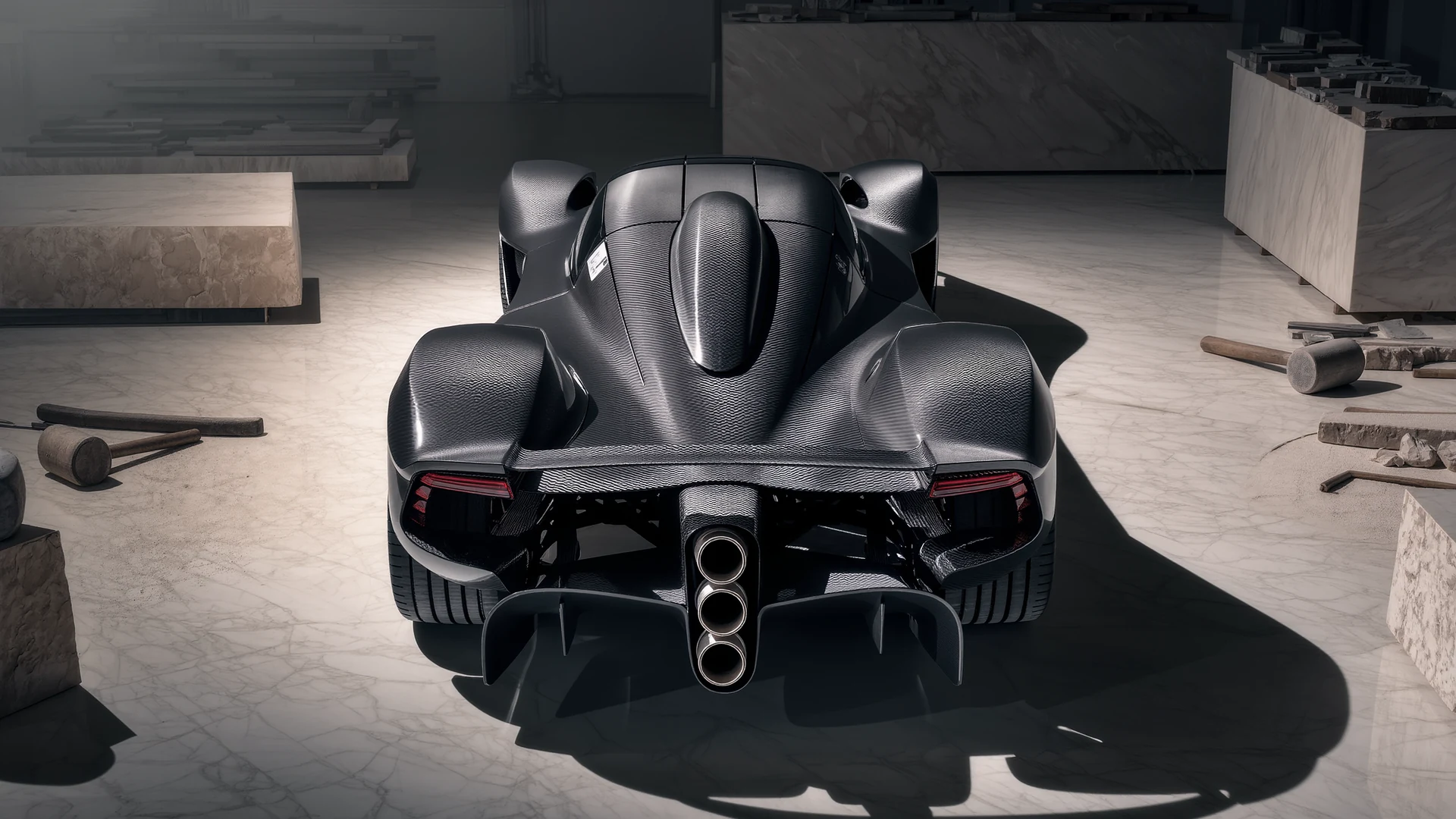
Pagani Automobili, founded in 1992 by Horacio Pagani in San Cesario sul Panaro, builds hand-crafted Italian hypercars with Mercedes-AMG V12 engines that fuse fine art with extreme performance.
Key Takeaways
- Horacio Pagani, born in 1955 in Casilda, Argentina, founded Pagani Automobili in 1992 after pioneering carbon-fiber work at Lamborghini, including the 1987 Countach Evoluzione's carbon-fiber monocoque.
- Every Pagani road car uses a Mercedes-AMG V12, a partnership Pagani secured in the early 1990s before his car even existed.
- The Zonda, named after an Argentine Andes wind, launched as the C12 at the 1999 Geneva Motor Show with a 394-horsepower 6.0-liter AMG V12 and stayed in production for twenty years until 2019 via one-off 760 commissions like Lewis Hamilton's 760 LH.
- The Huayra (2011-2023) introduced active aerodynamics with four independently controlled flaps and a twin-turbocharged AMG M158 V12; the Huayra Imola, limited to five units, exceeded EUR 5 million each.
- Pagani pioneered carbon-titanium, a patented in-house composite weaving titanium strands into carbon fiber that gives a signature blue-tinted shimmer.
- The Utopia, revealed in 2022 and limited to 99 coupes, rejects hybrid systems and offers a bespoke seven-speed manual gearbox developed with Xtrac alongside an 864-horsepower twin-turbo AMG V12.
- Pagani builds cars in an atelier rather than a factory in San Cesario sul Panaro, where small artisan teams hand-lay carbon fiber over months, guided by the company's 'theology of perfection'.
Where Bugatti represents engineering dominance and Koenigsegg embodies technological revolution, Pagani Automobili stands alone as the intersection of automotive engineering and fine art. Founded in 1992 by Horacio Pagani in San Cesario sul Panaro, a small town in Italy’s Motor Valley just kilometers from Ferrari and Lamborghini, Pagani fuses Renaissance-era craftsmanship with bleeding-edge composite materials science. The result is a series of automobiles that many critics, collectors, and enthusiasts consider the most beautiful and obsessively detailed cars ever built. Each Pagani is not merely a vehicle; it is a commissioned sculpture, a client’s personal masterpiece that happens to be capable of extraordinary speed.
Horacio Pagani: The Visionary Behind the Name
Early Life in Argentina
Horacio Pagani was born on November 10, 1955, in Casilda, a small agricultural town in Argentina’s Santa Fe province. His father was a baker of Italian descent, and from an early age, young Horacio displayed an unusual fascination with both art and engineering. He spent his childhood sketching cars, building model airplanes from balsa wood, and studying the works of Leonardo da Vinci, an influence that would later manifest in his company’s tagline, “Art and Science.” By the age of 20, Pagani had designed and built his first vehicle, a miniature dune buggy, entirely from scratch in his family’s modest workshop. He also constructed a Formula 2 single-seater, teaching himself composite materials along the way. This self-directed education in carbon fiber and advanced composites would prove prophetic.
The Journey to Italy and Lamborghini Years
In 1982, at the age of 27, Horacio Pagani made the life-altering decision to leave Argentina for Italy. He arrived with little more than a tent, a sleeping bag, a bicycle, and a portfolio of his engineering drawings. He secured a meeting with Automobili Lamborghini and impressed them with his composite materials expertise. Initially hired as a third-level mechanic, Pagani quickly rose through the ranks, eventually becoming the head of Lamborghini’s newly established composite materials department. His most significant contribution at Lamborghini was the development of the Countach Evoluzione in 1987, the first car to feature a fully carbon-fiber monocoque chassis. This pioneering work established Pagani as a leading authority on composite automotive structures and laid the groundwork for his future endeavors.
Founding Modena Design and Pagani Automobili
Recognizing the growing demand for advanced composites in motorsport and luxury automotive applications, Pagani founded Modena Design in 1991, a consultancy specializing in composite materials for clients including Ferrari, Aprilia, and Dallara. The revenue from Modena Design provided the financial foundation for his true ambition: creating his own car company. In 1992, he established Pagani Automobili S.p.A. and began work on what would become the Zonda. He secured a crucial partnership with Mercedes-AMG to supply V12 engines, a relationship that continues to define the soul of every Pagani ever produced. In an era when small independent manufacturers rarely survived, Pagani’s combination of technical brilliance, artistic vision, and business acumen proved unstoppable.
The Zonda: A Twenty-Year Masterpiece (1999bis2019)
Birth of an Icon: The Zonda C12
The Zonda C12 debuted at the 1999 Geneva Motor Show and instantly redefined expectations of what a supercar could be. Named after the hot, dry wind that sweeps across Argentina’s Andes Mountains, the “zonda”, the car featured a naturally aspirated 6.0-liter Mercedes-AMG V12 producing 394 horsepower, housed in a carbon-titanium monocoque. But raw power was never the headline. The Zonda’s design language, inspired equally by jet fighters and classic Italian coachbuilding, established a visual vocabulary that remains unmatched decades later. The exposed titanium linkages in the suspension, the leather-wrapped interior, the center-mounted quad exhaust, and the transparent engine cover revealing the glorious AMG V12, every element was considered, every surface finished to jewelry standards.
Engineering Philosophy: Carbon-Titanium and the Art of Lightness
From the beginning, Pagani’s engineering philosophy diverged sharply from industry convention. The company pioneered the use of carbon-titanium, a proprietary composite that weaves titanium strands into carbon fiber fabric. This material, developed in-house and patented by Pagani, offered superior strength-to-weight characteristics while providing a characteristic blue-tinted shimmer that became a signature aesthetic. The Zonda’s structure weighed just 125 kilograms yet provided exceptional torsional rigidity. Beyond materials, Pagani’s approach to engineering celebrated mechanical honesty: gears, linkages, and structural elements were never hidden behind plastic covers but instead finished to exhibition quality and left exposed. The suspension featured machined billet aluminum uprights that looked sculptural, and the pedal box was an architectural statement in forged aluminum.
The AMG Partnership: A Marriage of Italian Soul and German Muscle
Central to the Zonda’s identity, and to every Pagani since, was the Mercedes-AMG V12 engine. Horacio Pagani’s relationship with AMG began in the early 1990s when he convinced the German performance division to supply him with engines for a car that did not yet exist. AMG, impressed by Pagani’s vision and composite expertise, agreed. The partnership has been remarkably stable: every Pagani road car has been powered by an AMG-developed V12, each generation more powerful and more bespoke than the last. For the Zonda, AMG engines evolved from 6.0 liters to 7.0 liters and eventually 7.3 liters, with power outputs climbing from 394 horsepower in the original C12 to over 760 horsepower in the track-focused Zonda R.
The Zonda Variants: An Expanding Universe of Exclusivity
Zonda C12 and C12 S (1999bis2002)
The original Zonda C12 established the template, but the C12 S of 2000 raised the stakes considerably. Engine displacement grew to 7.0 liters, power jumped to 550 horsepower, and subtle aerodynamic refinements improved high-speed stability. Just 15 C12s and 15 C12 S models were built, establishing the extreme exclusivity that defines Pagani ownership.
Zonda F (2005bis2009)
Named in honor of Juan Manuel Fangio: the legendary Argentine Formula One champion whom Horacio Pagani admired and who had agreed to lend his name to the project before his passing in 1995, the Zonda F represented a comprehensive evolution. The 7.3-liter AMG V12 produced 602 horsepower, and the car featured extensive aerodynamic revisions including a larger rear diffuser and a revised front splitter. The Zonda F Clubsport variant pushed output to 650 horsepower and incorporated lightweight components throughout, tipping the scales at just 1,230 kilograms. The F set a Nürburgring Nordschleife lap time of 7:27, placing it among the fastest production cars of its era.
Zonda Cinque and Tricolore (2009bis2010)
As the Zonda platform matured, Pagani turned to ever more extreme limited editions. The Cinque, Italian for “five”, was produced in a run of just five coupes and five roadsters. It featured a 678-horsepower V12, a sequential six-speed gearbox that shifted in under 100 milliseconds, and carbon-titanium construction throughout. The Tricolore, limited to just three units, commemorated the 50th anniversary of the Italian Air Force’s Frecce Tricolori aerobatic team. It featured a unique blue-tinted clear carbon body with red, white, and green stripes running the length of the car, along with a pitot tube-style speed sensor mounted on the nose, a direct aeronautical reference.
Zonda R and Zonda Revolución (2009bis2014)
The Zonda R represented the ultimate expression of the Zonda platform: a track-only weapon unrestricted by road-car regulations. It featured a 6.0-liter V12 derived from Mercedes’ DTM racing program producing 750 horsepower, a six-speed sequential racing gearbox, and aerodynamic elements that generated over 400 kilograms of downforce. The Zonda R lapped the Nürburgring in 6:47, faster than any road-legal production car at the time. The Revolución, an even more extreme evolution, added DRS (Drag Reduction System) and pushed output to 800 horsepower.
Zonda One-Offs and the 760 Series (2012bis2019)
Perhaps the most remarkable chapter in the Zonda story occurred after the model had officially been succeeded by the Huayra. Wealthy clients, unwilling to let the Zonda fade into history, commissioned a series of one-off Zonda 760 variants. Each was named by its owner: Lewis Hamilton’s “760 LH,” the “760 RS,” “760 Fantasma,” “760 Aether,” and many others. These bespoke creations kept the Zonda in production, technically speaking, as each was a new commission, for a full two decades, a testament to the design’s enduring appeal. Production of the final Zondas concluded in 2019, twenty years after the original.
The Huayra: Technology Meets Baroque Elegance (2011bis2023)
A New Chapter: The Huayra Coupé
Replacing a legend is never easy, but the Huayra, named after Huayra-tata, the Andean wind god, proved a worthy successor when it debuted in 2011. Where the Zonda was sharp, angular, and aggressive, the Huayra adopted a more organic, baroque design language characterized by sweeping curves, elliptical forms, and a cabin inspired by the elegant teardrop shapes of 1950s racing cars. Under the skin, however, the Huayra was a technological tour de force that redefined what active aerodynamics could achieve.
Active Aerodynamics: A Revolution in Real-Time Downforce
The Huayra’s defining technical innovation was its active aerodynamic system. Four independently controlled flaps, two at the front and two at the rear, adjusted their angle in real time based on speed, lateral acceleration, steering angle, and throttle position. During hard braking, the flaps deployed upward to act as air brakes while simultaneously increasing downforce at the rear to maintain stability. Through high-speed corners, the system could increase downforce on the inside wheels to counteract body roll. In a straight line at high speed, the flaps retracted to minimize drag. This system eliminated the need for a traditional large fixed rear wing, preserving the Huayra’s elegant profile while delivering the aerodynamic performance of a dedicated track car.
The Twin-Turbo Transition
The Huayra marked another significant shift: turbocharging. The Mercedes-AMG M158 engine was a 6.0-liter twin-turbocharged V12 developed specifically for Pagani, producing 730 horsepower and 1,000 Nm of torque. The transition from natural aspiration was controversial among purists, but AMG and Pagani engineered the power delivery to be remarkably linear, with minimal turbo lag. The engine was mated to a seven-speed single-clutch sequential gearbox, chosen over a heavier dual-clutch unit to save weight and preserve a more visceral, mechanical shifting feel that clients demanded.
Interior as Art: The Huayra Cabin
If the Zonda’s interior was distinctive, the Huayra’s was transcendent. Horacio Pagani described it as “a jewel” and the description was not hyperbole. The gear lever was machined from a solid billet of aluminum and featured an exposed gated mechanism that looked like a piece of kinetic sculpture. The climate control vents were milled from single blocks of aluminum, with intricate knurling on every rotary control. The seats, wrapped in the finest leather, featured exposed carbon-fiber shells with contrasting stitching. The key, yes, even the key, was a sculptural aluminum form modeled after the car itself. Every surface, every control, every stitch was considered not merely for function but for beauty.
The Huayra Special Editions
Huayra BC (2016bis2019)
Named in honor of Benny Caiola, a dear friend of Horacio Pagani and the company’s first-ever customer, the Huayra BC was a more focused, more aggressive evolution. The twin-turbo V12 was tuned to 789 horsepower, and an extensive weight-reduction program, including a new titanium exhaust system, lighter wheels, and even lighter interior components, brought dry weight down to 1,218 kilograms, a reduction of 132 kilograms versus the standard Huayra. Aerodynamic changes included a prominent fixed rear wing, a more aggressive front splitter, and deeper side skirts. Just 20 coupes were produced.
Huayra Roadster (2017bis2023)
Against all conventional wisdom, the Huayra Roadster was lighter than the coupe upon which it was based. Pagani’s engineers developed an entirely new carbon-titanium monocoque that required no additional reinforcement to compensate for the absent roof, resulting in a dry weight of just 1,280 kilograms, 80 kilograms less than the Huayra Coupé. The Roadster featured a removable carbon-fiber roof panel and a gorgeous engine cover with sculptural buttresses that echoed classic sports racing cars. Power came from a 764-horsepower version of the AMG V12. One hundred units were planned, and all were sold before production began.
Huayra Imola (2019bis2020)
Named after the legendary Italian racetrack, the Imola was the most extreme road-legal Huayra. Limited to just five units at a price exceeding €5 million each, the Imola underwent over 16,000 kilometers of track testing to perfect its aerodynamic package. It featured the most aggressive fixed aerodynamic elements of any Huayra, including a massive rear wing, an elaborate seven-element rear diffuser, and a shark fin extending from the roof. Power from the AMG V12 rose to 827 horsepower, and weight was reduced through the extensive use of Carbo-Titanium HP62 and Carbo-Triax HP62, new composite formulations developed for this model. The Imola represented Pagani’s road-car performance zenith.
Huayra Codalunga (2022)
The Codalunga, Italian for “longtail”, was a breathtaking homage to the longtail racing cars of the 1960s, particularly the Porsche 917 Langheck and the Ferrari 512 S. Developed in close collaboration with two devoted Pagani collectors through the brand’s Grandi Complicazioni special projects division, the Codalunga featured an extended rear bodywork with flowing, uninterrupted lines. The rear grille weighed just 3.5 kilograms, and the exposed ceramic-coated titanium exhaust system echoed the artful mechanical displays of the original Zonda. Powered by an 840-horsepower V12 and limited to just five units, the Codalunga demonstrated that even as Pagani’s technology advanced, the company’s commitment to beauty remained paramount.
Huayra R (2021bis2023)
The Huayra R was the spiritual successor to the Zonda R: a track-only, unrestricted hypercar that represented the ultimate expression of the Huayra platform. It featured an all-new naturally aspirated 6.0-liter V12, the “Pagani V12-R”, developed in partnership with HWA AG, the motorsport company founded by AMG co-founder Hans Werner Aufrecht. Free of turbochargers and producing 850 horsepower while revving to 9,000 rpm, this engine was a deliberate celebration of the internal combustion engine in its purest form. The Huayra R’s aerodynamic package generated 1,000 kilograms of downforce at 320 km/h, and its carbon-titanium monocoque incorporated the latest advances in Pagani’s materials science. Thirty units were produced at a price of €2.6 million each.
The Utopia: Pagani’s Analog Manifesto (2024+)
A Deliberate Rejection of Convention
When the automotive world seemed to be racing toward electrification, hybridization, and increasing digital intervention, Horacio Pagani made a characteristically contrarian decision. The Utopia, revealed in 2022 after six years of development, eschewed hybrid systems entirely. It rejected automatic and dual-clutch transmissions. Instead, it paired an 864-horsepower twin-turbocharged 6.0-liter AMG V12 with a seven-speed manual gearbox as standard equipment, an automated manual was available only as an option. This was not a retro gesture or a nostalgic indulgence; it was a deliberate statement about the essence of the driving experience. Pagani described the Utopia as his most personal creation, the car that most perfectly embodied his philosophy that driving should engage every human sense.
Design Language: Leonardo’s Principles Revisited
The Utopia’s design marked a departure from the baroque complexity of the Huayra toward something simpler, more sculptural, and more elemental. Horacio Pagani explicitly cited Leonardo da Vinci’s principle that “simplicity is the ultimate sophistication.” The body surfaces were cleaner, with fewer visible aerodynamic elements, though under the skin, an evolved active aerodynamic system managed airflow with even greater sophistication than the Huayra’s. The cockpit retained the teardrop glasshouse concept but with more organic integration into the body sides. The front fascia featured elliptical headlamps set within sculpted carbon forms, while the rear incorporated floating taillight elements and exposed titanium exhaust outlets. The Utopia’s design represented a mature refinement of Pagani’s aesthetic language: equally beautiful, but more restrained and confident.
Technical Specifications and Engineering
Beneath the Utopia’s elegant skin lay Pagani’s most advanced engineering package. The Carbo-Titanium HP62-G2 and Carbo-Triax HP62 monocoque was 10.5% stiffer than the Huayra’s structure while weighing the same. The twin-turbocharged AMG-sourced V12 produced 864 horsepower and 1,100 Nm of torque, sufficient for a dry weight of just 1,280 kilograms. The suspension employed forged aluminum double wishbones with electronically controlled dampers, and the braking system featured massive Brembo carbon-ceramic discs with six-piston calipers at the front and four-piston units at the rear. Despite its analog ethos, the Utopia incorporated sophisticated electronics where they enhanced rather than diluted the experience: the active aerodynamic flaps, the damping control system, and the traction management were all state-of-the-art, operating invisibly to preserve the mechanical purity of the driving interaction.
The Manual Gearbox: A Statement of Purpose
The Utopia’s seven-speed manual gearbox, developed in collaboration with Xtrac, was perhaps the car’s most significant technical statement. In an era when even Ferrari had eliminated manual transmissions from its lineup, Pagani invested millions in engineering a bespoke manual that could handle the V12’s immense torque while delivering the precise, mechanical shift feel that defines driver engagement. The exposed gated shifter mechanism, machined from billet aluminum and finished to the standard of fine watchmaking, was mounted on a carbon-fiber tunnel and visually celebrated rather than hidden. The clutch pedal required genuine effort, the shift throws were deliberate, and the entire experience demanded skill and attention from the driver. For Pagani’s clients, wealthy collectors who owned garages full of hypercars, the manual Utopia offered something increasingly rare: a challenge, a skill to be developed, a machine that rewarded human excellence rather than replacing it.
The Bespoke Commissioning Program: Creating Personal Masterpieces
The Utopia program is limited to just 99 coupes, and each represents the culmination of Pagani’s bespoke commissioning process. Every Utopia client begins with extensive consultations at the Pagani atelier in San Cesario sul Panaro, where they work directly with Horacio Pagani and his design team. The process can span more than a year and encompasses every conceivable detail: the exterior paint, often a custom-developed color created specifically for that client, the carbon-fiber weave pattern and its tint, the leather and Alcantara for the interior sourced from specific tanneries and dyed to match a client’s vision, the finish of every metal component from polished aluminum to anodized titanium, and even the stitch pattern and thread color used throughout. Some clients commission custom luggage sets designed to fit precisely in the Utopia’s storage compartments. Others request unique materials, gold foil inlays, meteorite accents, or family crests rendered in precious metals. The Utopia is not merely purchased; it is brought into existence through a collaborative creative process between client and carrozzeria.
Pagani’s Manufacturing Philosophy: Where Artisanship Meets Aerospace
The Atelier: A Workshop, Not a Factory
Pagani’s production facility in San Cesario sul Panaro is deliberately called an “atelier” rather than a factory, and the distinction is meaningful. Where most automotive manufacturers employ assembly lines and robotic automation, Pagani’s production floor resembles a Renaissance workshop crossed with an aerospace laboratory. Cars are built by small teams of artisans who remain with a single vehicle from the initial layup of carbon fiber through final delivery. The pace is deliberately slow: a Pagani takes months to build, not hours. Each carbon-fiber component is hand-laid by technicians who have trained for years to achieve the precise weave orientation and resin distribution that the company’s exacting standards demand.
Material Science: Beyond Carbon Fiber
Pagani’s commitment to material innovation extends far beyond the carbon-titanium for which the company is best known. The brand’s composite catalog now includes Carbo-Triax, which orients fibers in three directions for maximum strength, and Carbo-Titanium HP62 G2, an evolution of the original formula with enhanced vibration damping characteristics. Pagani also employs titanium extensively, not merely as a structural material but as a visual statement. Suspension components, exhaust systems, linkage arms, and even interior trim are machined from aerospace-grade titanium alloys, often with surface finishes that range from mirror-polished to a distinctive blue tint created through controlled oxidation. The company operates its own autoclave and composite curing facilities, allowing complete control over every material that enters a Pagani.
Attention to Detail: The Theology of Perfection
Within Pagani, there exists a philosophy that Horacio Pagani has described as “the theology of perfection.” Every component, no matter how small or hidden from view, must be beautiful. The inside of a Pagani’s door panel, a surface most owners will never see, is finished to the same standard as the visible exterior. Bolts are machined from titanium and laser-etched with the Pagani logo. Wiring harnesses are wrapped in technical fabric rather than plastic conduit. The manual that accompanies each car is a leather-bound volume that resembles a Renaissance codex. This obsessive attention extends to customer service: Pagani maintains a “flying doctor” program that dispatches technicians anywhere in the world at any time should a client require assistance. The goal is not merely to satisfy but to astonish.
The Pagani Ownership Experience
The Commissioning Journey
Owning a Pagani begins long before delivery. The commissioning process, particularly for Utopia and Huayra clients, is an experience in itself. Clients visit the atelier multiple times over the course of a year or more, working with Pagani’s design team to specify every element of their car. These visits include tours of the production floor, meetings with the artisans who will build the car, and private dinners with Horacio Pagani himself. The process creates a relationship between client and carrozzeria that is more akin to patronage of the arts than to a commercial transaction. Many clients describe the waiting period as almost pleasurable, a time of anticipation, creativity, and immersion in the Pagani philosophy.
Pagani Raduni: The Global Gathering of the Tribe
Pagani owners are not merely customers; they are members of a global community that the company actively cultivates. The centerpiece of this community is the Pagani Raduni, an annual gathering that brings together Pagani owners from around the world for a multi-day celebration of the brand. Past Raduni events have traversed the Italian Dolomites, the French Riviera, the California coastline, and the Japanese countryside. The events combine spirited driving with curated cultural experiences, private museum tours, Michelin-starred dinners, helicopter excursions, and provide owners with the opportunity to form lasting friendships with fellow collectors who share their passion. Horacio Pagani personally attends these gatherings, often driving his own car and spending hours conversing with clients about their cars, their lives, and their dreams. The Raduni embodies Pagani’s belief that the car is not an end in itself but a catalyst for human connection and shared experience.
The Collector Community and Market Dynamics
Pagani’s production volumes, the company has built fewer than 500 cars in its three-decade history, create a market dynamic unlike any other in the automotive world. Cars rarely appear on the open market, and when they do, they typically command multiples of their original price. Zonda values, particularly for the 760-series one-offs, have appreciated dramatically, with some examples trading privately for sums exceeding €10 million. This appreciation reflects not merely scarcity but the recognition that Paganis represent a unique fusion of art, engineering, and craftsmanship that is unlikely to be replicated. The collector community is close-knit, with many owners possessing multiple Paganis spanning different eras. The brand attracts a particular type of collector: someone who values beauty and emotional connection as much as performance metrics, who appreciates the story behind each component as much as the lap time it enables.
The Legacy Question: What Pagani Means for the Future
As the automotive industry undergoes its most profound transformation since the invention of the motor car, Pagani’s position is unique. The company has committed to continuing V12 production as long as regulations permit, and Horacio Pagani has expressed openness to exploring synthetic fuels as a means of preserving the internal combustion experience in a carbon-neutral framework. The brand’s focus on small volumes, extreme exclusivity, and artisanal craftsmanship insulates it somewhat from the forces driving mass-market electrification. Whatever the future holds, Pagani’s legacy is already secure: in an era of increasing digital isolation and technological abstraction, the company has proven that there remains an audience, small but deeply passionate, for objects created through the union of human hands, human imagination, and an uncompromising commitment to beauty.
Frequently Asked Questions (FAQ)
Who founded Pagani and what is his background?
Pagani Automobili was founded in 1992 by Horacio Pagani, born in 1955 in Casilda, Argentina. The son of a baker, he taught himself composite materials, built his first vehicle by age 20, then moved to Italy in 1982 and led Lamborghini's composite materials department before launching his own company.
What engine does every Pagani use?
Every Pagani road car is powered by a Mercedes-AMG V12. Horacio Pagani secured the partnership in the early 1990s, convincing AMG to supply engines for a car that did not yet exist. AMG units grew from the Zonda's 6.0-liter 394-horsepower V12 to the Utopia's 864-horsepower twin-turbocharged version.
What was the Pagani Zonda and how long was it produced?
The Zonda was Pagani's first car, debuting as the C12 at the 1999 Geneva Motor Show with a 394-horsepower AMG V12 in a carbon-titanium monocoque. Named after an Argentine Andes wind, it stayed in production for twenty years, ending in 2019 through bespoke one-off 760 commissions ordered by wealthy collectors.
What makes the Pagani Huayra technically special?
The Huayra's defining innovation was active aerodynamics: four independently controlled flaps adjusted in real time based on speed, steering, lateral acceleration, and throttle. This eliminated a fixed rear wing while delivering track-car downforce. It also introduced turbocharging via the twin-turbo AMG M158 V12 producing 730 horsepower and 1,000 Nm.
Why does the Pagani Utopia have a manual gearbox?
The Utopia offers a bespoke seven-speed manual, developed with Xtrac, as a deliberate statement about driver engagement. Revealed in 2022, it rejects hybrid systems and dual-clutch transmissions. Horacio Pagani invested millions engineering a manual capable of handling the V12's torque, offering collectors a rare driving challenge that rewards human skill.
What is Pagani carbon-titanium?
Carbon-titanium is a proprietary composite developed in-house and patented by Pagani that weaves titanium strands into carbon fiber fabric. It offers superior strength-to-weight characteristics and produces a signature blue-tinted shimmer. The Zonda's carbon-titanium structure weighed just 125 kilograms while providing exceptional torsional rigidity.
How are Pagani cars built?
Pagani builds its cars in an atelier, not a factory, in San Cesario sul Panaro. Small teams of artisans stay with a single vehicle from the initial carbon-fiber layup through final delivery. The pace is deliberately slow, taking months per car, with every carbon component hand-laid by technicians trained for years.
How exclusive is the Pagani Utopia and how does commissioning work?
The Utopia is limited to just 99 coupes, each built through Pagani's bespoke commissioning process. Clients begin with extensive consultations at the atelier, working directly with Horacio Pagani and his team for over a year to specify paint, carbon weave, leather, metal finishes, stitching, and even custom materials like meteorite accents or gold inlays.
Who founded Pagani and what is the company's engineering signature?
What was special about the Pagani Zonda?
How does the Utopia differ from the Huayra that came before it?
More from Blog
The Future of Hypercars: Electrification, Autonomy, and the Next Performance Frontier
The future of hypercars: how electrification, solid-state batteries, hybrid V16 powertrains, 3D printing, active aero, autonomy and eFuels redefine pe…
Hypercar Maintenance Guide: The True Cost of Keeping an Automotive Masterpiece on the Road
Hypercar maintenance guide: real annual service costs from Bugatti and Koenigsegg to Pagani and Rimac, plus tire, brake and resale-value insights for …
Hypercar Events Worldwide: The Ultimate Calendar for Collectors and Enthusiasts
Hypercar events worldwide: a collector’s calendar from Monterey Car Week and Goodwood to Villa d’Este, Top Marques Monaco, elite rallies a…