Koenigsegg Complete Guide: Inside Sweden’s Revolutionary Hypercar Manufacturer
Koenigsegg complete guide: how a 22-year-old founder built Sweden’s revolutionary hypercar maker, from the 655 hp CC8S to the 500+ km/h Jesko Absolut.…
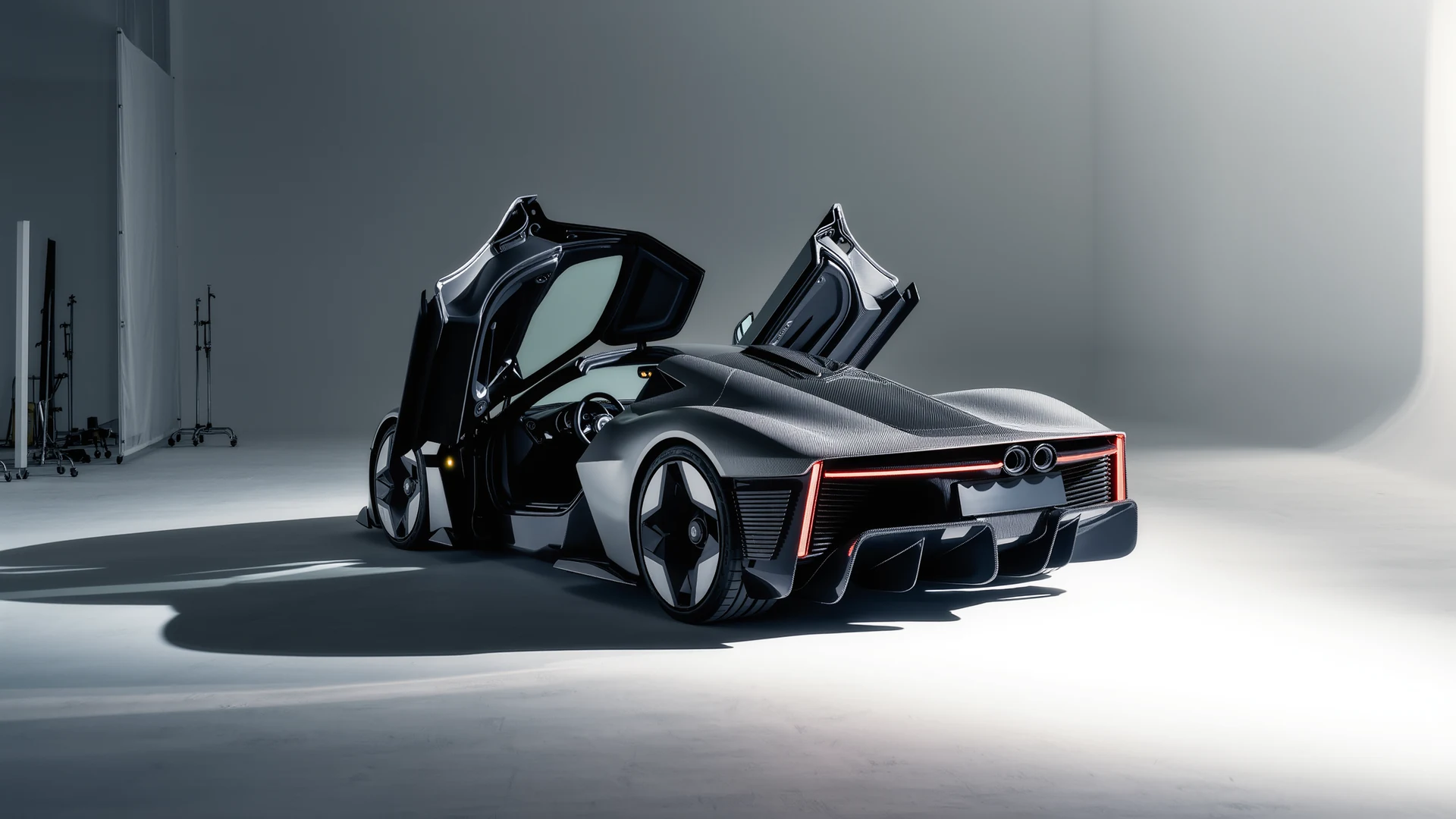
Koenigsegg is a Swedish hypercar maker founded in 1994 by 22-year-old Christian von Koenigsegg, building fewer than 40 hand-made cars a year in a former fighter-jet hangar at Angelholm.
Key Takeaways
- Christian von Koenigsegg founded Koenigsegg Automotive AB in 1994 at age 22, with no engineering training, after being inspired as a child by the Norwegian film Flaklypa Grand Prix.
- The company operates from the former F10 Angelholm air force base (Valhall Park) in Skane, southern Sweden, where it uses the original runway to test customer cars at over 300 km/h.
- Koenigsegg is extremely vertically integrated, designing and building its own engines, transmissions, software, carbon-fiber monocoques, and valve technology, with each car taking roughly 4,000 hours of hand assembly.
- The CC8S earned Koenigsegg its first Guinness World Record in 2002 for most powerful production engine, and in 2005 a CCR driven by Loris Bicocchi hit 387.87 km/h to become the world's fastest production car.
- The Agera RS reached a verified 447 km/h top speed, while the Regera abandoned a conventional gearbox for the single-speed Koenigsegg Direct Drive system with a combined output over 1,500 hp.
- The Jesko features a flat-plane-crank V8 making up to 1,600 hp on E85 and the nine-speed Light Speed Transmission; the Jesko Absolut, with a 0.278 Cd, is engineered to exceed 500 km/h.
- The Gemera is a four-seat Mega-GT entering production in 2024, producing 1,400 hp in base form or up to 2,300 hp, powered in part by a camless three-cylinder engine.
Introduction: The Hypercar Manufacturer That Defied Every Convention
In the rarefied world of hypercars, where storied Italian marques and German engineering giants have dominated for decades, a small Swedish company operating from a former fighter-jet hangar has systematically rewritten the rulebook. Koenigsegg Automotive AB produces fewer than 40 cars per year at its Ängelholm factory, yet its influence on automotive engineering is disproportionate to its microscopic production volume. Founded by a 22-year-old with no automotive background, no legacy, and no corporate backing, Koenigsegg has become synonymous with extreme performance records, radical powertrain innovation, and a manufacturing philosophy that borders on the obsessive.
From the 655-horsepower CC8S that stunned the automotive world in 2002 to the 2,300-horsepower Gemera, a four-seat “Mega-GT” powered by a camless three-cylinder engine, Koenigsegg has never built a car that anyone asked for. Instead, Christian von Koenigsegg has built exactly the cars he wanted to drive, and the world’s wealthiest collectors have lined up to buy every single one. This comprehensive guide traces the company’s improbable origin story, dissects its most important engineering breakthroughs, catalogs every production model from the CC8S to the Jesko Absolut, and examines why a boutique manufacturer from Scandinavia matters so profoundly to the future of the automobile.
The Visionary Founder: Christian von Koenigsegg
A Dream Born in Childhood
Christian Erland Harald von Koenigsegg was born on July 2, 1972, in Stockholm, Sweden. The pivotal moment in his life arrived at age five, when he watched a Norwegian stop-motion animated film called Flåklypa Grand Prix (released in English as The Pinchcliffe Grand Prix). The film tells the story of a bicycle repairman who builds a racing car in his workshop. For young Christian, the message was unambiguous: you could build your own car. Most children outgrow such fantasies. Christian von Koenigsegg turned his into a company valued in the hundreds of millions of dollars.
By his teenage years, von Koenigsegg was already an accomplished inventor and entrepreneur. He ran a successful business importing and modifying mopeds, then moved into trading electronics and perfumes. By the age of 20, he had accumulated enough capital to begin entertaining the impossible: starting his own car company. He had no formal engineering training, no automotive industry connections, and certainly no racing pedigree. What he possessed was an unshakeable conviction that the world’s fastest car did not yet exist, and that he was the person to build it.
From Sketch to Reality at Age 22
In 1994, at the age of 22, Christian von Koenigsegg formally founded Koenigsegg Automotive AB. The initial concept was audacious: a mid-engined, carbon-fiber supercar that would outperform anything from Ferrari, Lamborghini, or Porsche while remaining usable on public roads. Von Koenigsegg personally sketched the initial designs and recruited a small team of engineers and technicians, many of whom had backgrounds in motorsport and aerospace.
The first prototype, known internally as the Koenigsegg CC (Competition Coupe), was unveiled in 1996 at the Anderstorp race track in Sweden. It was rough but functional, and it proved that the concept had merit. Over the next six years, von Koenigsegg and his growing team refined the design through successive prototypes. CC2, CC4 (there was no CC3 due to superstition), and eventually the production-ready CC8S. Every setback, including a devastating fire in 2003 that destroyed part of the factory, was met with relentless forward momentum. The company had burned through family savings, venture capital attempts had failed, and at multiple points complete failure seemed certain. But in 2002, the first production CC8S was delivered to a customer, and Koenigsegg had officially become a car manufacturer.
The Ängelholm Air Force Base
Since 2003, Koenigsegg has operated from the former F10 Ängelholm air force base in Skåne County, southern Sweden. The facility, known as Valhall Park, is essential to the company’s identity. The main production building is a converted fighter-jet hangar, complete with the original runway still accessible. This is not a marketing gimmick: Koenigsegg uses the runway for high-speed testing of customer cars, with each vehicle undergoing shakedown runs at speeds exceeding 300 km/h before delivery. The ghost of Swedish military aviation permeates the facilities, and the company’s fighter-jet emblem, a ghost shield derived from the Swedish Air Force’s F10 wing insignia, is a direct tribute to the site’s heritage.
The factory currently employs approximately 400 people and has expanded to include dedicated carbon-fiber production facilities, engine assembly clean rooms, paint shops, and a growing research-and-development campus. In 2023, Koenigsegg announced a major expansion across the runway to a second campus, effectively doubling the company’s physical footprint. The juxtaposition is striking: inside what was once a Cold War military installation, some of the most advanced consumer vehicles ever conceived are built almost entirely by hand.
Vertical Integration: The Koenigsegg Manufacturing Philosophy
In-House Engineering
Koenigsegg’s manufacturing philosophy is extreme by any standard. Where most hypercar manufacturers source major components from third-party suppliers, engines from Mercedes-AMG or Audi, gearboxes from Getrag or Graziano, electronics from Bosch or Magneti Marelli. Koenigsegg designs and builds almost everything under its own roof. The company has developed its own engines, its own transmissions, its own engine management software, its own traction-control and stability-control systems, its own carbon-fiber manufacturing processes, and even its own valve-actuation technology.
This vertical integration is not merely a point of pride. It allows Koenigsegg to innovate in directions that would be impossible if constrained by a supplier’s catalog. The Light Speed Transmission, the Direct Drive system in the Regera, and the camless Freevalve engine technology all required starting from a blank sheet of paper. No automotive supplier could have delivered these components because they simply did not exist before Koenigsegg invented them.
The cost of this approach is staggering. Developing a new engine from scratch can consume hundreds of millions of euros. For a company producing 35 to 40 cars annually, the economics appear absurd, until you understand that Koenigsegg also licenses its technology. The Freevalve system has been under development with a major Chinese automaker, and Koenigsegg’s engineering consultancy serves external clients, providing revenue streams that support its hypercar operations.
The Ängelholm Factory
A tour of the Ängelholm facility reveals the full scope of Koenigsegg’s vertical integration. The carbon-fiber department weaves and autoclave-cures the monocoques, body panels, and structural components on site. The engine department assembles the twin-turbocharged V8s from billet aluminum blocks machined in-house. The electronics team writes the code that governs every aspect of vehicle behavior. The leather shop hand-stitches interiors to each customer’s specification. Even the nuts and bolts are sourced from premium aerospace-grade suppliers and individually quality-controlled.
Each car requires approximately 4,000 hours of assembly labor from start to finish. The production rate is roughly three cars per month, and every single vehicle is built to order. There is no dealer inventory, no speculative production, and virtually no two cars are identical. Customers configure their vehicles through an exhaustive personalization process that can include unique paint formulations, bespoke interior materials, and one-off engineering modifications. The result is that every Koenigsegg that leaves Ängelholm is essentially a commissioned work of automotive art.
Model Evolution: A Complete Chronology
The Genesis: CC8S (2002bis2004)
The CC8S was Koenigsegg’s first production car and the vehicle that earned the company its first Guinness World Record, for the most powerful production engine, in 2002. The CC8S was powered by a 4.7-liter supercharged V8 producing 655 horsepower and 750 Nm of torque. Developed from a Ford Modular V8 architecture but so extensively re-engineered that it bore almost no resemblance to its origin, the engine featured a dual-overhead-cam design with Koenigsegg’s own cylinder heads, pistons, connecting rods, and intake system.
The body was full carbon fiber over an aluminum honeycomb monocoque, a construction method that was exotic even by supercar standards at the time. The dihedral synchro-helix doors, which rotate outward and upward, made their debut on this model and have become Koenigsegg’s most recognizable design signature.
CC8S Specifications
- Engine: 4.7L supercharged DOHC V8
- Power: 655 hp (488 kW) at 6,800 rpm
- Torque: 750 Nm at 5,000 rpm
- 0bis100 km/h: 3.5 seconds
- Top speed: 390 km/h (242 mph) theoretical
- Curb weight: 1,175 kg
- Production: 6 units
Only six CC8S models were ever built, making it one of the rarest production hypercars in existence. Two were right-hand drive. Each was sold for approximately $500,000 at the time, a figure that now seems almost quaint given the multi-million-dollar valuations of later Koenigseggs.
The Record Breaker: CCR (2004bis2006)
The CCR represented a significant step forward. It used an upgraded version of the CC8S engine with twin Rotrex superchargers, boosting output to 806 horsepower and 920 Nm of torque. The body received subtle aerodynamic refinements, including a larger front splitter, a redesigned rear diffuser, and a revised rear wing. The braking system upgraded to massive 362 mm ceramic discs with eight-piston calipers, among the largest on any production car at that time.
The 388 km/h Record
On February 28, 2005, a CCR driven by Loris Bicocchi achieved a top speed of 387.87 km/h (241.01 mph) on the Nardò Ring in Italy, claiming the Guinness World Record for the fastest production car. This dethroned the McLaren F1, which had held the record at 386.4 km/h since 1998. The record stood until September 2005, when the Bugatti Veyron 16.4 pushed the mark beyond 400 km/h, but for seven months, a Swedish car built in a fighter-jet hangar was officially the fastest production vehicle on Earth.
CCR Specifications
- Engine: 4.7L twin-supercharged DOHC V8
- Power: 806 hp (601 kW) at 6,900 rpm
- Torque: 920 Nm at 5,700 rpm
- 0bis100 km/h: 3.2 seconds
- Top speed: 388+ km/h (241 mph)
- Production: 14 units
Going Global: CCX & CCXR (2006bis2010)
The CCX (Competition Coupe X, marking the 10th anniversary of the first CC prototype) was designed specifically to meet global homologation requirements, enabling sales in the critical North American market. The car grew slightly in every dimension compared to the CCR, and the engine was comprehensively redesigned. The new 4.7-liter twin-supercharged V8 was nearly entirely Koenigsegg’s own design, sharing little beyond bore spacing with any existing engine architecture.
CCX Specifications
- Engine: 4.7L twin-supercharged DOHC V8
- Power: 806 hp (601 kW) on 91-octane petrol
- Torque: 920 Nm at 5,700 rpm
- 0bis100 km/h: 3.2 seconds
- 0bis200 km/h: 9.8 seconds
- Top speed: 395+ km/h (245 mph)
- Production: 29 units (CCX) + 2 CCXR prototypes
The CCX was the car that proved to the world that Koenigsegg could build a globally compliant vehicle without sacrificing performance. It also introduced the Top Gear viewing audience to the brand, albeit through an infamous episode in which the Stig spun a CCX fitted with a rear wing on the test track, prompting a factory response that delivered the wing-equipped CCXR variant.
CCXR: The Biofuel Pioneer
The CCXR was a landmark vehicle: the world’s first biofuel-powered hypercar. When running on E85 ethanol, the twin-supercharged V8 produced 1,018 horsepower, a staggering figure for 2007. Ethanol’s higher octane rating (approximately 104 RON vs. 91bis93 for premium pump petrol) and superior cooling properties allowed Koenigsegg to increase boost pressure and ignition advance while simultaneously reducing charge-air temperatures. The CCXR also carried an upgraded braking system, a larger rear wing, and optional carbon-fiber wheels.
CCXR Specifications
- Engine: 4.8L twin-supercharged flex-fuel V8
- Power (E85): 1,018 hp (759 kW)
- Torque (E85): 1,060 Nm
- 0bis100 km/h: 2.9 seconds
- Top speed: 402+ km/h (250+ mph)
- Production: 9 units
In addition to the standard CCXR, Koenigsegg produced several special editions on the CCX/CCXR platform, including the CCXR Edition (4 units), the CCXR Special Edition (2 units), and the notorious CCXR Trevita, just 2 units were built, each featuring a unique carbon-fiber weave impregnated with diamond dust that gave the bodywork an iridescent, silvery-white shimmer. The Trevita was, at the time of its release, one of the most expensive production cars in the world at approximately $4.8 million.
The Agera Era (2011bis2018)
The Agera (Swedish for “to act” or “to take action”) marked a generational leap for Koenigsegg. The company designed an entirely new engine, a 5.0-liter twin-turbocharged V8 producing 940 horsepower on 95-octane petrol. This engine, built entirely in-house from a billet aluminum block, would become the foundation for an entire family of record-setting vehicles. The Agera introduced a new carbon-fiber monocoque with aluminum honeycomb reinforcements, an upgraded seven-speed dual-clutch transmission, and the first generation of Koenigsegg’s active aerodynamics system. The interior was a quantum leap forward, with the debut of the now-iconic Koenigsegg Infotainment System and a “ghost light” interior illumination scheme.
Agera (2011) Specifications
- Engine: 5.0L twin-turbocharged DOHC V8
- Power: 940 hp (700 kW) on 95-octane petrol
- Torque: 1,100 Nm
- 0bis100 km/h: 3.1 seconds
- Top speed: 420+ km/h (260+ mph)
- Production: 7 units
Agera R (2011bis2014)
The Agera R was the E85-capable, higher-performance iteration of the Agera platform. On biofuel, the twin-turbo V8 produced 1,140 horsepower and 1,200 Nm of torque. The Agera R was the first Koenigsegg to feature the Triplex suspension system (detailed below) and introduced a retractable rear wing with active aerodynamic adjustment. In September 2011, an Agera R set a new 0bis300bis0 km/h world record of 21.19 seconds, a staggering demonstration of both acceleration and braking capability. The Agera R also became the first Koenigsegg to be tested by independent automotive media on a large scale, earning near-universal acclaim for its combination of ferocious performance and surprising civility.
Agera R Specifications
- Engine: 5.0L twin-turbo flex-fuel V8
- Power (E85): 1,140 hp (850 kW)
- Torque (E85): 1,200 Nm
- 0bis100 km/h: 2.8 seconds
- 0bis200 km/h: 7.8 seconds
- 0bis300 km/h: 14.53 seconds
- Top speed: 439 km/h (273 mph) theoretical
- Production: 18 units
One:1. The Megacar (2014bis2015)
The One:1 was a paradigm shift. The name referred to its unprecedented 1:1 power-to-weight ratio: 1,360 PS (1,341 hp) from 1,360 kg of mass. This was the world’s first “Megacar”, Koenigsegg’s own term, defined as a production vehicle with more than one megawatt (1,341 hp) of power. The One:1 was built for a single purpose: to be the fastest car around a racing circuit, full stop.
The engineering upgrades went far beyond a simple power increase. The One:1 featured active aerodynamics capable of generating 610 kg of downforce at 260 km/h, upgraded carbon-ceramic brakes, a bespoke suspension geometry with active ride-height control, carbon-fiber wheels, and Michelin Pilot Sport Cup 2 tires developed specifically for the car. The chassis used a more advanced carbon-fiber construction that was 20 percent lighter than the Agera’s monocoque. Every component was optimized for weight: even the windshield was thinner than standard. The One:1 lapped the Spa-Francorchamps circuit in 2015 in a time that stood as the unofficial production-car record for years.
Only 7 One:1 units were produced, including one factory development car. Each was sold for approximately $2.85 million. In July 2016, a One:1 was involved in a high-profile accident during testing at the Nürburgring Nordschleife, crashing heavily but with the driver walking away, a testament to the monocoque’s structural integrity.
One:1 Specifications
- Engine: 5.0L twin-turbo V8
- Power (E85): 1,360 PS (1,341 hp)
- Torque: 1,371 Nm
- Curb weight: 1,360 kg (dry)
- Power-to-weight: 1 kg/hp (1:1)
- 0bis400 km/h: approximately 20 seconds
- Top speed: 440+ km/h (273+ mph) theoretical
- Downforce (260 km/h): 610 kg
Agera RS: The Ultimate Record Holder (2015bis2018)
The Agera RS combined the advanced aerodynamics of the One:1 with the more daily-usable character of the Agera R. It was the final evolution of the Agera platform and would become the most decorated Koenigsegg in the company’s history. The standard Agera RS produced 1,160 hp on pump petrol, but the optional 1MW engine upgrade package pushed output to 1,360 hp, the same as the One:1, when configured for E85.
Agera RS Specifications
- Engine: 5.0L twin-turbo V8
- Power (standard/1MW): 1,160 hp / 1,360 hp
- Torque: 1,280 Nm (1,371 Nm with 1MW upgrade)
- 0bis100 km/h: 2.8 seconds
- 0bis200 km/h: 6.9 seconds
- 0bis300 km/h: 11.5 seconds
- Top speed (verified): 447 km/h (278 mph)
- Production: 25 units
The Regera Revolution (2016bis2022)
The Regera (Swedish for “to reign”) was the most radical production car Koenigsegg had ever conceived. It abandoned the conventional multi-speed gearbox entirely in favor of a system called Koenigsegg Direct Drive (KDD), a single-speed fixed-gear transmission. The Regera’s powertrain combined a 5.0-liter twin-turbo V8 producing 1,100 hp with three electric motors (one on the crankshaft and one at each rear wheel) contributing an additional 700 hp, for a combined system output of over 1,500 hp and more than 2,000 Nm of torque.
Direct Drive System
The Direct Drive system is perhaps Koenigsegg’s most audacious engineering achievement. In a conventional car, a gearbox is necessary because internal combustion engines produce useful torque only within a narrow RPM band. The Regera solves this problem through a hydraulic coupling, essentially a torque converter with lockup, combined with the instant torque fill from the electric motors. At low speeds, the hydraulic coupling slips, allowing the engine to rev to its power band while the electric motors provide instantaneous thrust. At higher speeds (above approximately 48 km/h), the coupling locks up, creating a direct mechanical connection from the crankshaft to the rear wheels with a fixed ratio of 2.85:1.
The result is a car that accelerates with the seamless, uninterrupted surge of an electric vehicle, combined with the top-end fury of an 1,100-horsepower twin-turbo V8. There is no gearshift interruption because there are no gearshifts. The Regera also lacks a traditional reverse gear; reversing is handled entirely by the rear-wheel electric motors, which spin backward to move the car in reverse. This saves approximately 90 kg compared to a conventional seven-speed dual-clutch transmission.
Regera Specifications
- Combustion engine: 5.0L twin-turbo V8, 1,100 hp
- Electric motors: 3x (1 crankshaft, 2 rear wheels), 700 hp combined
- Total system output: 1,500+ hp
- Total system torque: 2,000+ Nm
- Battery: 4.5 kWh, 800V, liquid-cooled
- Transmission: Koenigsegg Direct Drive (single-speed fixed gear)
- 0bis100 km/h: 2.8 seconds
- 0bis200 km/h: 6.6 seconds
- 0bis300 km/h: 10.9 seconds
- 0bis400 km/h: 20.0 seconds (approximately)
- Top speed: 403 km/h (250 mph) electronically limited
- Production: 80 units
All 80 Regeras sold out before the first customer delivery. The Regera also featured fully active aerodynamics, including an active rear wing that deployed at speed and under braking, and active front flaps that adjusted airflow through the front diffuser. The bodywork included an entirely new design language that was more flowing and organic than the angular Agera line, and the distinctive wraparound windshield, the largest single-piece windshield on any production car, became one of its most striking visual signatures.
The Jesko Family (2020: Present)
Named after Christian von Koenigsegg’s father, Jesko von Koenigsegg, the Jesko was revealed at the 2019 Geneva Motor Show as the successor to the Agera line. It introduced an entirely new version of the 5.0-liter twin-turbo V8, now featuring a 180-degree flat-plane crankshaft, a configuration rare in forced-induction engines due to the immense vibrational forces it creates, that allowed the engine to rev to 8,500 rpm, an extraordinary figure for a twin-turbocharged unit. On standard petrol, the engine produces 1,280 hp. On E85, output rises to an astonishing 1,600 hp, with 1,500 Nm of torque.
The Jesko also debuted the Light Speed Transmission (LST), a nine-speed multi-clutch gearbox capable of shifting between any two gears nearly instantaneously, without the sequential constraints of a traditional dual-clutch transmission. The LST can jump directly from 9th gear to 4th gear without passing through intermediate ratios, a capability no other production gearbox offers.
Jesko Attack Specifications
- Engine: 5.0L twin-turbo V8, flat-plane crank
- Power (E85): 1,600 hp (1,177 kW)
- Torque (E85): 1,500 Nm
- Redline: 8,500 rpm
- Transmission: 9-speed LST multi-clutch
- Downforce (250 km/h): 800 kg
- 0bis100 km/h: 2.5 seconds (estimated)
- Production: 125 units (combined Jesko and Jesko Absolut)
The “Attack” version is the track-focused specification, featuring a massive active rear wing, an aggressive front splitter, deep side skirts, and an active rear diffuser. With 800 kg of downforce at 250 km/h and an additional 1,000 kg at 275 km/h, the Jesko Attack generates more aerodynamic grip than the total weight of most sports cars.
Jesko Absolut: The 500+ km/h Contender
The Jesko Absolut is the top-speed variant, designed with one objective: to become the fastest production car ever built. Koenigsegg removed the large rear wing of the Attack, eliminated the front canards, closed off the front wheel-arch vents, and replaced the side air intakes with rear-facing scoops that reduce drag rather than increase downforce. The result is a drag coefficient of just 0.278 Cd, an extraordinarily low figure for a mid-engined car, combined with a frontal area of only 1.88 square meters.
Koenigsegg’s own simulations indicate that the Jesko Absolut is capable of exceeding 500 km/h (311 mph), a threshold no production car has ever crossed, at least not in a verified two-way run. The company has not yet attempted an official top-speed record, but the combination of 1,600 horsepower, extreme gearing optimized for terminal velocity, and the ultra-low drag coefficient makes the Absolut the strongest theoretical candidate to breach the 500 km/h barrier. Each of the 125 planned Jesko builds can be specified as either an Attack or an Absolut, and the first customer deliveries began in 2023.
Jesko Absolut Specifications
- Engine: 5.0L twin-turbo V8, flat-plane crank
- Power (E85): 1,600 hp
- Drag coefficient (Cd): 0.278
- Frontal area: 1.88 m²
- Top speed: 500+ km/h (311+ mph) theoretical
- Transmission: 9-speed LST
The Gemera: A Four-Seat Paradigm Shift (2024+)
The Gemera is arguably Koenigsegg’s most ambitious project to date. Revealed in 2020 and entering production in 2024, the Gemera is a four-seat “Mega-GT” that seats four adults comfortably, features luggage space sufficient for a family trip, and produces a combined 1,400 hp in its base configuration, or 2,300 hp with the optional V8 hybrid powertrain. It is the world’s first four-seat hypercar, and it redefines what a family car can be.
The Gemera’s standard powertrain centers around the Tiny Friendly Giant (TFG), a 2.0-liter twin-turbocharged three-cylinder engine that produces an astonishing 600 hp and 600 Nm of torque. This specific output of 300 hp per liter is the highest of any production three-cylinder engine ever made. The TFG is camless, using Koenigsegg’s Freevalve technology to control valve timing, duration, and lift independently on each cylinder. Combined with three electric motors (one on the crankshaft, two on the rear axle), the base Gemera delivers 1,400 hp and 1,850 Nm of total system torque.
For customers who find 1,400 hp insufficient, Koenigsegg offers the HV8 configuration, which replaces the three-cylinder TFG with the Jesko’s 5.0-liter twin-turbo V8 and the LST nine-speed transmission, combined with a single electric motor. The result is a combined output of 2,300 hp and 2,750 Nm, making the Gemera HV8 the most powerful production car ever announced.
The Tiny Friendly Giant Engine
The TFG engine deserves its own chapter in automotive history. It is the world’s first production camless engine. Instead of a camshaft, each of the TFG’s 12 valves (4 per cylinder) is actuated by an independent pneumatic-hydraulic-electronic actuator controlled by a dedicated engine management computer. This allows infinite variability in valve timing, duration, and lift. The engine can run in two-stroke mode under certain conditions, skip individual cylinder firings for efficiency, and even deactivate entire banks of cylinders. It can run on any mixture of gasoline and alcohol, from pure petrol to E85 to even neat ethanol and certain other renewable fuels. The TFG is also capable of cold-starting directly in two-stroke mode to rapidly heat the catalytic converters, dramatically reducing cold-start emissions. At a curb weight of just 70 kg, the TFG is one of the lightest production automotive engines ever built relative to its power output.
Gemera Specifications
- Base powertrain: 2.0L twin-turbo Freevalve I3 (TFG) + 3 electric motors
- Base output: 1,400 hp combined, 1,850 Nm
- Optional HV8 powertrain: 5.0L twin-turbo V8 + 1 electric motor
- HV8 output: 2,300 hp combined, 2,750 Nm
- Seating: 4 adults, full carbon monocoque
- Doors: 2x massive dihedral synchro-helix doors, pillarless opening
- 0bis100 km/h: 1.9 seconds (claimed)
- Top speed: 400+ km/h
- Electric range: Up to 50 km (pure EV mode)
- Production: 300 units planned
The Gemera’s interior redefines the hypercar category. Four heated and cooled memory-foam seats, eight cupholders (four heated, four cooled), twin infotainment screens for rear passengers, and a suite of active safety systems make it a genuine four-seat grand tourer. Yet with the HV8 powertrain, it can accelerate from 0 to 100 km/h in under 2 seconds. The Gemera is simultaneously the most practical and the most powerful Koenigsegg ever built, and it challenges every assumption about what a hypercar can be.
Game-Changing Innovations
Freevalve Camless Engine Technology
Koenigsegg’s Freevalve system is arguably the most significant internal combustion engine innovation since the invention of the overhead camshaft. In a conventional engine, valve events, when they open, for how long, and how far, are mechanically fixed by the camshaft profile. Variable valve timing and lift systems can modify these parameters within limits, but the fundamental constraint of a rotating cam lobe remains. Freevalve eliminates the camshaft entirely.
Each valve is controlled by an independent electro-pneumatic-hydraulic actuator. A high-pressure pneumatic system provides the closing force, while a precisely controlled hydraulic circuit handles opening. An electronic control unit governs each actuator independently, with response times measured in milliseconds. The advantages are profound:
- Independent cylinder deactivation: Any cylinder can be deactivated at any time by simply ceasing valve actuation, without the complexity of mechanical cylinder-deactivation systems.
- Infinite valve-lift variability: Valve lift can be adjusted continuously from zero to maximum, optimizing breathing across the entire RPM range.
- Miller and Atkinson cycle operation: The engine can switch between thermodynamic cycles on the fly by altering intake valve closing timing.
- Two-stroke capability: By opening the exhaust valves during every downward stroke, the engine can operate in a two-stroke mode for maximum power density.
- Fuel flexibility: Valve timing can be optimized for any fuel chemistry in real time, from pump petrol to E100 ethanol, methanol, or even hydrogen.
- Emission reduction: Cold-start emissions are dramatically reduced by starting the engine in two-stroke mode, which delivers hot exhaust gases to the catalytic converter far faster than a conventional four-stroke start.
Koenigsegg estimates that Freevalve technology can improve fuel efficiency by 15 to 20 percent while simultaneously increasing power output by 30 percent compared to an equivalent camshaft-driven engine. The system has been under development for over two decades and has been road-tested in prototype form across hundreds of thousands of kilometers. The Freevalve-equipped Qoros concept car, developed in partnership with the Chinese automaker, demonstrated the technology’s viability in a mainstream application. The Gemera’s TFG engine is the first production Freevalve powerplant, and it may prove to be the most important Koenigsegg innovation that extends far beyond the hypercar niche.
Light Speed Transmission (LST)
The Light Speed Transmission, introduced on the Jesko, is a nine-speed multi-clutch gearbox that fundamentally reimagines automotive transmission design. In a conventional dual-clutch transmission, a computer pre-selects the next gear (either one gear up or one gear down) based on predicted driver behavior. If the prediction is wrong, if the driver floors the throttle when the gearbox expected a downshift, the shift is delayed by hundreds of milliseconds while the system re-selects the correct gear.
The LST eliminates this prediction problem entirely. It uses a cluster of seven wet multi-plate clutches that can engage any of the nine forward gears in any order, nearly instantaneously. A shift from 9th to 4th gear, for example, takes no longer than a shift from 5th to 6th, because the transmission does not need to cycle through intermediate gears. The shift time is measured not in gear changes but in clutch engagement speed, and because the clutches can open and close simultaneously, the effective shift time approaches the physical limit of the clutch plates themselves. Koenigsegg claims shift times are effectively instantaneous from the driver’s perspective. The entire transmission weighs just 90 kg, including the clutches and the integrated differential, making it lighter than most dual-clutch gearboxes despite offering an additional gear ratio.
Direct Drive System (Regera)
The Koenigsegg Direct Drive (KDD) system is a radical departure from conventional transmission philosophy. Rather than using a gearbox to reconcile the narrow power band of an internal combustion engine with the wide speed range required of a road car, KDD uses a hydrodynamic torque converter with lockup and electric torque fill to bypass the gearbox entirely. The result is a single-speed, fixed-gear system that is lighter, simpler, and, in Koenigsegg’s internal testing, more efficient at transferring power to the road than any multi-gear transmission.
The physics are elegant: electric motors produce maximum torque from zero RPM, so they provide the initial acceleration thrust while the torque converter allows the combustion engine to spin up to its power band without stalling. By the time the car reaches approximately 48 km/h, the engine is operating in its most efficient range and the torque converter locks up, creating a direct mechanical path from engine to wheels. From that point forward, the Regera accelerates with the combined force of 1,100 combustion horsepower and 700 electric horsepower flowing through a single fixed gear ratio. The absence of gearshift interruption means that acceleration is seamless, with the car pulling continuously from a standstill to its top speed with no interruption in power delivery. KDD weighs approximately 90 kg less than the seven-speed dual-clutch transmission it replaces, and it has exactly one moving part in its power-transfer path once locked up: the final drive gear. This is automotive minimalism in its most extreme and effective form.
Carbon Fiber Monocoque & Triplex Suspension
Koenigsegg’s carbon-fiber expertise is one of the company’s foundational competitive advantages. While many hypercar manufacturers outsource their carbon-fiber tubs to specialist suppliers (Dallara, CarboTech, or Multimatic), Koenigsegg designs and manufactures its monocoques entirely in-house. The company uses pre-impregnated carbon fiber cured in a high-pressure autoclave, a process more commonly associated with Formula 1 and aerospace applications than road-car production. The monocoques incorporate aluminum honeycomb cores in critical areas for impact absorption, and the weave patterns are optimized for stiffness in specific directions based on finite-element analysis of crash loads and chassis forces.
Each Agera RS monocoque weighs approximately 70 kg but provides torsional rigidity of 65,000 Nm per degree, a figure that rivals dedicated racing prototypes. The Jesko and Gemera platforms use a further-evolved monocoque that is both lighter and stiffer than the Agera’s, despite the Gemera incorporating a full four-seat passenger cell with no central tunnel. The Gemera’s monocoque is a structural marvel: a single carbon-fiber tub with integrated rollover protection, seat mounting points, and crash structures, all visible through the massive pillarless door opening.
Triplex Suspension
The Triplex suspension system, introduced on the Agera R and refined through subsequent models, is a third damper mounted horizontally across the rear subframe, connecting the left and right rear suspension uprights. In a conventional suspension, vertical wheel movement is controlled independently at each corner by a spring and damper. However, pure vertical motion is rare on real roads; most inputs involve some degree of roll or pitch. The Triplex damper counters this by resisting differential movement between the two rear wheels, when one wheel moves up and the other moves down (as during cornering), the Triplex damper provides resistance that would normally require stiffer anti-roll bars. When both wheels move up or down together (as over a speed bump), the Triplex damper offers no additional resistance, preserving ride comfort.
The result is a suspension system that provides the roll stiffness of a track-focused setup without the ride-quality penalty. Combined with the active ride-height system and adaptive dampers, the Triplex suspension helps a Koenigsegg corner with astonishing flatness while still absorbing road imperfections that would unsettle most supercars. It is typical Koenigsegg engineering: identify a fundamental conflict (cornering stiffness vs. ride comfort), recognize that the conflict arises from a mechanical constraint (anti-roll bars that couple stiffness to ride quality), and then eliminate the constraint with a novel solution.
World Records and Achievements
The 447 km/h Production Car Record
On November 4, 2017, on a closed 17.7-kilometer stretch of Nevada State Route 160 near Pahrump, a Koenigsegg Agera RS achieved a two-way average top speed of 447.19 km/h (277.87 mph), setting the official Guinness World Record for the fastest production car. The car, owned by a customer and driven by factory test driver Niklas Lilja, reached a peak one-way speed of 457.94 km/h (284.55 mph), a velocity at which the car was traveling nearly 127 meters per second, or the length of an American football field every 0.8 seconds.
This shattered the previous record of 431.07 km/h (267.86 mph) set by the Bugatti Veyron Super Sport in 2010, and also beat the 447 km/h one-way claim by the Bugatti Chiron in a non-record-attempt demonstration. Critically, the Agera RS’s record was set on public roads (closed for the event) using standard Michelin Pilot Sport Cup 2 tires, the same tires fitted to delivery vehicles, with the car in full road-legal specification. It was not a stripped-out, special-tire, special-fuel record special; it was a customer’s car, detuned slightly from its maximum output for safety, driven by a factory test driver on a public highway.
0-400-0 km/h Records
Koenigsegg has dominated the 0-400-0 km/h (0-249-0 mph) metric, which measures the time from a standing start to 400 km/h and back to a complete stop. In October 2017, the same Agera RS that would go on to set the speed record achieved a 0-400-0 time of 36.44 seconds, demolishing the previous record of 42 seconds held by the Bugatti Chiron. The Agera RS completed the 0-400 km/h sprint in 26.88 seconds and then decelerated from 400 km/h to a standstill in just 9.56 seconds, a braking performance that is nearly as impressive as the acceleration.
In September 2019, a Koenigsegg Regera further lowered the 0-400-0 record to 31.49 seconds, leveraging the Direct Drive system’s uninterrupted acceleration. The Regera’s 0-400 km/h time was 22.82 seconds, and the 400-0 braking distance consumed 8.62 seconds. The Regera also set the 0-400-0 km/h record on the Vandel airfield in Denmark, marking the first time the record had been set on European soil.
Other Notable Records
The Regera holds the record for fastest 0-300-0 km/h time at 17.98 seconds, set in 2019. The Jesko Absolut, while not yet officially record-tested, stands as the strongest theoretical candidate to break both the 480 km/h (300 mph) and 500 km/h (311 mph) barriers when Koenigsegg chooses to stage an attempt. The Gemera, with its HV8 powertrain option producing 2,300 hp, may eventually claim records in categories that do not yet exist, four-seat hypercar acceleration records, for instance, simply because no competitor has built anything remotely comparable.
Model Comparison Data
The following table provides a comparative overview of key specifications across Koenigsegg’s production model history:
- CC8S (2002): 655 hp, 750 Nm, 0bis100 in 3.5s, 390 km/h top speed, 1,175 kg, 6 units
- CCR (2004): 806 hp, 920 Nm, 0bis100 in 3.2s, 388 km/h verified, 1,180 kg, 14 units
- CCX (2006): 806 hp, 920 Nm, 0bis100 in 3.2s, 395+ km/h, 1,280 kg, 29 units
- CCXR (2007): 1,018 hp (E85), 1,060 Nm, 0bis100 in 2.9s, 402+ km/h, 1,330 kg, 9 units
- Agera (2011): 940 hp, 1,100 Nm, 0bis100 in 3.1s, 420+ km/h, 1,435 kg, 7 units
- Agera R (2011): 1,140 hp (E85), 1,200 Nm, 0bis100 in 2.8s, 439 km/h, 1,435 kg, 18 units
- One:1 (2014): 1,360 hp (E85), 1,371 Nm, 0bis100 in ~2.8s, 440+ km/h, 1,360 kg, 7 units
- Agera RS (2015): 1,360 hp (E85, 1MW), 1,371 Nm, 0bis100 in 2.8s, 447 km/h verified, 1,395 kg, 25 units
- Regera (2016): 1,500+ hp, 2,000+ Nm, 0bis100 in 2.8s, 403 km/h limited, 1,590 kg, 80 units
- Jesko Attack (2020): 1,600 hp (E85), 1,500 Nm, 0bis100 in ~2.5s, 800 kg downforce at 250 km/h, 1,420 kg, 125 units (combined)
- Jesko Absolut (2020): 1,600 hp (E85), 1,500 Nm, 0.278 Cd, 500+ km/h theoretical, 1,390 kg, 125 units (combined)
- Gemera TFG (2024): 1,400 hp, 1,850 Nm, 0bis100 in 1.9s, 4 seats, 1,850 kg, 300 units planned
- Gemera HV8 (2024): 2,300 hp, 2,750 Nm, 0bis100 in ~1.9s, 4 seats, ~1,900 kg, 300 units planned
Across this chronology, the trajectory is unmistakable: Koenigsegg has increased peak power output by a factor of approximately 3.5x (from 655 hp to 2,300 hp) while simultaneously expanding vehicle capabilities from a two-seat track special to a four-seat grand tourer, all within a span of 22 years. No other manufacturer has demonstrated a comparable rate of engineering progression in the hypercar segment.
Why Koenigsegg Matters
To the casual observer, a company that builds 35 cars per year for multimillionaires might seem irrelevant to the broader automotive landscape. This view misses the point entirely. Koenigsegg matters not because of the volume it produces, but because of the engineering standards it sets and the boundaries it expands.
First, Koenigsegg has proved that a tiny, independent company can compete with, and in many metrics surpass, the engineering might of Volkswagen Group (Bugatti), Ferrari, and McLaren. The 447 km/h record was set not by a billion-dollar conglomerate leveraging a shared platform and supplier network, but by roughly 400 people in a converted aircraft hangar who designed their own engine, wrote their own software, and laid their own carbon fiber. This is a profoundly important proof-of-concept for the viability of independent, innovation-driven manufacturing in an industry dominated by global consolidation.
Second, Koenigsegg’s technology portfolio has implications far beyond hypercars. Freevalve camless engine technology could improve the efficiency of mainstream internal combustion engines by 15 to 20 percent while simultaneously reducing complexity and weight. At a time when internal combustion is under existential pressure from electrification, a technology that makes ICE meaningfully cleaner and more efficient is of enormous strategic importance, particularly in developing markets where full electrification may be decades away. Koenigsegg has reportedly licensed Freevalve technology to major Chinese manufacturers for volume production, and if deployed at scale, it could reduce global automotive CO2 emissions by a measurable percentage.
Third, Koenigsegg embodies an approach to engineering that the rest of the industry has largely abandoned: the willingness to question fundamental assumptions. Why must a car have a gearbox? Why must an engine have a camshaft? Why can’t a hypercar seat four people? These are not marketing questions; they are genuine engineering provocations that have yielded genuine engineering breakthroughs. The Direct Drive system, the Light Speed Transmission, the Freevalve engine, and the four-seat carbon monocoque are not incremental improvements on existing paradigms, they are entirely new paradigms, conceived in a small Swedish town and executed with world-class precision.
Future Outlook
Koenigsegg enters its fourth decade with a product portfolio stronger than at any point in its history. The Jesko Attack and Absolut are sold out through the mid-2020s, the Gemera has a multi-year waiting list despite its 300-unit production run, and demand for the company’s limited-production vehicles consistently exceeds supply by a factor of five to ten.
Christian von Koenigsegg has signaled that the company is investing heavily in electrification, though not in the manner of conventional EV manufacturers. The Gemera’s plug-in hybrid architecture, combining a camless combustion engine with multiple electric motors, represents Koenigsegg’s vision of the immediate future: electrification as an enhancement to, rather than a replacement of, the internal combustion engine. Longer-term, the company is exploring high-performance pure-electric powertrains, lightweight solid-state battery integration, and, characteristically, propulsion technologies that do not yet exist in production form. The expansion of the Ängelholm campus, the growth of the engineering workforce, and the revenue from technology licensing provide the financial foundation for another decade of radical innovation.
The central question for Koenigsegg is not whether it will continue to produce extraordinary vehicles, its order books and engineering pipeline guarantee that for years to come, but whether the technologies it has pioneered will achieve the widespread adoption they deserve. If Freevalve becomes a standard feature on millions of cars, if the Direct Drive concept influences hybrid powertrain design at scale, if carbon-fiber monocoque manufacturing follows the trajectory Koenigsegg has established, then this company’s impact on the automobile will ultimately be measured not in the thousands of cars it has built, but in the billions of kilometers driven by vehicles that adopted its ideas. That is the definition of a truly consequential car company. And it all started with a five-year-old boy in Stockholm watching a puppet movie about a bicycle repairman who built a racing car.
Frequently Asked Questions (FAQ)
Who founded Koenigsegg and when?
Christian von Koenigsegg formally founded Koenigsegg Automotive AB in 1994 at the age of 22. Born in Stockholm in 1972, he had no formal engineering training, no industry connections, and no racing pedigree. He was inspired at age five by the Norwegian stop-motion film Flaklypa Grand Prix, about a man who builds his own racing car.
Where are Koenigsegg cars built?
Koenigsegg cars are built at the former F10 Angelholm air force base, known as Valhall Park, in Skane County in southern Sweden. The main production building is a converted fighter-jet hangar whose original runway is still used to test customer cars at speeds above 300 km/h before delivery. The factory employs roughly 400 people.
How many cars does Koenigsegg make each year?
Koenigsegg produces fewer than 40 cars per year, at a rate of roughly three cars per month, with every vehicle built to order. There is no dealer inventory and no speculative production. Each car requires approximately 4,000 hours of assembly labor, and virtually no two cars are identical thanks to extensive customer personalization.
What was the first production Koenigsegg?
The CC8S was Koenigsegg's first production car, delivered in 2002. It used a 4.7-liter supercharged V8 producing 655 horsepower and earned the company its first Guinness World Record for the most powerful production engine. Only six CC8S units were built, each sold for about 500,000 dollars, making it one of the rarest production hypercars ever made.
What is the fastest Koenigsegg ever recorded?
The Agera RS holds the company's highest verified top speed at 447 km/h (278 mph). Earlier, in 2005, a CCR driven by Loris Bicocchi reached 387.87 km/h on Italy's Nardo Ring to claim the production-car record. The Jesko Absolut is engineered to exceed 500 km/h, though Koenigsegg has not yet attempted an official record.
What makes the Koenigsegg Regera's Direct Drive system special?
The Regera replaces a conventional multi-speed gearbox with Koenigsegg Direct Drive, a single-speed fixed-gear system. A hydraulic coupling slips at low speed and locks above roughly 48 km/h at a fixed 2.85:1 ratio, while three electric motors fill in torque. This delivers EV-like seamless acceleration and saves about 90 kg over a dual-clutch transmission.
What is the Koenigsegg Jesko Absolut designed to do?
The Jesko Absolut is the top-speed variant designed to become the fastest production car ever built. Koenigsegg removed the large rear wing and added drag-reducing scoops to achieve a 0.278 drag coefficient and a frontal area of just 1.88 square meters. With 1,600 hp on E85, simulations suggest it can exceed 500 km/h (311 mph).
What is the Koenigsegg Gemera?
The Gemera is Koenigsegg's four-seat Mega-GT, revealed in 2020 and entering production in 2024. It seats four adults comfortably with luggage space for a family trip, and produces a combined 1,400 hp in base form or up to 2,300 hp. It is powered in part by a camless three-cylinder engine, a radical break from typical hypercar layouts.
Who founded Koenigsegg and when?
Where does Koenigsegg build and test its cars?
What sets the Jesko and Gemera apart in Koenigsegg's lineup?
More from Blog
The Future of Hypercars: Electrification, Autonomy, and the Next Performance Frontier
The future of hypercars: how electrification, solid-state batteries, hybrid V16 powertrains, 3D printing, active aero, autonomy and eFuels redefine pe…
Hypercar Maintenance Guide: The True Cost of Keeping an Automotive Masterpiece on the Road
Hypercar maintenance guide: real annual service costs from Bugatti and Koenigsegg to Pagani and Rimac, plus tire, brake and resale-value insights for …
Hypercar Events Worldwide: The Ultimate Calendar for Collectors and Enthusiasts
Hypercar events worldwide: a collector’s calendar from Monterey Car Week and Goodwood to Villa d’Este, Top Marques Monaco, elite rallies a…