Hypercar Investment Guide: Building Wealth Through Automotive Blue Chips
Hypercar investment guide: how scarcity, provenance and timing drive 300%+ returns. Real case studies from LaFerrari to Carrera GT, plus costs and risks.…
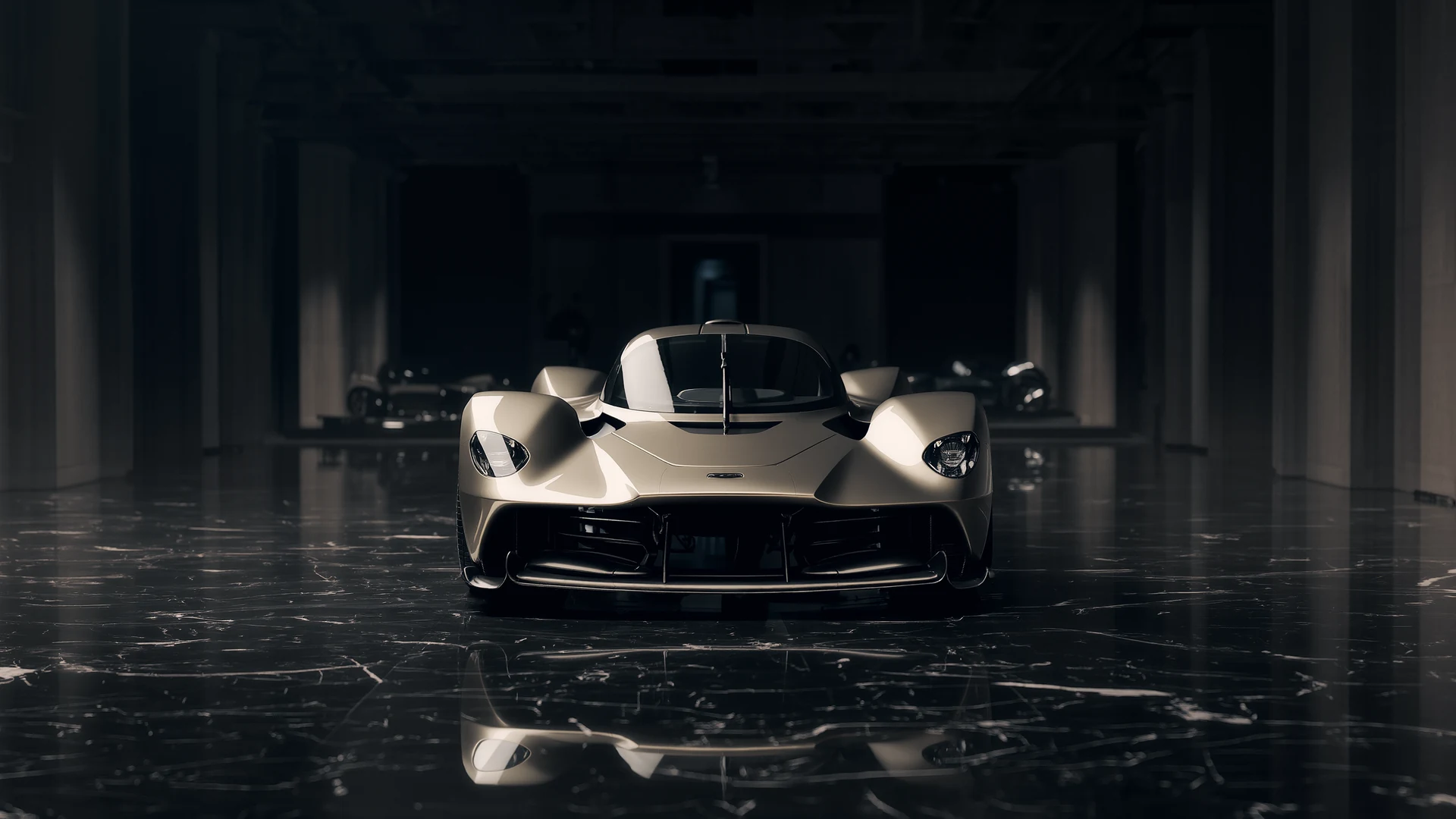
Hypercars are a top-performing alternative asset, with select models appreciating over 500% within five years and the Knight Frank index showing 185% growth from 2012 to 2022.
Key Takeaways
- The Knight Frank Luxury Investment Index recorded a 185% rise in classic and hypercar values between 2012 and 2022, versus 91% for art and 53% for gold over the same period.
- Deliberate scarcity drives value: the entire hypercar industry of Bugatti, Koenigsegg, Pagani, Rimac and others builds fewer than 500 cars per year, while roughly 30 million millionaires exist globally.
- The Ferrari LaFerrari, originally priced at 1.2 million euros, now trades at 3.5 to 4.5 million euros for coupes, representing roughly 300% appreciation over a decade and an annualized return above 12%.
- The Porsche Carrera GT, originally 440,000 dollars and once down to the 300,000 dollar range, now commands 1.8 to 2.5 million dollars for sub-1,000-mile examples.
- Annual ownership costs run 8% to 15% of a car's value, with a Chiron tire set costing about 40,000 dollars and tire-plus-wheel replacement exceeding 100,000 dollars.
- Optimal holding periods span 5 to 10 years, with the best buying window in the 'trough of disillusionment' 3 to 5 years after a model's introduction.
- Final-run combustion hypercars like the GMA T.50, Pagani Utopia and Aston Martin Valkyrie may earn a 'last of the analog' premium as electrification reshapes the category.
Hypercars have emerged as one of the most compelling alternative asset classes of the 21st century. With select models appreciating over 500% within five years of delivery, discerning collectors increasingly view these extraordinary machines through a dual lens, as objects of profound passion and as serious investment vehicles capable of outperforming traditional asset classes. This comprehensive guide explores every dimension of hypercar investment, from market fundamentals to portfolio construction.
Understanding Hypercar Market Dynamics
The hypercar investment thesis rests on a fundamental economic principle: deliberate scarcity meeting accelerating global wealth creation. Understanding this intersection requires examining both supply-side constraints and demand-side forces that have created one of the most remarkable asset appreciation stories in modern history.
The Scarcity Mechanism
Hypercar manufacturers operate on a business model fundamentally different from traditional automakers. Where Toyota produces over 10 million vehicles annually, the entire hypercar industry, encompassing Bugatti, Koenigsegg, Pagani, Rimac, and a handful of others, produces fewer than 500 cars per year combined. This is not accidental; it is the core of the value proposition.
Bugatti limited the Veyron to 450 units across all variants. The Chiron family is capped at 500 cars. Koenigsegg builds approximately 35 vehicles annually, with specific models like the Jesko Absolut restricted to 125 examples. Pagani has produced fewer than 500 cars in its entire three-decade history. Each Rimac Nevera, all 150 planned units, was spoken for before the first customer delivery.
The Psychology of Exclusivity
This scarcity operates on multiple psychological levels. For the buyer, owning one of 99 Pagani Utopias confers membership in a club more exclusive than any country club or social registry. For the market, constrained supply creates a permanent imbalance, there are approximately 30 million millionaires globally, but only a few thousand hypercars ever produced. Even if only 0.1% of high-net-worth individuals desire a hypercar, demand exceeds supply by orders of magnitude.
Wealth Creation and Global Demand
The Knight Frank Luxury Investment Index has tracked hypercars and classic cars as the top-performing luxury asset class over the past decade, outpacing art, wine, watches, and gold. Between 2012 and 2022, the index recorded a 185% increase in classic and hypercar values, compared to 91% for art and 53% for gold over the same period.
This performance is fueled by unprecedented wealth creation. The number of ultra-high-net-worth individuals (those with $30 million or more in net assets) has grown by over 50% in the past decade according to Credit Suisse and Knight Frank data. Markets in the Middle East, Southeast Asia, and North America continue producing new collectors who view hypercar ownership as both cultural currency and store of value.
What Makes a Hypercar Appreciate
Not every hypercar becomes a blue-chip asset. Understanding the specific factors that drive appreciation separates successful investors from hopeful speculators. These factors operate in concert, and the most valuable hypercars typically score highly across multiple dimensions.
Rarity and Production Numbers
Rarity is the foundational driver of hypercar value. Within this category, multiple tiers of scarcity create a hierarchy of investment potential. Standard production models, the baseline Chiron, the standard Aventador successor, may hold value but rarely deliver exponential returns. Limited editions with triple-digit production runs occupy the middle tier: the Bugatti Divo (40 units), the McLaren Speedtail (106 units), the Aston Martin Valkyrie (150 coupes).
The true investment-grade hypercars exist in the single-digit and one-off categories. The Bugatti La Voiture Noire exists as a single example. The Rolls-Royce Boat Tail was produced in three individually commissioned units. The Pagani Zonda HP Barchetta saw only three examples built. These cars operate under different economic rules entirely, where value is determined not by comparables but by the depth of a single buyer’s desire.
Special Editions and Final-Run Variants
Manufacturers strategically create value through special editions that commemorate milestones or mark the end of a model’s production. The Bugatti Centodieci, limited to 10 units celebrating the brand’s 110th anniversary, sold out immediately at €8 million each. The Lamborghini Aventador LP 780-4 Ultimae, the final pure-V12 Aventador, saw its 600-unit production run (350 coupes, 250 roadsters) sell out instantly. Final-run variants typically command 30bis50% premiums over equivalent non-final models that preceded them.
Provenance and Ownership History
A hypercar’s ownership history can multiply its value several times over. Provenance operates on multiple levels: celebrity ownership, historical significance, and chain of custody. A Ferrari 250 GTO owned by Ralph Lauren or a McLaren F1 that belonged to Elon Musk carries a provenance premium that can reach seven figures.
Factory-affiliated provenance matters equally. Cars retained by the manufacturer’s founding family. Horacio Pagani’s personal Zonda HP Barchetta, Christian von Koenigsegg’s development vehicles, acquire almost mythical status among collectors. Similarly, show cars, concept vehicles, and first-production examples (VIN 001) consistently outperform later examples of the same model.
Originality and Documentation
The collector market penalizes modifications heavily. A hypercar with its original engine, original paint, factory-correct interior, and complete service documentation will always trade at a premium to a modified or restored example. Even period-correct modifications by respected tuning houses (Mansory, Novitec, Brabus) typically reduce rather than enhance investment value.
Complete documentation: the original window sticker, factory build sheet, service records, owner’s manuals, tool kits, and even original sales correspondence, can add 10bis15% to a hypercar’s market value. This “book and tool” premium reflects the collector’s desire for completeness and authenticity.
Technological and Historical Milestones
Cars that represent technological inflection points consistently become the most valuable examples in any manufacturer’s history. The Porsche 918 Spyder introduced hybrid hypercar technology to the mainstream and has appreciated substantially from its $845,000 base price. The McLaren P1 demonstrated the potential of electrification in a performance context. The Bugatti Veyron 16.4 established the modern hypercar template, 1,000+ horsepower, 400+ km/h, million-plus price, and the final examples now trade significantly above their original prices.
Historical Performance: Case Studies in Appreciation
Examining specific appreciation trajectories provides the most compelling evidence for hypercars as investment assets. These case studies span different manufacturers, eras, and price points, demonstrating that the pattern is industry-wide rather than brand-specific.
The Ferrari LaFerrari (2013)
Originally priced at €1.2 million, the LaFerrari represented Ferrari’s entry into the hybrid hypercar trinity alongside the McLaren P1 and Porsche 918 Spyder. Only 499 coupes and 210 Apertas were produced. Current market values range from €3.5 million to €4.5 million for standard coupes, with Apertas commanding €5 million to €7 million. This represents approximately 300% appreciation over a decade, an annualized return exceeding 12%.
The McLaren P1 (2013bis2015)
With an original price of £866,000 and 375 units produced, the P1 has seen values climb to £1.2bis1.8 million depending on specification and mileage. Cars with MSO (McLaren Special Operations) bespoke features command the upper end of this range. The P1 GTR track-only variant (58 units) has followed a more volatile trajectory but represents an even rarer investment opportunity.
The Porsche Carrera GT (2003bis2007)
The Carrera GT illustrates the long-term appreciation potential of landmark hypercars. Originally priced at $440,000, examples with significant mileage depreciated to the $300,000 range during the 2008bis2012 period. Today, even higher-mileage cars command $1.2bis1.5 million, while sub-1,000-mile examples trade between $1.8 million and $2.5 million. The Carrera GT’s V10 engine, derived from Porsche’s abandoned Le Mans program, and its reputation as the last analog hypercar have driven this appreciation.
The Ford GT (2017bis2022)
Ford’s modern GT demonstrates that American manufacturers can compete in the hypercar investment arena. The application process alone, Ford received over 6,500 applications for 1,350 planned cars, signaled extraordinary demand. Original MSRP was approximately $500,000; Heritage Editions and low-mileage examples now trade above $1.5 million, with the ultra-rare Gulf-liveried Heritage models approaching $2 million.
The Bugatti Veyron 16.4 (2005bis2015)
The car that created the modern hypercar category has followed an interesting trajectory. Early Veyrons depreciated significantly during the 2008bis2015 period as the Chiron’s announcement created anticipation. However, the final Grand Sport Vitesse and limited-edition Legend models have since appreciated substantially. A well-chosen Veyron Grand Sport Vitesse “La Finale”, the last Veyron built, represents perhaps the most undervalued entry point into hypercar collecting.
Building a Hypercar Investment Portfolio
Approaching hypercar collecting with an investor’s discipline requires strategy, patience, and extensive market knowledge. The most successful collectors treat their acquisitions with the same rigor they would apply to any alternative investment.
Defining Your Investment Thesis
Every serious hypercar portfolio begins with a clearly articulated thesis. Marque-specific collectors focus on a single manufacturer, an all-Ferrari or all-Pagani collection that benefits from deep brand knowledge and community relationships. Era-specific collectors target particular periods, such as the 2013bis2015 hybrid hypercar trinity or the early-2000s analog supercar era. Technology-specific collectors pursue cars that represent particular engineering breakthroughs, hybrid systems, carbon fiber construction, active aerodynamics.
Diversification Within the Category
Even within hypercars, diversification matters. A balanced portfolio might include: one established appreciating asset (LaFerrari, P1, 918 Spyder), one newer model with appreciation potential (Koenigsegg Jesko, GMA T.50), one analog icon (Carrera GT, Zonda), and one high-risk/high-reward allocation (limited-edition modern hypercar, special commission). This approach hedges against model-specific market corrections while maintaining exposure to the broader appreciation trend.
Accessing Allocations at MSRP
The most reliable path to hypercar investment returns is acquiring cars at manufacturer’s suggested retail price. This requires relationships with franchised dealers and, increasingly, direct relationships with manufacturers themselves. Ferrari’s allocation system is legendary for its complexity, prospective buyers must demonstrate ownership history, brand loyalty, and often purchase several “entry” models before being offered halo-car allocations.
Koenigsegg, Pagani, and Rimac operate more direct-to-collector models, but the principle remains: the desirable allocations go to existing customers. Building these relationships requires attending manufacturer events, participating in owner communities, and demonstrating genuine passion beyond pure investment motivation. Manufacturers actively screen for flippers and may blacklist buyers who resell cars too quickly.
Market Timing and Holding Periods
Hypercar investment horizons typically span 5bis10 years for optimal returns. The initial post-delivery period often sees a speculative “flipper premium”, buyers who secured allocations at MSRP immediately resell at 20bis50% markups. However, the most significant appreciation occurs in years 5bis10, after the initial speculative activity settles and long-term holders consolidate supply.
The optimal purchase window for maximum appreciation is typically the “trough of disillusionment”, the period 3bis5 years after a model’s introduction, when initial excitement has faded but long-term scarcity value has not yet fully materialized. The Carrera GT’s $300,000 trough represented the greatest buying opportunity in modern hypercar history.
Risks, Costs, and Practical Considerations
Hypercar investment carries unique risks and costs that prospective buyers must understand thoroughly before committing capital. These factors differentiate hypercar investing from more conventional asset classes.
Carrying Costs and Maintenance
Annual ownership costs for a hypercar typically range from 8% to 15% of the vehicle’s value. Insurance for a $3 million hypercar can cost $30,000bis50,000 annually. Climate-controlled storage adds $5,000bis15,000 per year. Routine maintenance, annual services, tire replacements (a Chiron tire set costs approximately $40,000), battery conditioning, can reach $20,000bis50,000 annually even without significant driving.
Bugatti requires owners to replace the Chiron’s tires every 2,500 miles and the wheels every 10,000 miles at a combined cost exceeding $100,000. The Pagani Zonda’s titanium hardware requires specialized torque procedures. These costs erode overall returns and must be modeled into any investment projection.
Liquidity Constraints
Hypercars are inherently illiquid assets. Selling a $3 million hypercar typically requires 3bis12 months, even in strong markets. The buyer pool for any individual car may number in the dozens globally. Auction sales provide visibility but carry 10bis12% seller’s commissions. Private sales avoid commissions but require the seller to find and vet buyers independently.
Market downturns amplify liquidity problems. During the 2008bis2009 financial crisis, even blue-chip hypercars saw transaction volumes collapse, with sellers forced to accept significant discounts or withdraw from the market entirely. The COVID-19 pandemic initially threatened a similar dynamic before unprecedented monetary stimulus flooded the market with liquidity and drove prices to new records.
Model-Specific Risks
Not every hypercar appreciates. The McLaren Senna (2018) initially traded above MSRP due to speculative demand but subsequently corrected as supply proved more abundant than anticipated. Hybrid and electric hypercars face uncertainty around battery degradation and long-term drivetrain sustainability. Cars with significant accident history or missing documentation can trade at 30bis50% discounts to comparable examples.
Regulatory and Geographic Considerations
Import regulations, emissions standards, and registration requirements vary dramatically by jurisdiction and can dramatically impact a hypercar’s marketability. The Mercedes-AMG ONE’s complex F1-derived powertrain has created homologation challenges in multiple markets. Cars legal in one jurisdiction may be effectively worthless in another. The 25-year import rule in the United States creates artificial scarcity for European hypercars not originally federalized.
Fraud and Authentication
As hypercar values climb, the incentive for sophisticated fraud grows. Odometer tampering, undeclared accident damage, clone cars, and fraudulent documentation have all appeared in high-end transactions. Professional inspections, marque specialists, and factory authentication programs are essential components of any acquisition process. The cost of a thorough pre-purchase inspection, typically $5,000bis15,000, is insurance against seven-figure mistakes.
The Role of Community and Network Effects
Hypercar collecting extends far beyond the vehicles themselves into a world of relationships, events, and access that amplifies the value of ownership. The community surrounding these machines constitutes one of the most powerful, and least discussed, dimensions of hypercar investment.
Manufacturer Relationships
Establishing a direct relationship with a hypercar manufacturer opens doors unavailable to the general public. Bugatti invites its owners to private events at the Molsheim atelier, where they meet the engineers and craftspeople who built their cars. Pagani hosts annual gatherings, the “Raduno”, where owners drive their cars through the Italian countryside with Horacio Pagani himself. Koenigsegg offers factory tours that include conversations with Christian von Koenigsegg about future models and technologies still in development.
These relationships translate directly into investment value. Owners with strong manufacturer relationships receive priority access to limited-edition models at MSRP, the single most reliable path to hypercar appreciation. When Bugatti announced the Divo (40 units), existing Chiron owners received first right of refusal. When Koenigsegg unveiled the Jesko, established customers secured allocations before the public knew the car existed.
The Concours Circuit and Value Enhancement
Participation in prestigious concours events, Pebble Beach, Villa d’Este, Goodwood, Amelia Island, enhances a hypercar’s provenance and, by extension, its market value. A class award at Pebble Beach can add 10bis20% to a car’s value and dramatically expand the pool of potential buyers. The judging process itself creates a documented validation of the car’s condition, originality, and significance that serves as a permanent reference for future transactions.
Digital Communities and Market Intelligence
Modern hypercar collecting increasingly depends on digital communities where owners, dealers, and specialists share market intelligence. Private forums, invitation-only social media groups, and messaging networks provide real-time information about available cars, pricing trends, and buyer interest. Access to these networks, typically granted only to verified owners, provides a significant information advantage in a market where public data is sparse and unreliable.
The Future of Hypercar Values
The hypercar market stands at an inflection point. Electrification is transforming powertrain technology, removing the sonorous V8, V10, V12, and W16 engines that defined the category. The final generation of purely internal-combustion hypercars, the GMA T.50, the Pagani Utopia, the Aston Martin Valkyrie, may represent the last of an era, with corresponding implications for long-term values.
The Electrification Transition
Electric hypercars like the Rimac Nevera and Pininfarina Battista have demonstrated that electric powertrains can deliver performance that exceeds their combustion counterparts. However, the collector market has yet to establish whether electric hypercars will appreciate along the same trajectory as their combustion predecessors. Battery degradation, software obsolescence, and the rapid pace of electric vehicle technology advancement all introduce uncertainty.
The Combustion Premium
If regulators ultimately mandate electrification, the final generation of combustion hypercars could experience the most dramatic appreciation in automotive history. The market has already priced in this expectation to some degree, the GMA T.50’s 100-unit production run sold out before the first car was built, with a waitlist extending years. This “last of the analog” premium could define hypercar collecting for the next two decades.
A carefully selected hypercar represents far more than transportation. It is a portable, appreciating store of value, one that happens to deliver one of the most visceral experiences available to human beings. For the investor who combines market knowledge with genuine passion, hypercar collecting offers returns that few other asset classes can match.
Frequently Asked Questions (FAQ)
Are hypercars a good investment compared to art, wine or gold?
Yes, hypercars have outperformed those assets over the past decade. The Knight Frank Luxury Investment Index tracked classic and hypercar values up 185% between 2012 and 2022, compared with 91% for art and 53% for gold. Constrained supply meeting growing global wealth has made them the top-performing luxury asset class.
How much has the Ferrari LaFerrari appreciated since launch?
The Ferrari LaFerrari, originally priced at 1.2 million euros, now ranges from 3.5 to 4.5 million euros for standard coupes, while open-top Apertas command 5 to 7 million euros. That is roughly 300% appreciation over a decade, an annualized return exceeding 12%. Only 499 coupes and 210 Apertas were produced.
What factors make a hypercar appreciate in value?
Rarity is the foundational driver, followed by special and final-run editions, provenance such as celebrity or founding-family ownership, and originality. Cars retaining their original engine, paint and complete documentation trade at a premium. Technological milestones, like the hybrid Porsche 918 Spyder or the Bugatti Veyron, also consistently boost long-term value.
What are the annual costs of owning a hypercar?
Annual ownership costs typically run 8% to 15% of the vehicle's value. Insurance for a 3 million dollar hypercar can reach 30,000 to 50,000 dollars, climate-controlled storage adds 5,000 to 15,000 dollars, and maintenance can reach 50,000 dollars. A Bugatti Chiron tire set alone costs about 40,000 dollars.
How long should you hold a hypercar to maximize returns?
Hypercar investment horizons typically span 5 to 10 years for optimal returns. An early 'flipper premium' of 20 to 50% appears just after delivery, but the most significant appreciation occurs in years five through ten once speculation settles. The best buying window is the 'trough of disillusionment' three to five years after launch.
Why are hypercars so scarce, and how does that affect prices?
Scarcity is deliberate and central to the value proposition. The entire hypercar industry produces fewer than 500 cars per year combined, while around 30 million millionaires exist globally. Bugatti capped the Chiron family at 500, Koenigsegg builds about 35 cars annually, and one-offs like the La Voiture Noire exist as a single example.
What are the main risks of investing in hypercars?
Hypercars are illiquid, often taking 3 to 12 months to sell, and auctions carry 10 to 12% commissions. Not every model appreciates; the McLaren Senna corrected after early speculation. Other risks include accident history or missing documentation causing 30 to 50% discounts, plus fraud, and regulatory and import barriers that vary by jurisdiction.
Will electric hypercars appreciate like combustion models?
It remains uncertain. Electric hypercars like the Rimac Nevera and Pininfarina Battista deliver outstanding performance, but the collector market has not yet established whether they will follow the same appreciation path. Battery degradation, software obsolescence and rapid technology change introduce risk, while final combustion hypercars may earn a 'last of the analog' premium.
How have hypercars performed as an investment compared with other assets?
What drives a hypercar to appreciate in value?
What are the ongoing costs and ideal holding period for a hypercar investment?
More from Blog
The Future of Hypercars: Electrification, Autonomy, and the Next Performance Frontier
The future of hypercars: how electrification, solid-state batteries, hybrid V16 powertrains, 3D printing, active aero, autonomy and eFuels redefine pe…
Hypercar Maintenance Guide: The True Cost of Keeping an Automotive Masterpiece on the Road
Hypercar maintenance guide: real annual service costs from Bugatti and Koenigsegg to Pagani and Rimac, plus tire, brake and resale-value insights for …
Hypercar Events Worldwide: The Ultimate Calendar for Collectors and Enthusiasts
Hypercar events worldwide: a collector’s calendar from Monterey Car Week and Goodwood to Villa d’Este, Top Marques Monaco, elite rallies a…