Bugatti Complete Guide: The Definitive History and Future of the World’s Most Prestigious Hypercar Brand
Bugatti complete guide: the definitive history from Ettore Bugatti’s 1909 Molsheim workshop and the Type 35 to the Veyron, Chiron, and 1,800-PS V16 Tourbillon.…
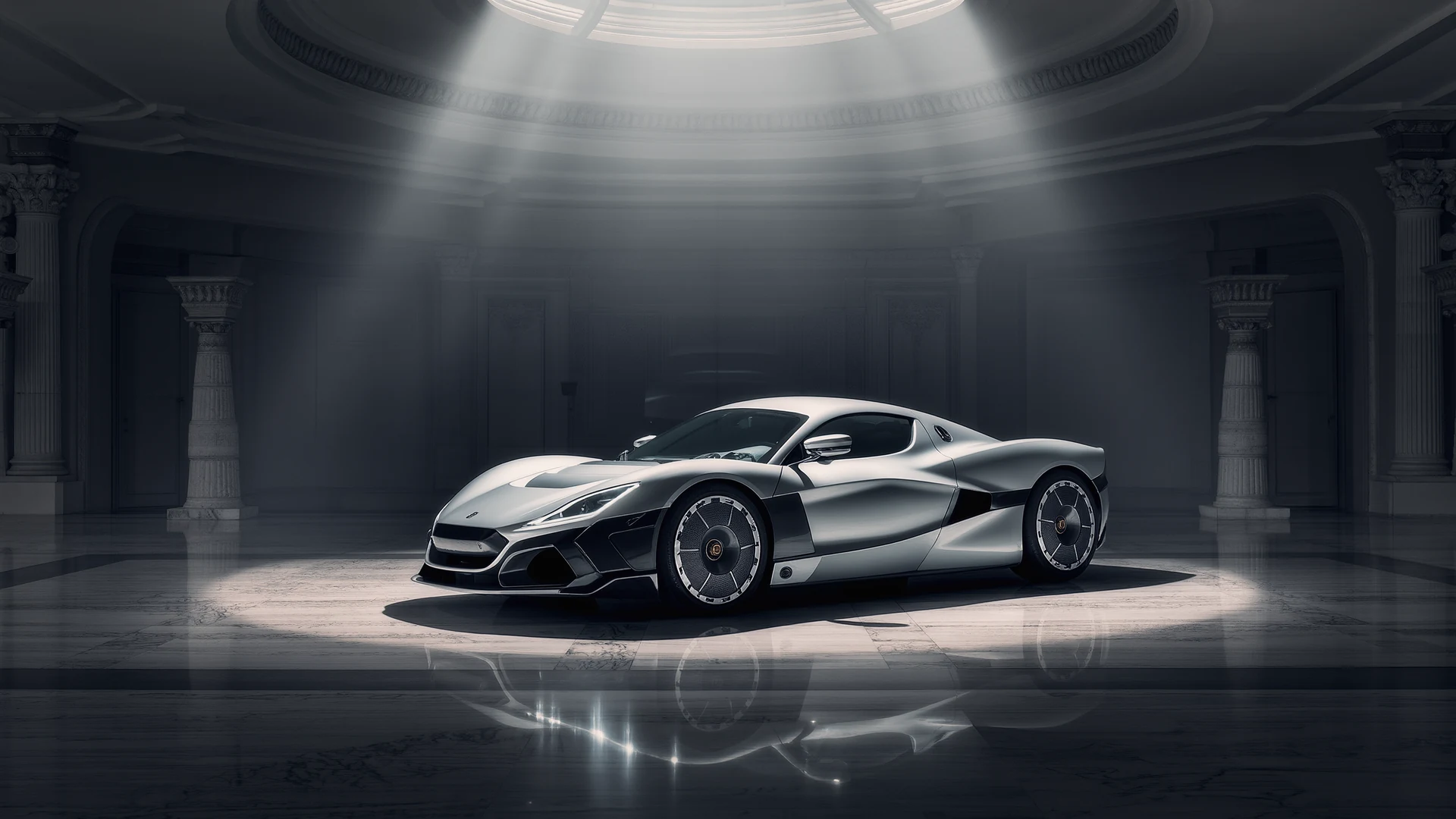
Founded by Ettore Bugatti in Molsheim in 1909, Bugatti has defined the limit of the road car across 115 years, from the racing Type 35 to the 1,800-PS V16 hybrid Tourbillon.
Key Takeaways
- Ettore Bugatti established his factory in 1909 in Molsheim, Alsace, and the Type 13 became the marque's first production model in 1910 with a 1.3-liter four-cylinder engine.
- The Bugatti Type 35, introduced in 1924, amassed over 2,000 race victories and won the Targa Florio five consecutive times from 1925 to 1929, with about 340 examples built.
- Only six of a planned 25 Type 41 Royales were completed, each now valued at $15 million to $20 million or more after the 1929 Wall Street Crash crushed demand.
- Volkswagen Group, under Ferdinand Piech, acquired Bugatti in 1998 and produced the 1,001-PS quad-turbo W16 Veyron, which reached 431.072 km/h in Super Sport form in 2010.
- The Chiron Super Sport 300+ broke the 300-mph barrier in 2019 with Andy Wallace driving 490.484 km/h, the first production-derived car to exceed 300 miles per hour.
- Mate Rimac unveiled the Tourbillon on June 20, 2024, the first new Bugatti in 20 years, powered by a naturally aspirated 8.3-liter Cosworth V16 hybrid producing 1,800 PS.
- La Voiture Noire, a one-of-one Type 57 SC Atlantic tribute priced at about 11 million euros before taxes, became the most expensive new car ever sold.
Introduction: The Apex of Automotive Excellence
Bugatti stands alone at the summit of the automotive world: not merely a hypercar manufacturer, but the embodiment of an ideal that has endured for over 115 years. From Ettore Bugatti’s Molsheim workshop in 1909 to the 1,800-horsepower V16 hybrid Tourbillon of 2026, no other marque has so consistently defined the absolute limit of what a road car can be. This guide traces every era: the racing dominance, the near-extinction, the Volkswagen Group resurrection, the Rimac-led hybrid future, and every milestone in between.
Part I: The Classic Era (1909bis1963)
Ettore Bugatti: The Artist-Engineer
Ettore Arco Isidoro Bugatti was born in Milan in 1881 to a family of artists and designers. His father, Carlo Bugatti, was a renowned furniture and jewelry designer in the Art Nouveau style; his brother Rembrandt was a celebrated sculptor. Ettore absorbed this aesthetic sensibility and fused it with a mechanical genius that would produce some of the most beautiful and technically advanced automobiles ever built.
At just 17, Ettore built his first vehicle: a motorized tricycle. By 1901 he had produced his first proper automobile, the Bugatti Type 2, which won a prize at the Milan International Exhibition. After a stint designing for Deutz in Cologne, Ettore established his own factory in 1909 in Molsheim, Alsace, then part of Germany, later returning to France after World War I. The Molsheim facility would become hallowed ground for automotive connoisseurs.
The Type 13 and Early Success
Bugatti’s first production model, the Type 13, debuted in 1910 with a lightweight 1.3-liter four-cylinder engine producing roughly 15 horsepower. What it lacked in raw power it made up for in handling precision and Ettore’s obsessive attention to weight reduction. The Type 13 finished second at the 1911 French Grand Prix, announcing Bugatti as a serious competitor. A revised Type 13 Brescia would go on to claim the top four positions at the 1921 Brescia Grand Prix, cementing the model’s legendary status.
The Type 35: Racing’s Greatest Generation
Design and Engineering
The Bugatti Type 35, introduced in 1924, is widely considered the most successful racing car in history. Its 2.0-liter straight-eight engine featured an innovative three-valve-per-cylinder head, a five-main-bearing crankshaft, and Bugatti’s signature hollow front axle that reduced unsprung weight. The aluminum-spoked wheels were an engineering marvel, the spokes were machined from solid billets and the brake drums were integral to the wheel castings.
Competition Record
Between 1924 and 1931, Type 35 variants amassed an astonishing over 2,000 race victories, a record no single model has ever approached. The car won the Targa Florio five consecutive times (1925bis1929) and the Monaco Grand Prix in its inaugural 1929 running. The supercharged Type 35B produced 130 horsepower and could reach over 200 km/h (124 mph), extraordinary figures for the 1920s. Approximately 340 examples were built across all Type 35 variants (35, 35A, 35C, 35T, 35B), and surviving examples now command $3 million to $8 million at auction.
The Type 41 Royale: The Ultimate Statement
A Car for Kings
Ettore Bugatti conceived the Type 41 Royale as the ultimate luxury automobile, intended exclusively for royalty and heads of state. The project was born of hubris, Ettore believed he could sell 25 examples to Europe’s monarchs. It featured a 12.7-liter straight-eight engine producing approximately 300 horsepower, with a wheelbase of 4.3 meters (169 inches), longer than a modern Rolls-Royce Phantom. Each Royale cost roughly $30,000 in 1929 (equivalent to over $500,000 today), making it the most expensive car in the world.
Production Reality and Legacy
The timing proved catastrophic. The Wall Street Crash of 1929 and subsequent Great Depression decimated the market for ultra-luxury goods. Only six Type 41 Royales were completed out of a planned 25. All six survive today and each is valued at $15 million to $20 million or more. One example, the Weinberger Cabriolet, sold for $9.8 million as early as 1986, then the highest price ever paid for an automobile. The Royale’s engine would later find a second life powering French railcars in the 1930s.
Post-War Decline and the End of an Era
Ettore’s Final Years
World War II devastated Bugatti. The Molsheim factory was seized by German forces, and Ettore, an Italian citizen in German-occupied France, found himself in a precarious position. After the war, Ettore attempted to revive production with the Type 73 and Type 101, but the spark was gone. Ettore Bugatti died on August 21, 1947, at the age of 65. He was buried in the Bugatti family plot in Dorlisheim, near Molsheim.
The Long Twilight
Ettore’s son Roland attempted to keep the company alive through the 1950s, producing a handful of Type 101 chassis and briefly attempting an ill-fated venture into aircraft components. The last Bugatti automobile of the original era, a Type 251 Formula One car with a transverse mid-engine design, competed in the 1956 French Grand Prix but proved uncompetitive. Bugatti effectively ceased automobile production in 1956, though the company wasn’t formally dissolved until 1963, when Hispano-Suiza acquired the remnants for aerospace manufacturing.
Part II: The Wilderness Years and Resurrection (1963bis2005)
Failed Revivals and Italian Interlude
The Bugatti name lay dormant through the 1960s and 1970s. Several entrepreneurs attempted to revive the marque: Virgil Exner designed a speculative Bugatti revival concept in the 1960s; various parties acquired rights to the name for limited production runs. The most significant attempt came in 1987 when Italian entrepreneur Romano Artioli purchased the Bugatti trademark and established Bugatti Automobili S.p.A. in Campogalliano, Italy, not Molsheim.
The EB 110: A Brief Italian Renaissance
Artioli’s Bugatti EB 110 (the “EB” honoring Ettore Bugatti on what would have been his 110th birthday) was a technological marvel for its era. It featured a 3.5-liter quad-turbocharged V12 producing 553 horsepower (SS version: 603 hp), all-wheel drive, and a carbon-fiber monocoque chassis, among the first production cars to use carbon fiber structurally. The EB 110 could accelerate from 0-60 mph in 3.2 seconds and reach a top speed of 342 km/h (212 mph), making it the fastest production car in the world at its 1991 launch.
Only 139 examples were built between 1991 and 1995. The company collapsed during the early-1990s recession, with Artioli filing for bankruptcy in 1995. The Campogalliano factory was abandoned and later became an industrial museum. The EB 110, however, had proven that the Bugatti name still carried tremendous cachet.
Volkswagen Group Acquisition: The Turning Point
In 1998, Volkswagen Group Chairman Ferdinand Piëch, grandson of Ferdinand Porsche, acquired the Bugatti trademark and established Bugatti Automobiles S.A.S. back in Molsheim, France. Piëch’s vision was audacious: build the fastest, most powerful, most luxurious production car ever made, with no compromises. He famously issued an edict that became the Veyron’s founding brief: create a car with 1,000 PS (987 hp), capable of over 400 km/h (249 mph), and refined enough to be driven to the opera.
What followed was one of the most expensive and technically ambitious automotive development programs in history, and one that nearly bankrupted the project before it ever reached production.
Part III: The Modern Revival: Veyron (2005bis2015)
The Impossible Brief
The Veyron program, internally designated Project 400, consumed over five years of development and an estimated €1.6 billion in Volkswagen Group investment. The engineering challenges were staggering: generating 1,001 PS required a bespoke 8.0-liter W16 engine with four turbochargers; cooling that engine demanded 10 radiators; dissipating 3,000 horsepower of thermal energy at top speed required radiators the size of a small apartment. The transmission, a 7-speed dual-clutch gearbox developed by Ricardo, had to handle 1,250 Nm (922 lb-ft) of torque reliably.
The Name
The car was named for Pierre Veyron, a Bugatti test driver and engineer who won the 1939 24 Hours of Le Mans alongside Jean-Pierre Wimille in a Bugatti Type 57S Tank. The connection to Bugatti’s racing heritage was intentional, Volkswagen wanted to honor the past while obliterating every existing speed record.
Veyron 16.4: The Original (2005bis2011)
Specifications and Performance
- Engine: 8.0-liter quad-turbocharged W16, 1,001 PS (987 hp) @ 6,000 rpm
- Torque: 1,250 Nm (922 lb-ft) @ 2,200bis5,500 rpm
- Transmission: 7-speed dual-clutch (DSG), all-wheel drive
- 0bis100 km/h (0bis62 mph): 2.5 seconds
- 0bis200 km/h (0bis124 mph): 7.3 seconds
- 0bis300 km/h (0bis186 mph): 16.7 seconds
- Top speed: 407 km/h (253 mph), electronically limited; 408.47 km/h was recorded
- Curb weight: 1,888 kg (4,162 lbs)
- Base price (2005): €1,225,000 (approximately $1.5 million USD)
The Veyron required a special “top speed” key to unlock its maximum velocity. At 375 km/h, the car automatically lowered by 65mm front and 70mm rear, the rear wing retracted to 2 degrees, and front diffusers closed to reduce drag. In this configuration, the Veyron consumed its 100-liter fuel tank in 12 minutes at top speed and its tires, specially developed by Michelin at a cost of $42,000 per set, would last just 15 minutes.
Production and Variants
A total of 450 Veyron 16.4 coupes were built. Special editions proliferated: the Pur Sang (unpainted carbon-aluminum bodywork), the Sang Noir (blacked-out tribute to the Type 57 Atlantic), the Fbg par Hermès (a collaboration with the French luxury house), and the Sang d’Argent among countless personalized commissions. Each special edition sold out before production began.
Veyron Grand Sport (2009bis2015)
The Grand Sport targa-top variant debuted in 2009, offering open-air motoring with a removable polycarbonate roof. Even without the roof, the Grand Sport achieved 407 km/h with the top off and 360 km/h with the temporary soft-top in place. A total of 150 Grand Sports were produced. The Grand Sport Vitesse, equipped with the Super Sport’s 1,200 PS engine, arrived in 2012, establishing itself as the world’s fastest open-top production car at 408.84 km/h (254.04 mph). The Grand Sport Vitesse World Record Car edition, limited to just 8 units, commemorated this achievement.
Veyron Super Sport (2010bis2011)
The 431 km/h Record
In July 2010, the Veyron Super Sport shattered the production-car speed record at Volkswagen’s Ehra-Lessien test track. With Bugatti test driver Pierre-Henri Raphanel at the wheel and Guinness World Records officials present, the Super Sport achieved a two-way average of 431.072 km/h (267.856 mph). The record run was done on the car’s standard Michelin Pilot Sport 2 tires, not racing rubber. Power output rose to 1,200 PS (1,184 hp), torque to 1,500 Nm (1,106 lb-ft), and aerodynamic refinements including larger NACA ducts and a revised front end reduced drag.
Customer cars were electronically limited to 415 km/h (258 mph) to preserve tire integrity. Only 30 Veyron Super Sports were produced, making it the rarest Veyron variant. The Super Sport’s record stood until 2017, when Koenigsegg‘s Agera RS claimed 447.19 km/h, though Bugatti later reclaimed the honor with the Chiron Super Sport 300+.
The Veyron’s Business Case and Legacy
Despite the staggering development costs, the Veyron served its purpose: it re-established Bugatti as the undisputed pinnacle of automotive engineering. Every Veyron was sold at a loss, estimates suggest Volkswagen lost €4bis6 million per car, but the halo effect across the entire Group’s engineering capabilities and the brand value restored to Bugatti were deemed incalculable. When the final Veyron, a Grand Sport Vitesse “La Finale”, left Molsheim in February 2015, exactly 450 cars had been delivered over a decade, generating approximately €1.5 billion in revenue.
Part IV: The Chiron Era (2016bis2024)
Exceeding the Impossible
If the Veyron was about proving what was possible, the Bugatti Chiron, unveiled at the 2016 Geneva Motor Show, was about refining that possibility into art. Named after Louis Chiron, the Monegasque driver who won the 1931 French Grand Prix for Bugatti and remains the oldest driver to win a Formula One race, the Chiron moved the goalposts again.
Core Specifications
- Engine: 8.0-liter quad-turbocharged W16, 1,500 PS (1,479 hp) @ 6,700 rpm
- Torque: 1,600 Nm (1,180 lb-ft) @ 2,000bis6,000 rpm
- Transmission: 7-speed dual-clutch, all-wheel drive
- 0bis100 km/h: 2.4 seconds
- 0bis200 km/h: 6.1 seconds
- 0bis300 km/h: 13.1 seconds
- 0bis400 km/h: 32.6 seconds (a full 7 seconds faster than the Veyron)
- Top speed: Electronically limited to 420 km/h (261 mph)
- Curb weight: 1,996 kg (4,400 lbs)
- Base price (2016): €2.4 million (approximately $2.6 million)
- Production run: 500 units (all variants)
The Chiron’s engine, an evolution of the Veyron’s W16, featured a redesigned intake and exhaust system, larger turbochargers, 32 fuel injectors, and a titanium exhaust system that required 6.7 km (4.2 miles) of welding per unit. Each engine was hand-assembled by just two technicians over the course of six days at the “Atelier” in Molsheim.
Chiron Sport (2018)
The Chiron Sport added sharper handling without increasing power output. Weight reduction of 18 kg (40 lbs) came from carbon-fiber wiper arms, a carbon intercooler cover, lighter wheels, and a lighter rear glass pane. A stiffer suspension, torque-vectoring rear differential, and the “Dynamic Torque Vectoring” system allowed the Sport to lap the Nardò handling circuit 5 seconds faster than the standard Chiron. Price: approximately €2.65 million.
Chiron Super Sport 300+ (2019): The 304-MPH Barrier
On August 2, 2019, at Volkswagen’s Ehra-Lessien test track, test driver Andy Wallace piloted a pre-production prototype of the Chiron Super Sport 300+ to an extraordinary 490.484 km/h (304.773 mph). This marked the first time any production-derived car had exceeded 300 miles per hour.
The record-setting car featured an elongated, aerodynamically optimized body stretched by 25 cm (9.8 inches) compared to the standard Chiron, producing net downforce at speed through carefully managed airflow, a radical departure from the Veyron’s low-drag, low-downforce top-speed philosophy. Power rose to 1,600 PS (1,578 hp). To honor the achievement, Bugatti produced 30 customer examples of the Super Sport 300+, priced at €3.5 million each. Customer cars were electronically capped at 440 km/h (273 mph) to preserve tire safety.
Divo (2018bis2021): The Handling Specialist
The Bugatti Divo, named after French racing driver Albert Divo (a two-time Targa Florio winner for Bugatti), represented a philosophical shift: lateral dynamics over outright top speed. With the same 1,500 PS W16 as the Chiron, the Divo was engineered to be 35 kg (77 lbs) lighter with 90 kg (198 lbs) more downforce at speed. The result: the Divo lapped the Nardò circuit 8 seconds faster than the Chiron Sport.
Only 40 units were produced, and every one was pre-sold at €5 million each before the Divo was officially unveiled. The Divo’s radically sculpted bodywork, with its NACA duct roof intake, vertical fin rear light signature, and aggressive rear diffuser, made it one of the most visually striking Bugattis of the modern era.
Centodieci (2022): Tribute to the EB 110
Unveiled at the 2019 Pebble Beach Concours d’Elegance, the Bugatti Centodieci (Italian for “110”) celebrated the marque’s 110th anniversary and paid homage to Romano Artioli’s EB 110. Its design language reinterpreted the EB 110’s flat silhouette, five-round-intake front end, and wedge profile in a modern hypercar form. Under the skin, the Centodieci used the Chiron’s W16 producing 1,600 PS (1,578 hp), with a 20 kg weight reduction over the standard Chiron.
Production was capped at just 10 units, each priced at €8 million. The first customer delivery occurred in June 2022, and all ten were spoken for long before production began. The 0bis100 km/h time dropped to a staggering 2.4 seconds, and 0bis300 km/h took just 13.1 seconds.
La Voiture Noire (2019bis2022): The Most Expensive New Car Ever
Bugatti’s La Voiture Noire (“The Black Car”) was revealed at the 2019 Geneva Motor Show as a one-of-one tribute to Jean Bugatti’s personal Type 57 SC Atlantic, the legendary “La Voiture Noire” that disappeared during World War II and remains one of the greatest “lost” automobiles in history.
With a reported price of €11 million before taxes (approximately $12.5 million), La Voiture Noire became the most expensive new car ever sold. It featured a hand-crafted carbon-fiber body with a dramatic dorsal fin running from hood to tail, echoing the Atlantic’s signature seam, six exhaust tips, and deeply sculpted flanks. Mechanically, it shared the Chiron’s 1,500 PS W16 engine. The single example was delivered to an anonymous collector in 2022 after over 65,000 engineering hours of development.
Bolide (Concept 2020, Production 2024): The Ultimate Track Weapon
The Bugatti Bolide began as an experimental concept in 2020, a no-compromise track-only hypercar that asked the question: how extreme can a W16-powered car be when unshackled from road regulations? The answer was staggering. The concept promised a power-to-weight ratio of 0.67 kg per PS, with the 8.0-liter W16 producing 1,850 PS (1,824 hp) and a dry weight of just 1,240 kg (2,734 lbs). Simulated lap times predicted the Bolide could lap the Nürburgring Nordschleife in 5:23.1 and Le Mans in 3:07.1, both extraordinary projections that stirred enormous controversy and excitement.
Bugatti announced a production run of 40 track-only Bolides in 2021, with each priced at €4 million. The production version, however, was detuned to 1,600 PS (1,578 hp) running on 98 RON pump fuel. The design featured a roof-mounted air scoop, an aggressive rear diffuser, a central-fin rear light, and motorsport-derived pushrod suspension. Customer deliveries began in 2024. The Bolide’s aerodynamic package generates over 2,600 kg of downforce at 320 km/h, and lateral acceleration exceeds 2.5 G on racing tires.
The Final W16: Mistral and W16 Mistral (2022bis2024)
As Bugatti prepared to retire the W16 engine after two decades of dominance, the company launched the W16 Mistral, a roadster that combined the Chiron Super Sport 300+ body architecture with open-top design. Limited to 99 units at €5 million each, the Mistral represented the final road-going application of the W16. Its name referenced the powerful, cold northwesterly wind that blows through southern France near Molsheim.
On November 14, 2024, a W16 Mistral with Andy Wallace at the wheel achieved 453.91 km/h (282.05 mph) on the ATP Automotive Testing Papenburg high-speed oval in Germany, setting a new record for the fastest open-top production car. The cycle of the W16 era was complete: the Veyron Grand Sport Vitesse had held the record at 408.84 km/h; now Bugatti had shattered its own benchmark by over 45 km/h.
Chiron Production Summary
By the end of 2024, Bugatti had delivered the final Chiron-based vehicles from Molsheim. The complete Chiron-era family totaled:
- Chiron, ~200 units, 1,500 PS, €2,400,000 base price
- Chiron Sport, ~60 units, 1,500 PS, €2,650,000 base price
- Chiron Super Sport 300+, 30 units, 1,600 PS, €3,500,000 base price
- Chiron Pur Sport, 60 units, 1,500 PS, €3,000,000 base price
- Divo, 40 units, 1,500 PS, €5,000,000 base price
- Centodieci, 10 units, 1,600 PS, €8,000,000 base price
- La Voiture Noire, 1 unit, 1,500 PS, €11,000,000 base price
- Bolide, 40 units, 1,600 PS, €4,000,000 base price
- W16 Mistral, 99 units, 1,600 PS, €5,000,000 base price
Part V: The Tourbillon: A New Chapter (2026)
A Clean-Sheet Revolution
On June 20, 2024, Bugatti CEO Mate Rimac unveiled the Bugatti Tourbillon at the company’s Molsheim headquarters, the first entirely new Bugatti in 20 years that wasn’t based on the W16 platform. The name itself is a statement: a tourbillon (French for “whirlwind”) is the most revered complication in haute horlogerie, a mechanism that counteracts gravity’s effects on a watch’s accuracy. For Bugatti, it signals a commitment to mechanical excellence that transcends trends, including the industry’s headlong rush toward electrification.
The Engine: A Naturally Aspirated V16 Hybrid
The Tourbillon’s powertrain is the most audacious in automotive history. At its heart sits a naturally aspirated 8.3-liter V16 engine, developed in partnership with Cosworth, the legendary British motorsport engineering firm. Unlike the quad-turbocharged W16 it replaces, this engine breathes without forced induction, revving to a soaring 9,000 rpm and producing 1,000 PS (986 hp) on its own. The sound, a crescendo that automotive journalists who witnessed early prototype runs describe as “otherworldly”, is central to the Tourbillon’s appeal.
The V16 is paired with a triple-electric-motor hybrid system. Two electric motors drive the front axle, providing torque vectoring and all-wheel-drive capability. A third electric motor, integrated into the rear-mounted 8-speed dual-clutch transmission, supplements the combustion engine. Combined output: 1,800 PS (1,775 hp), making the Tourbillon the most powerful production Bugatti ever built.
Battery and Electric Strategy
A 25 kWh oil-cooled battery pack, mounted centrally in a T-shape along the transmission tunnel and behind the seats, provides approximately 60 km (37 miles) of pure electric range. The battery is not intended for long-distance EV driving, it exists to enable instant torque delivery, zero-emission urban operation, and to provide the burst of power for the Tourbillon’s staggering performance figures. Total system voltage is 800V, and the battery can accept regenerative braking energy at rates that keep it perpetually charged during spirited driving.
Performance Figures
- Combined output: 1,800 PS (1,775 hp)
- 0bis100 km/h (0bis62 mph): 2.0 seconds
- 0bis200 km/h (0bis124 mph): under 5.0 seconds
- 0bis300 km/h (0bis186 mph): under 10.0 seconds
- 0bis400 km/h (0bis249 mph): under 25.0 seconds
- Top speed: 445 km/h (276 mph), electronically limited; unlimited potential to be explored
- Electric-only top speed: 140 km/h (87 mph)
- Electric range: 60 km (37 miles)
These figures place the Tourbillon ahead of every Bugatti that came before it, including the Chiron Super Sport 300+, in acceleration across every benchmark, while delivering nearly double the power of the original Veyron.
Chassis and Construction
The Tourbillon is built around an all-new carbon-fiber monocoque with a rear subframe constructed from forged aluminum. The entire structure was designed from scratch, no carryover from the Chiron. The suspension uses pushrod-actuated adaptive dampers at all four corners, a system more commonly found in LMP1 and Formula One race cars. Braking is handled by carbon-ceramic discs with massive calipers: 420mm front rotors with 8-piston calipers, 390mm rear rotors with 6-piston calipers.
Weight has been a critical engineering focus. Despite the hybrid system’s added mass, the Tourbillon tips the scales at a targeted 1,995 kg (4,398 lbs), only slightly heavier than the non-hybrid Chiron. The power-to-weight ratio exceeds 0.90 PS per kg, an extraordinary figure for a road-legal luxury hypercar.
Interior: The Horological Cockpit
The Tourbillon’s interior is as radical as its powertrain. In a deliberate rejection of the “tablet-on-dashboard” trend that dominates modern automotive design, Bugatti commissioned Swiss watchmakers to create a fully analog, skeletonized instrument cluster. The titanium and sapphire crystal cluster, containing over 600 individual components and weighing just 700 grams, floats ahead of the steering wheel, remaining stationary while the wheel rim rotates behind it. The speedometer and tachometer needles are hand-finished, visible through multiple layers of sapphire crystal.
The center console features crystal glass surfaces, machined aluminum switchgear, and a hidden digital display that rotates into view only when needed. Even the steering wheel is a work of art, a fixed-hub design with spokes wrapping around the floating instrument cluster.
Production and Pricing
The Tourbillon is limited to 250 units, each priced at €3.8 million (approximately $4.1 million). Deliveries are expected to begin in 2026, following a two-year development and homologation phase. Bugatti reported that the entire production run was pre-sold within weeks of the reveal, before any customer had driven the car or heard the V16 engine in person.
Part VI: The Rimac Era: A New Stewardship
The Bugatti-Rimac Joint Venture
In July 2021, the automotive world witnessed a historic transfer of power. Porsche AG and the Rimac Group announced the formation of Bugatti Rimac d.o.o., a Croatian-registered joint venture in which the Rimac Group holds 55% ownership and Porsche holds 45%. Mate Rimac, the 36-year-old Croatian entrepreneur who founded Rimac Automobili in his garage in 2009, was appointed CEO of both Bugatti Automobiles and the new entity.
The deal marked the end of Volkswagen Group’s 23-year stewardship of Bugatti. Under the arrangement, Bugatti remained headquartered in Molsheim, France, with its Atelier and heritage preserved. All Bugatti intellectual property, manufacturing facilities, and the brand itself transferred to Bugatti Rimac d.o.o. Volkswagen effectively exchanged control for a stake in the most exciting electric hypercar company in the world, with Porsche maintaining operational influence through its 45% stake and its existing 24% holding in the Rimac Group.
Mate Rimac’s Vision
Mate Rimac has repeatedly emphasized that Bugatti will not become an electric-only brand in the near term. “A fully electric Bugatti makes no sense right now,” Rimac told assembled media at the Tourbillon’s unveiling. “The combustion engine, especially one like a V16, is at the heart of what Bugatti represents. Our customers want analog emotion, craftsmanship, and theater.”
This philosophy explains the Tourbillon’s unconventional hybrid approach: using electrification to enhance the combustion experience rather than replace it. Rimac’s own company supplies the Tourbillon’s batteries, electric motors, and power electronics, a seamless fusion of Molsheim’s heritage and Zagreb’s technological prowess.
Porsche’s Continuing Role
Porsche’s 45% stake in Bugatti Rimac and its 24% stake in the Rimac Group give Stuttgart significant influence over Bugatti’s future. Porsche executives sit on the supervisory board, and Porsche’s carbon-fiber expertise, supply chain relationships, and homologation experience contribute directly to Bugatti’s development programs. The arrangement allows Bugatti to function as an independent ultra-luxury house while drawing on Porsche’s industrial might, an evolution of the Volkswagen-era model with a lighter, more agile corporate structure.
Part VII: Cultural Impact and the Mythology of Bugatti
Pop Culture and the Veyron Effect
No hypercar has permeated popular culture quite like the Bugatti Veyron. From its prominence in hip-hop lyrics, mentioned in hundreds of songs by artists including Kanye West, Jay-Z, and Drake, to its central role in video games like the Forza Horizon and Gran Turismo franchises, the Veyron introduced an entire generation to the very concept of a “million-dollar hypercar.” The phrase “Bugatti Veyron” became shorthand for ultimate wealth and speed in a way no Ferrari or Lamborghini ever achieved.
The Chiron extended this cultural dominance. In 2019, the Chiron became a central plot device in the film Ford v Ferrari-adjacent cultural conversation; a custom Chiron appeared in Travis Scott’s “Franchise” music video; and the Bolide became the most-requested vehicle in the Forza Horizon 5 game. Bugatti’s social media following exceeds 14 million across platforms, extraordinary for a company that produces barely 80 cars per year.
The Collector Market
Bugatti occupies a unique position in the collector car market. Modern Bugattis, the Veyron and Chiron generations, have demonstrated remarkable value retention, with many variants trading above their original MSRP. A standard Veyron 16.4, originally priced at €1.225 million, now trades between €1.0 and €1.5 million depending on specification. The rarer variants have appreciated significantly: a Veyron Super Sport recently sold at auction for €3.2 million, and a Chiron Super Sport 300+ commanded €5.1 million on the secondary market.
Classic Bugattis occupy an even loftier stratosphere. The Type 57 SC Atlantic, of which only four were built, is considered the most valuable automobile in the world. Ralph Lauren’s example is valued at over $40 million, and the missing “La Voiture Noire” Atlantic, if ever discovered, would likely become the first car to sell for over $100 million. A Type 35 in race-ready condition trades between $3 million and $8 million, while a Type 41 Royale’s value exceeds $20 million.
Bugatti and the Art World
Ettore Bugatti’s family roots in furniture design and sculpture have always imbued the marque with an artistic sensibility that transcends mere transportation. The Molsheim “Atelier”, Bugatti deliberately uses the French word for an artist’s workshop rather than “factory”, assembles each car with the precision of a Swiss watch manufacture. Customization through the Bugatti Sur Mesure program allows clients to spend months selecting paint formulations, interior leathers, and bespoke details that can add €500,000 to €1.5 million to a car’s base price.
Bugatti has also collaborated directly with the art world: the 2019 “Bugatti La Voiture Noire” sculpture by French artist Bernar Venet; partnerships with luxury houses like Hermès; and a permanent presence at the Pebble Beach Concours d’Elegance and Villa d’Este, where Bugattis have won Best of Show multiple times.
Part VIII: The Future Roadmap
Beyond the Tourbillon
Mate Rimac has confirmed that Bugatti is already developing the Tourbillon’s successors, with a product cadence that extends into the 2030s. While specific details remain closely guarded, several directions have been indicated:
- A Tourbillon Grand Sport (roadster) is an obvious next step, likely arriving around 2028bis2029, continuing Bugatti’s tradition of open-top hypercars.
- A track-focused Tourbillon variant, positioned as the spiritual successor to the Bolide, could push the V16 hybrid powertrain even further, potentially exceeding 2,000 PS in a lightweight configuration.
- A full-electric Bugatti is inevitable but has been pushed beyond 2030. Rimac has stated that when Bugatti does go electric, the technology will be sufficiently advanced to deliver an experience that eclipses combustion, and that day has not yet arrived.
The Sustainability Challenge
Bugatti’s customer base: ultra-high-net-worth individuals with an average collection of over 30 cars and a median net worth exceeding $500 million, is largely insulated from regulatory pressure. However, Bugatti must navigate tightening emissions regulations in the European Union, the United Kingdom, and other markets. The Tourbillon’s 60 km electric range and plug-in hybrid architecture provide regulatory compliance through at least 2035 under current EU rules.
Bugatti has also committed to carbon-neutral manufacturing at the Molsheim facility by 2030, using renewable energy, sustainable materials sourcing, and offset programs. The company’s total annual carbon footprint, fewer than 100 cars produced, is negligible in global terms, but the symbolic importance of the world’s most prestigious car brand embracing sustainability carries weight.
Molsheim: The Eternal Home
Perhaps the most significant guarantee of Bugatti’s future is the commitment to Molsheim. Both Mate Rimac and Porsche have confirmed that Bugatti will remain at its historic home in Alsace for the foreseeable future. The château, the Atelier, the test track, and the archive, containing every Bugatti ever built, remain the brand’s spiritual center. A recent €50 million investment has expanded the facility to accommodate Tourbillon production alongside the ongoing Bolide and Mistral programs.
Conclusion: The Unbroken Arc
Bugatti’s story is one of improbable continuity. From Ettore’s Molsheim workshop through the dark decades of dormancy, the Italian EB 110 interlude, the Volkswagen Group’s billion-euro resurrection, and now the Rimac era’s hybrid renaissance, a single thread persists: the refusal to accept limits.
The numbers tell the story. Over 2,000 Type 35 race victories. Six Type 41 Royales, each now priceless. 450 Veyrons, each sold at a loss but building a legend. 490.484 km/h, the first 300-mph production car. An 8.3-liter naturally aspirated V16 in an era of downsized turbocharged engines and silent EVs. A €3.8 million car that sold out its entire production run before anyone drove it.
Bugatti has never been about rational economics. It has always been about what is possible when an engineer refuses to compromise, when a designer worships beauty as fiercely as speed, and when a company measures success not in units sold but in records shattered and legends forged. As the Tourbillon prepares to carry this tradition into the late 2020s and beyond, the question is not “What has Bugatti achieved?” but the same question Ettore asked in 1909: “What comes next?”
Published June 2025. This guide will be updated annually as Bugatti’s story continues to unfold.
Frequently Asked Questions (FAQ)
Who founded Bugatti and where is the company based?
Bugatti was founded by Ettore Arco Isidoro Bugatti, born in Milan in 1881, who established his factory in 1909 in Molsheim, Alsace. Molsheim remains hallowed ground for the marque and is where Bugatti Automobiles S.A.S. and the modern Veyron, Chiron, and Tourbillon were all built.
Why is the Bugatti Type 35 considered the greatest racing car?
The Bugatti Type 35, introduced in 1924, is widely considered the most successful racing car in history because its variants amassed over 2,000 race victories between 1924 and 1931. It won the Targa Florio five consecutive times from 1925 to 1929 and the inaugural 1929 Monaco Grand Prix.
How many Bugatti Type 41 Royales were built and what are they worth?
Only six Type 41 Royales were completed out of a planned 25, because the 1929 Wall Street Crash and Great Depression destroyed the ultra-luxury market. All six survive today, each valued at $15 million to $20 million or more. The Weinberger Cabriolet sold for $9.8 million in 1986.
How fast is the Bugatti Veyron Super Sport?
The Veyron Super Sport set a production-car speed record of 431.072 km/h (267.856 mph) in July 2010 at Volkswagen's Ehra-Lessien track, driven by Pierre-Henri Raphanel. It produced 1,200 PS from its 8.0-liter quad-turbo W16, and only 30 examples were built, making it the rarest Veyron variant.
When did Bugatti first break 300 mph?
Bugatti first broke 300 mph on August 2, 2019, when test driver Andy Wallace drove a Chiron Super Sport 300+ prototype to 490.484 km/h (304.773 mph) at Ehra-Lessien. It was the first time any production-derived car exceeded 300 miles per hour, and 30 customer examples were built at 3.5 million euros each.
What engine powers the Bugatti Tourbillon?
The Bugatti Tourbillon is powered by a naturally aspirated 8.3-liter V16 engine developed with Cosworth, revving to 9,000 rpm and producing 1,000 PS on its own. Paired with a triple-electric-motor hybrid system and a 25 kWh battery, combined output reaches 1,800 PS, the most powerful production Bugatti ever.
What is the most expensive new Bugatti ever sold?
La Voiture Noire is the most expensive new car ever sold, with a reported price of about 11 million euros before taxes (around $12.5 million). Revealed at the 2019 Geneva Motor Show, this one-of-one tribute to Jean Bugatti's lost Type 57 SC Atlantic shares the Chiron's 1,500-PS W16 and was delivered in 2022.
How did Volkswagen revive Bugatti and what was the Veyron brief?
Volkswagen Group, under Chairman Ferdinand Piech, acquired the Bugatti trademark in 1998 and reestablished the company in Molsheim. Piech's founding brief for the Veyron was a car with 1,000 PS, capable of over 400 km/h, yet refined enough to be driven to the opera, which Bugatti achieved in 2005.
When and where was Bugatti founded?
What made the Bugatti Type 35 so significant?
What is the Bugatti Tourbillon?
More from Blog
The Future of Hypercars: Electrification, Autonomy, and the Next Performance Frontier
The future of hypercars: how electrification, solid-state batteries, hybrid V16 powertrains, 3D printing, active aero, autonomy and eFuels redefine pe…
Hypercar Maintenance Guide: The True Cost of Keeping an Automotive Masterpiece on the Road
Hypercar maintenance guide: real annual service costs from Bugatti and Koenigsegg to Pagani and Rimac, plus tire, brake and resale-value insights for …
Hypercar Events Worldwide: The Ultimate Calendar for Collectors and Enthusiasts
Hypercar events worldwide: a collector’s calendar from Monterey Car Week and Goodwood to Villa d’Este, Top Marques Monaco, elite rallies a…