Rimac Nevera Review: The Electric Hypercar That Rewrote the Rulebook
Rimac Nevera review: the 1,914 hp Croatian electric hypercar that hits 60 mph in 1.74s, set 23 records in a day and tops out at 412 km/h. Specs, range and price.…
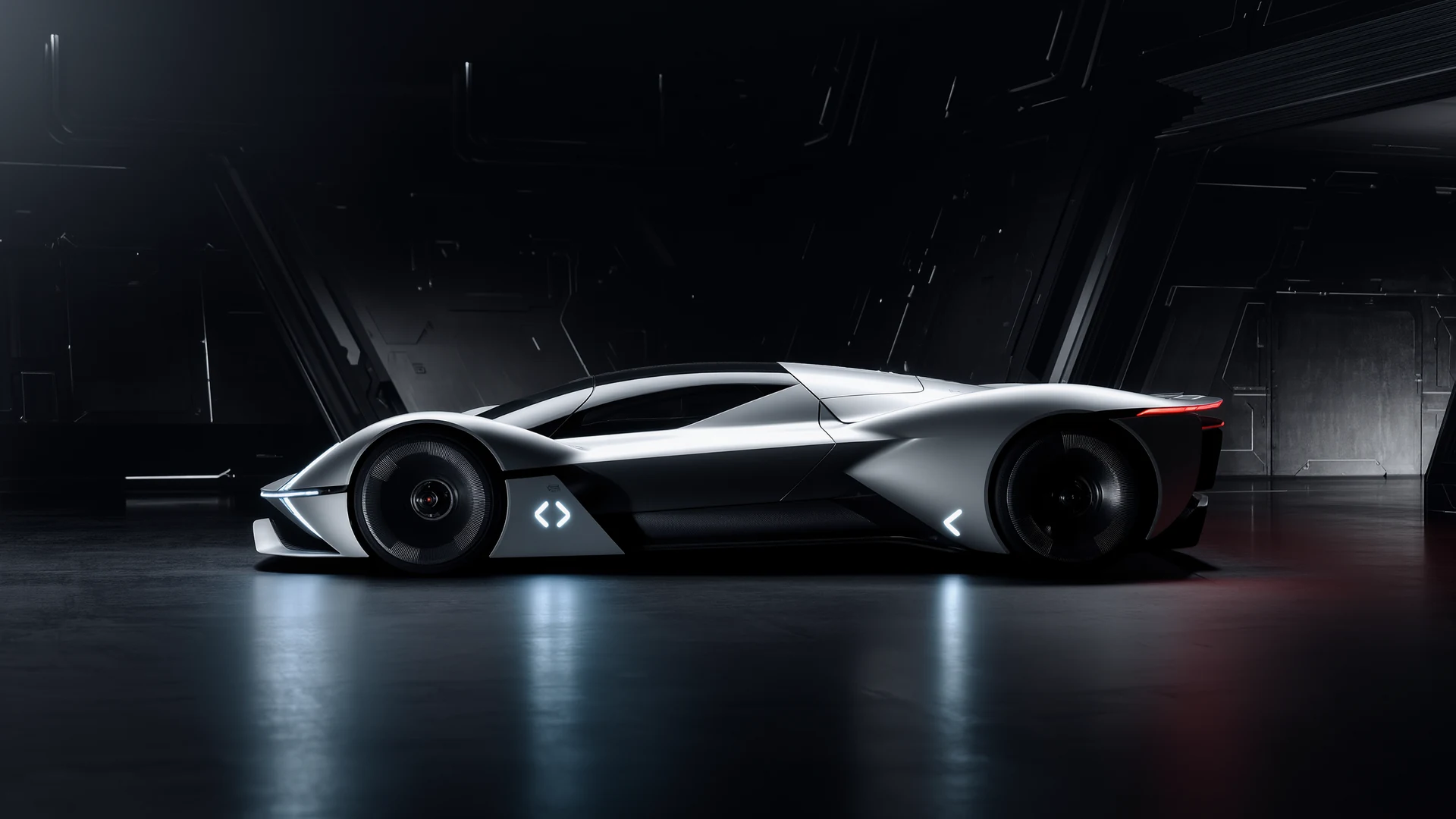
The Rimac Nevera is a 1,914-horsepower, quad-motor Croatian electric hypercar that is the fastest-accelerating production car ever, hitting 60 mph in 1.74 seconds.
Key Takeaways
- The Rimac Nevera is built in Sveta Nedelja, Croatia, costs from 2.1 million euros and is limited to 150 units worldwide.
- Four permanent magnet synchronous motors, one per wheel, produce a combined 1,914 horsepower (1,408 kW) and 2,360 Nm of torque.
- On May 17, 2023, the Nevera set 23 verified records in a single day at the ATP Papenburg facility, including a 0-400-0 km/h run in 29.93 seconds and 0-60 mph in 1.74 seconds.
- Its 120 kWh Rimac-built battery runs on an 800-volt architecture, charges from 0 to 80 percent in under 19 minutes and delivers a 490 km (304 mile) WLTP range.
- In August 2023 a production Nevera lapped the Nurburgring Nordschleife in 7:05.298, setting a production EV lap record with driver Martin Kodric.
- Top speed is electronically limited to 412 km/h (256 mph) and the car weighs 2,150 kg with a very low center of gravity.
- The R-AWTV 2.0 torque vectoring system adjusts torque at each wheel up to 100 times per second and enables seven driving modes, including a Drift mode.
Introduction: The Storm from Croatia
In the small Croatian town of Sveta Nedelja, roughly 30 kilometers west of Zagreb, a quiet revolution in automotive engineering has been taking place. What began as one man’s obsession with electrifying a 1984 BMW E30 in his parents’ garage has evolved into a company that now defines the bleeding edge of hypercar performance. The Rimac Nevera, named after the fierce, sudden electrical storms that sweep across the Mediterranean, is not merely a car. It is the crystallization of over a decade of relentless engineering, a rolling manifesto that the electric era does not dampen the hypercar experience but rather elevates it into a dimension previously accessible only in science fiction.
With a starting price of €2.1 million and a production run limited to 150 units, the Nevera sits in rarefied company. Yet its significance extends far beyond exclusivity. It is the fastest-accelerating production vehicle ever built, the holder of over 20 world records set in a single day, and the car that forced the established order. Ferrari, Bugatti, Koenigsegg, to confront an uncomfortable truth: the future of ultimate performance wears a Croatian badge and runs on electrons. This is the comprehensive story of the Rimac Nevera, from its founder’s improbable journey to the technology that makes it the most capable road car in history.
Mate Rimac: The Visionary Behind the Voltage
The Garage That Started Everything
In 2007, Mate Rimac was a 19-year-old electronics enthusiast and inventor whose passions lay closer to circuit boards than combustion chambers. When the engine in his 1984 BMW E30 323i failed during a race, he made a decision that would alter automotive history: rather than rebuilding the BMW’s inline-six, he would convert it to electric propulsion. Working from his parents’ garage with salvaged parts and an obsessive, self-taught understanding of electrical engineering, Rimac transformed the aging Bavarian coupe into something unprecedented. The resulting machine, dubbed the “e-M3”, was crude by today’s standards, but it proved a fundamental concept: electric power could deliver visceral, grin-inducing performance.
That home-built conversion set five FIA and Guinness World Records for electric vehicles in 2011, catching the attention of investors and enthusiasts worldwide. It also gave Rimac something far more valuable than accolades: a deep, empirical understanding of the challenges inherent in high-performance electric powertrains, battery thermal management, and the integration of cutting-edge software with mechanical systems.
The Concept_One: Proof of Concept
Rimac Automobili was formally founded in 2009, and by 2011 the company unveiled the Concept_One at the Frankfurt Motor Show. With 1,088 horsepower, a 0bis60 mph time of 2.5 seconds, and a claimed range of 600 kilometers, the Concept_One was audacious, perhaps too audacious for an unknown company from a country with no automotive manufacturing tradition. But Rimac delivered. Over the following years, the company produced eight Concept_Ones (and two Concept_S track-focused variants), each one serving as a rolling laboratory for the technologies that would define the Nevera.
The Concept_One’s most famous moment came in 2017, when Richard Hammond crashed one during filming for The Grand Tour, launching the car off a Swiss mountainside and escaping a fire that consumed the vehicle. The crash, terrifying as it was, inadvertently demonstrated the structural integrity of Rimac’s carbon-fiber construction. Hammond walked away, and Rimac’s reputation for safety engineering was cemented in the most dramatic fashion imaginable.
From Startup to Strategic Powerhouse: The Bugatti Rimac Era
Between the Concept_One and the Nevera, something remarkable happened: the industry came to Rimac. Recognizing the company’s unmatched expertise in high-voltage battery systems and electric powertrains, manufacturers began knocking. Porsche acquired a 10% stake in 2018, later increasing it. Hyundai and Kia invested €80 million in 2019. Then, in 2021, the landscape shifted dramatically: Rimac and Bugatti formed a joint venture, Bugatti Rimac, with Rimac Group holding a 55% stake and Porsche the remaining 45%.
Overnight, Mate Rimac went from scrappy entrepreneur to the CEO of one of the most prestigious automotive brands in history, while simultaneously continuing to lead Rimac Technology as a Tier-1 supplier to OEMs including Aston Martin, Pininfarina, Koenigsegg, and Jaguar. The Nevera was developed during this period of explosive growth, and the synthesis of Rimac’s in-house expertise with the resources of a global automotive powerhouse is evident in every aspect of the car.
Design and Aerodynamics: Form That Follows Function
Exterior Styling: Aggressive Elegance
The Nevera’s exterior, penned by Rimac’s in-house design team under the direction of Adriano Mudri, strikes a masterful balance between aggression and elegance. The low-slung silhouette, just 1,206 mm tall, features a cab-forward profile with sculpted flanks that channel air with surgical precision. The absence of a traditional internal combustion engine allowed designers to pursue a purity of form that no mid-engined hypercar can match: the nose is low and sharp, the greenhouse is compact, and the rear haunches swell dramatically to accommodate the massive rear tires and the active aerodynamic elements.
Every surface, inlet, and crease serves a purpose. The “cravat” motif, a nod to the necktie invented in Croatia, appears in the LED headlight signature and in the side air intakes. The butterfly doors open upward in classic hypercar fashion, revealing a carbon-fiber tub that is both structural art and engineering statement. The overall effect is futuristic without being alienating, aggressive without being juvenile, a machine that looks exactly as fast as it is, and exactly as sophisticated as its price tag demands.
Active Aerodynamics: The Shape-Shifter
The Nevera’s aerodynamic package operates across multiple regimes, adapting in real time to driving conditions. At the front, an active splitter extends and retracts, while a deployable rear wing rises from the decklid. Underneath, the carbon-fiber floor is perfectly flat, incorporating venturi channels that work in concert with a rear diffuser to generate substantial downforce without the drag penalty of large fixed wings.
In its low-drag configuration, front splitter retracted, rear wing stowed, the Nevera achieves a drag coefficient of 0.30, slipping through the air with surprising efficiency for a car capable of 412 km/h (256 mph). In high-downforce mode, with the wing deployed and the splitter extended, drag increases by approximately 20%, but downforce rises by 326% compared to the low-drag setting, providing the confidence needed for high-speed cornering. The transition between aerodynamic modes is seamless, managed by the vehicle’s central control unit without any driver input unless the driver deliberately selects a specific mode.
The Carbon-Fiber Monocoque: The Largest in Production
At the heart of the Nevera’s structure lies what Rimac describes as the largest single-piece carbon-fiber monocoque in any production car. Weighing less than 200 kg, this tub integrates the battery housing as a structural element, a design philosophy borrowed from Formula 1, which eliminates the need for a separate battery casing and contributes to a torsional rigidity of over 70,000 Nm/degree. To put that in perspective, the Bugatti Chiron’s carbon monocoque achieves approximately 50,000 Nm/degree. This extraordinary stiffness is not merely a bragging right; it provides the stable platform upon which the suspension and active dynamics systems can operate with millimeter precision.
The monocoque is bonded to a carbon-fiber roof structure, and the rear subframe, also carbon, cradles the rear powertrain and suspension. The entire structure is crash-tested and homologated for global markets, a non-trivial achievement given the integrated battery design and the extreme performance envelope. Crumple zones at the front and rear absorb impact energy while protecting the high-voltage components, and the passenger cell itself is designed to remain intact under loads far exceeding regulatory requirements.
Powertrain: Four Motors, One Mission
The Quad-Motor Architecture
The Nevera’s powertrain is the product of over a decade of in-house development at Rimac. Four surface-mounted permanent magnet synchronous motors, one at each wheel, deliver a combined output of 1,914 horsepower (1,408 kW) and 2,360 Nm of torque. The front axle houses two motors driving the wheels through single-speed gearboxes, while each rear wheel has its own motor and a two-speed gearbox (with the motors coupled to the wheels via carbon-fiber driveshafts). This quad-motor layout is the enabling technology for the Nevera’s most dramatic capabilities, allowing independent torque control at each corner and eliminating the need for traditional mechanical differentials entirely.
The numbers demand a moment of contemplation: 1,914 horsepower is roughly equivalent to the combined output of three Porsche 911 Turbo S models. The torque figure of 2,360 Nm exceeds that of a heavy-duty diesel truck, yet it arrives instantly, silently, and with the precision of a surgeon’s scalpel. The front motors produce 280 kW each, while the rear units deliver 425 kW apiece, a rear-biased configuration that preserves the dynamic character expected of a hypercar while allowing the front axle to contribute dramatically to acceleration and handling.
Battery and 800-Volt Architecture: Range Without Compromise
The energy reservoir is a 120 kWh lithium-manganese-nickel battery pack developed and manufactured entirely by Rimac. Unlike off-the-shelf battery solutions used by many EV startups, the Nevera’s pack is a bespoke design that integrates with the carbon monocoque as a stressed structural element. The cells are arranged in a “T” shape that runs through the central tunnel and behind the seats, lowering the center of gravity and concentrating mass within the wheelbase for optimal handling balance.
The pack operates at 800 volts, a voltage architecture that Rimac pioneered in production vehicles, enabling DC fast-charging at up to 500 kW. On a compatible charger, the Nevera can replenish from 0% to 80% in under 19 minutes, a figure that rivals the fastest-charging EVs on the market despite the pack’s substantial capacity. On the WLTP cycle, the Nevera achieves a range of 490 km (304 miles), not merely acceptable for a hypercar, but genuinely usable for cross-country grand touring. The combination of world-beating acceleration and a practical driving range is one of the Nevera’s most quietly impressive achievements.
Thermal Management: Cooling the Beast
Controlling the heat generated by 1,914 horsepower and a 120 kWh battery during sustained high-output operation is an immense engineering challenge. The Nevera’s thermal management system deploys eight independent cooling circuits, including systems for the battery, each motor, the power electronics, and the cabin HVAC, orchestrated by a central controller that can shift cooling resources dynamically based on driving conditions.
The low-temperature circuit for the battery and electronics uses dielectric oil cooling, which circulates coolant directly around the cells to maintain an optimal operating temperature window (25bis35°C). During track driving, the system can dissipate over 25 kW of heat, equivalent to the thermal output of a small house. The motors are oil-cooled as well, and the front and rear radiators work in concert with active aerodynamic shutters to balance cooling drag against range. Even after multiple consecutive launch-control starts or sustained high-speed autobahn runs, the Nevera maintains consistent performance without the power reduction, “derating”, that plagues many electric performance cars.
Record-Breaking Performance: The Numbers That Changed Everything
The Day of 23 Records
On May 17, 2023, Rimac took a production-specification Nevera to Germany’s Automotive Testing Papenburg (ATP) facility, a sprawling proving ground with a 12.3 km high-speed oval, and spent a single day systematically dismantling the record book. When the clock stopped, the Nevera had claimed 23 verified performance records, a feat unprecedented in automotive history. These records were independently verified by Racelogic, Dewesoft, and a representative from Guinness World Records, and were later recognized officially.
The headline figure, and the one that most concisely communicates the Nevera’s capability, is the 0bis400bis0 km/h (0bis249bis0 mph) sprint, which the Nevera completed in 29.93 seconds. To reach 400 km/h from a standstill and brake to a complete stop in under 30 seconds was previously inconceivable for a road-legal production car. The Nevera’s 0bis400 km/h acceleration alone took 21.31 seconds, and the 400bis0 km/h braking phase consumed just 8.62 seconds. Other records set that day included:
- 0bis60 mph: 1.74 seconds
- 0bis100 mph: 3.21 seconds
- 0bis130 mph: 4.86 seconds
- 0bis200 mph: 10.86 seconds
- Standing quarter-mile: 8.25 seconds at 180 mph
- Standing half-mile: 12.82 seconds
- 100bis200 km/h: 2.89 seconds
- 60bis130 mph: 2.59 seconds
To contextualize the quarter-mile time: the Nevera covers 1,320 feet from a standing start faster than a Formula 1 car manages 0bis200 km/h. It reaches 60 mph from rest in less time than it takes a human to inhale deeply. The 0bis200 mph time of 10.86 seconds is faster than most hot hatches can reach 60 mph.
The Nürburgring Nordschleife: Conquering the Green Hell
In August 2023, the Nevera turned its attention to the most demanding proving ground in motorsport: the Nürburgring Nordschleife. With Croatian racing driver Martin Kodrić at the wheel, a production-specification Nevera on road-legal Michelin Pilot Sport Cup 2 R tires lapped the 20.8 km circuit in 7:05.298, setting a new production EV lap record. The time placed the Nevera in extremely rare company, within striking distance of purpose-built track specials and faster than dedicated combustion-engined supercars that sacrifice road usability for lap time.
The Nordschleife time is significant not merely as a number but as proof of a complete vehicle engineering philosophy. Endurance on the Nürburgring demands sustained thermal management, a single hot lap taxes the battery, motors, and electronics more than a quarter-mile sprint ever could. That the Nevera could set records in both straight-line acceleration and circuit lap time demonstrates a breadth of capability that no electric car, and few combustion cars, had previously achieved.
World Speed Records and Beyond
The Nevera’s top speed is electronically limited to 412 km/h (256 mph), a figure verified during testing. While the Bugatti Chiron Super Sport 300+ has achieved higher velocities, the Nevera’s acceleration to terminal velocity is in a different league entirely: the Chiron may ultimately be faster in absolute top speed, but the Nevera will have already arrived at its destination while the Chiron is still building momentum.
In the broader context of automotive history, the Nevera’s performance suite represents a pivotal moment. For over a century, the internal combustion engine’s limitations in power delivery, turbo lag, gear changes, traction management, defined the character of the fastest cars. The Nevera demonstrates that electric propulsion does not homogenize the experience; it removes physical constraints, allowing chassis and aerodynamic engineers to design for a regime that was previously theoretical. The result is a car that doesn’t just beat records, it renders previous benchmarks irrelevant.
R-AWTV 2.0: The Brain Behind the Brawn
How Torque Vectoring Works in the Nevera
The Nevera’s Rimac All-Wheel Torque Vectoring 2.0 system (R-AWTV 2.0) is the conductor of the quad-motor orchestra. Unlike conventional torque vectoring systems that use differentials and clutches to redirect power, R-AWTV 2.0 controls each motor independently, adjusting torque output at each wheel up to 100 times per second. This update rate, an order of magnitude faster than any mechanical system, allows the vehicle dynamics controller to shape the handling balance with a granularity that borders on telepathic.
The system ingests data from an array of sensors: wheel-speed sensors, yaw, pitch, and roll rate gyros, accelerometers, steering angle, brake pressure, accelerator position, and suspension travel. A central vehicle dynamics controller, dubbed the “Vehicle Control Unit” or VCU, fuses these inputs and issues torque commands to each inverter, which then modulate the current delivered to each motor. The latency from sensor input to torque response at the tire contact patch is measured in single-digit milliseconds.
In practice, this means the Nevera can overdrive the outside rear wheel during corner exit to rotate the car, vector more torque to the front axle during braking to stabilize the platform, or run the front motors in regenerative mode while the rears accelerate to create a yaw moment mid-corner without the driver touching the brake pedal. The possibilities, and the resulting driving behaviors, are defined entirely in software, and the character of each driving mode is a product of thousands of hours of calibration by Rimac’s dynamics engineers.
Driving Modes: Seven Personalities in One Machine
The Nevera offers seven distinct driving modes, each representing a fundamentally different calibration of the powertrain, suspension, steering, and aerodynamic systems:
Range Mode
Prioritizes efficiency above all. The front motors do the majority of the work, the rear wing and front splitter remain stowed, and torque delivery is calibrated for smooth, progressive power application. Range mode enables the full 490 km WLTP range and is genuinely usable for relaxed highway cruising.
Cruise Mode
The default setting, blending comfort and capability. All four motors are active but torque delivery is softened, the suspension adopts a compliant damper setting, and the steering is light but precise. Cruise mode transforms the Nevera into a surprisingly comfortable grand tourer capable of crossing continents with minimal fatigue.
Sport Mode
Sharpens every parameter: throttle response becomes more immediate, the suspension firms up by approximately 25%, steering weight increases, and the torque vectoring system adopts a more aggressive cornering calibration. The rear wing deploys at lower speeds. Sport mode is the setting for spirited road driving, offering accessible performance without the full commitment of the track-focused modes.
Track Mode
Maximum attack. Torque delivery is instantaneous and unrestricted, the suspension moves to its firmest setting, and the full aerodynamic package, wing and splitter fully deployed, maximizes downforce. The stability control threshold is raised significantly, allowing substantial slip angles before intervention. Track mode is calibrated for the limits of grip on a circuit and provides the driver with the tools to extract the Nevera’s full dynamic potential.
Drift Mode
Perhaps the most entertaining, and most technically impressive, driving mode ever offered in a production car. Drift mode biases torque to the rear axle and allows the rear wheels to spin freely while the front motors maintain directional control. The result is the ability to sustain massive, tire-smoking drifts with a level of control that would be impossible in a combustion car. The system can maintain a drift angle continuously, with the driver modulating the slide using only the throttle, the front motors automatically adjusting torque to keep the car pointed in the chosen direction.
Low-Grip Mode
Developed for wet, damp, or loose surfaces. Torque delivery is progressively limited, the all-wheel-drive system prioritizes stability, and the stability control intervenes earlier and more smoothly. Low-Grip mode is a recognition that 1,914 horsepower requires careful management on anything less than perfect asphalt, and the calibration ensures the Nevera remains driveable, even enjoyable, in conditions that would park lesser hypercars.
Custom Mode
Allows the driver to independently adjust throttle response, suspension firmness, steering weight, torque vectoring aggression, and aerodynamic deployment. The Nevera stores custom preferences in the driver profile, enabling owners to create bespoke calibrations for specific roads, tracks, or moods.
The Driving Experience: Beyond the Numbers
On the Road: The 2,150 kg Paradox
The Nevera weighs 2,150 kg: a figure that, on paper, seems incompatible with the agility expected of a hypercar. The laws of physics are not optional: mass is mass, and 2,150 kg of it must be managed through corners, over crests, and under braking. Yet the Nevera’s engineering has managed something remarkable: it doesn’t merely hide its weight; it weaponizes it. The low center of gravity, achieved by integrating the battery into the floor and monocoque, means the Nevera carries its mass closer to the ground than any combustion hypercar can manage. The result is a center of gravity height that Rimac claims is among the lowest of any production vehicle.
On the road, the Nevera is docile when driven gently: eerily so. The regenerative braking provides genuinely useful one-pedal driving in traffic, the adaptive dampers absorb surface imperfections that would unsettle stiffer competitors, and the near-total absence of mechanical noise creates a cabin environment that is serene at a cruise. Then, at the flex of an ankle, the serene cabin is replaced by a sensation that defies description: the instant, gut-punching, horizon-compressing shove of 2,360 Nm delivered to four contact patches simultaneously. There is no build-up, no spooling, no gear-change pause, just an immediate translation of pedal position to velocity vector. It is addictively, dangerously, intoxicatingly fast.
On Track: Engagement Without Compromise
Critics of electric performance cars often invoke a lack of “engagement”, the argument that the absence of a combustion engine’s mechanical interactions (gear changes, engine note, turbo spool, throttle response curve) diminishes the driving experience. The Nevera’s rebuttal to this argument is not theoretical; it is empirical. The depth of driver involvement comes not from managing an engine’s limitations but from exploring the chassis’s almost limitless capabilities.
The torque vectoring system, the double-wishbone suspension with electronically controlled dampers, the carbon-ceramic brakes (390 mm front discs with six-piston calipers), each subsystem operates with a precision and bandwidth that combustion cars cannot match. The result is a driving experience that feels fundamentally different from a traditional hypercar: not worse, not better, different. The Nevera replaces the mechanical theatre of a V12 with the cerebral satisfaction of a system so perfectly integrated that the car responds to inputs as if it can read the driver’s intentions directly from their neural impulses.
Turn-in is immediate and flat. Mid-corner balance can be adjusted with the throttle, lift-off oversteer is available on demand, but the stability control ensures it never becomes a liability. Corner exit is where the Nevera most dramatically diverges from combustion convention: where a traditional hypercar would be managing turbo boost, shift timing, and traction, the Nevera simply catapults out of the apex with all four tires at the limit of grip simultaneously. The sheer speed through and out of corners is disorienting, requiring the driver to recalibrate reference points that have been ingrained through years of driving lesser machines.
Drift Mode in Practice: Controlled Chaos
Drift mode deserves special mention, as it represents the most dramatic demonstration of what a quad-motor architecture enables. Engaging Drift mode transforms the Nevera into a precision smoke machine. The rear tires spin freely while the fronts pull the car through a drift with surgical precision. The driver can initiate a slide with a sharp steering input and a stab of throttle, and then, remarkably, hold the drift indefinitely, modulating angle with the accelerator alone. The front motors work silently to maintain directional control, vectoring torque between the left and right wheels 100 times per second to keep the car pointed where the driver intends.
What makes Drift mode genuinely special is that it’s not a gimmick. It’s the same underlying R-AWTV 2.0 system operating with a different calibration, and it demonstrates, vividly, the flexibility of the quad-motor architecture. The same hardware that sets a 7:05 Nürburgring lap can also keep the Nevera sideways for as long as the tires hold out. That duality, record-chasing precision and tire-shredding playfulness, is the essence of the Nevera’s character.
Interior and Technology: The Digital Cockpit
The Cabin: Materials and Design Philosophy
The Nevera’s interior reflects a philosophy that Rimac describes as “bespoke minimalism.” Three TFT displays, a digital instrument cluster, a central infotainment screen, and a passenger display, are arranged in a cockpit that wraps around the driver. Exposed carbon fiber, in both gloss and matte finishes, is used extensively, not as decorative trim but as primary structure, with the door sills, center tunnel, and dashboard architecture visibly integrating carbon components. Billet aluminum rotary controls for the driving modes, climate control, and media volume provide tactile contrast to the digital interfaces.
The seats are carbon-shelled buckets trimmed in the buyer’s choice of leather, Alcantara, or sustainable materials, with six-point harness compatibility for track driving. Despite the performance brief, the Nevera does not sacrifice comfort: the seats are heated, the cabin is well-insulated from road noise, aided by the inherently quiet electric powertrain, and the driving position offers excellent visibility for a mid-engined hypercar, thanks in part to the low-slung nose and the slim A-pillars. Storage is surprisingly practical, with a front trunk under the hood and space behind the seats for soft bags, sufficient for a weekend away.
Infotainment and the AI Driving Coach
The central infotainment system runs on Rimac’s proprietary software platform, offering connectivity features including over-the-air updates, real-time performance telemetry, and navigation with charging-station routing. The interface is clean, responsive, and designed to minimize distraction during performance driving, critical data (speed, power output, torque distribution, battery temperature, lap times) is available at a glance, while secondary functions are accessible through voice commands or the steering-wheel controls.
One of the Nevera’s most forward-thinking features is the AI Driving Coach. Using data from the vehicle’s onboard sensors and GPS, the system can analyze a driver’s performance on a given track, comparing their lines, braking points, throttle application, and steering inputs against an “ideal lap” constructed from the combined data of professional drivers. The system then provides real-time feedback, audio cues and visual overlays, to help the driver improve. It can coach on specific corners, highlight areas of understeer or oversteer, and even gamify the learning process by awarding scores for improvements. The AI Driving Coach transforms the Nevera from a mere vehicle into a platform for continuous driver development, a feature that will become increasingly sophisticated as more Nevera owners generate track data that feeds back into the system.
Pricing, Production, and Personalization
The €2.1 Million Question
The Nevera’s starting price of €2.1 million places it firmly in the upper echelon of the hypercar market, competing directly with the Bugatti Chiron, the Koenigsegg Jesko, and the Pagani Utopia. However, viewed through the lens of what it offers, 1,914 horsepower, quad-motor torque vectoring, 23 production-car records, a 490 km range, and technology that no competitor, regardless of price, can match, the Nevera can be argued to represent something approaching value in the hypercar segment. Production is limited to 150 units worldwide, and as of 2024, a significant portion of the allocation has been spoken for, though Rimac has not disclosed exact sales figures.
The Personalization Program
Each Nevera is built to the owner’s specification through Rimac’s in-house personalization department. Buyers are invited to Rimac’s facility in Sveta Nedelja to select from an extensive palette of exterior paints (including bespoke color matching), interior leathers and Alcantara finishes in virtually any color, carbon-fiber weave patterns, and trim materials that range from billet aluminum to precious metals. Even the stitching color and pattern, the brake caliper finish, and the seat-belt color can be specified. Rimac has built several notable one-off specifications, including liveries that pay homage to Croatian heritage and collaborations with luxury brands for interior appointments.
The personalization process is not merely aesthetic. Buyers can work with Rimac’s engineers to calibrate specific aspects of the driving experience, steering weight preferences, damper tuning, and even the aggressiveness of the torque vectoring calibration beyond the standard driving modes. Each Nevera effectively becomes a bespoke machine, which, given the 150-unit production run, makes even the “standard” cars functionally unique.
The Nevera R and the Future: Where Does Rimac Go From Here?
The Nevera R: Sharper, Lighter, Faster
In August 2024, Rimac unveiled the Nevera R: a more extreme, track-focused evolution of the Nevera platform. The Nevera R increases total output to 2,107 horsepower, sheds approximately 70 kg of weight through lightweight components and reduced soundproofing, and introduces an aggressive fixed rear wing in place of the active unit. The suspension geometry has been revised for sharper turn-in and higher peak cornering speeds, and the tires are upgraded to a bespoke Michelin compound designed specifically for the Nevera R’s performance targets.
The Nevera R is not merely a trim package; it represents the logical evolution of the platform, applying lessons learned from the Nürburgring record lap and from customer feedback on track-day usage. The 0bis60 mph time drops to an estimated 1.74 seconds (essentially unchanged, as the standard Nevera is already traction-limited), but the 0bis200 km/h time, quarter-mile time, and circuit lap times are projected to improve appreciably. Production is limited to 40 units, making the Nevera R one of the rarest hypercars in existence.
Beyond the Nevera: The Rimac Technology Platform
The Nevera is important not only as a car but as a demonstration of the Rimac Technology platform that the company now supplies to other manufacturers. The battery systems, powertrain components, and vehicle-control software developed for the Nevera are being adapted for use in vehicles ranging from the Pininfarina Battista to future Aston Martin, Porsche, and Cupra models. In a sense, every Nevera sold is a rolling advertisement for Rimac’s Tier-1 supply business, and the revenue from that business ensures the company’s long-term viability far more than the limited-production hypercars ever could.
The Nevera’s true legacy may not be the records it set but the platform it established, a modular, scalable electric architecture that can be adapted to vehicles across segments and price points. Mate Rimac has been explicit about his ambition: to become the Bosch or ZF of the electric era, supplying the fundamental building blocks of electric mobility to the entire automotive industry. The Nevera is the proof of concept that makes that ambition credible.
Conclusion: The Rulebook Has Been Rewritten
The Rimac Nevera is a landmark automobile. It is the product of an improbable journey, from a teenager’s garage in Croatia to the apex of the global hypercar hierarchy, and it represents a technological achievement that will be studied and referenced for decades. Its acceleration performance redefines the limits of what a road-legal vehicle can achieve. Its chassis dynamics, enabled by the quad-motor torque vectoring system, demonstrate a new paradigm for vehicle control that combustion powertrains cannot replicate. Its range and charging speed prove that extreme performance and everyday usability are not mutually exclusive.
But the Nevera’s ultimate contribution is philosophical. For years, the automotive world debated whether electrification would sterilize the hypercar, reducing the emotive, analog, mechanical experience to a silent, soulless appliance. The Nevera ends that debate. It does not replicate the combustion hypercar experience, it transcends it, offering a new form of engagement defined not by managing limitations but by exploring possibilities. The Rimac Nevera is not the best internal-combustion hypercar. It is something more significant: the best argument yet that the internal-combustion hypercar has been surpassed.
With 150 examples, and 40 Nevera R variants, the Nevera will remain rare, the privilege of a tiny fraction of automotive enthusiasts. But its influence will be felt in every electric performance car that follows, from track-day specials to tomorrow’s sports sedans. Mate Rimac’s electric BMW E30 proved a point; the Nevera proved an era. The Mediterranean storm has arrived, and the landscape will never be the same.
Frequently Asked Questions (FAQ)
How fast does the Rimac Nevera accelerate from 0 to 60 mph?
The Rimac Nevera reaches 60 mph from a standstill in just 1.74 seconds, making it the fastest-accelerating production vehicle ever built. This figure was among 23 records verified on May 17, 2023, at the ATP Papenburg facility. Other records include 0-100 mph in 3.21 seconds and 0-200 mph in 10.86 seconds.
How much does the Rimac Nevera cost and how many were made?
The Rimac Nevera starts at 2.1 million euros, placing it among the rarest hypercars in the world. Production is strictly limited to just 150 units. The car is designed and built by Rimac in the small Croatian town of Sveta Nedelja, roughly 30 kilometers west of Zagreb.
What is the power output of the Rimac Nevera?
The Rimac Nevera produces a combined 1,914 horsepower (1,408 kW) and 2,360 Nm of torque from four electric motors, one at each wheel. The front motors deliver 280 kW each while the rear units produce 425 kW apiece, creating a rear-biased layout. That output roughly equals three Porsche 911 Turbo S models combined.
What is the range and charging speed of the Rimac Nevera battery?
The Rimac Nevera uses a bespoke 120 kWh lithium-manganese-nickel battery built by Rimac on an 800-volt architecture. It achieves a WLTP range of 490 km (304 miles), making it usable for grand touring. DC fast-charging at up to 500 kW replenishes the pack from 0 to 80 percent in under 19 minutes.
What lap time did the Rimac Nevera set at the Nurburgring Nordschleife?
A production-specification Rimac Nevera lapped the 20.8 km Nurburgring Nordschleife in 7:05.298 in August 2023, setting a new production EV lap record. Croatian racing driver Martin Kodric drove the car on road-legal Michelin Pilot Sport Cup 2 R tires. The time placed it within striking distance of purpose-built track specials.
Who founded Rimac and how did the company start?
Rimac was founded by Mate Rimac, who in 2007 at age 19 converted his failed 1984 BMW E30 to electric power in his parents' garage. That build, the e-M3, set five FIA and Guinness records in 2011. Rimac Automobili was formally founded in 2009 and unveiled the Concept_One in 2011.
What is the top speed of the Rimac Nevera?
The Rimac Nevera has a top speed electronically limited to 412 km/h (256 mph), verified during testing. While the Bugatti Chiron Super Sport 300+ reaches higher absolute velocities, the Nevera's acceleration to terminal speed is in a different league, arriving at speed far sooner. Its 0-400 km/h sprint alone takes 21.31 seconds.
What driving modes does the Rimac Nevera offer?
The Rimac Nevera offers seven driving modes: Range, Cruise, Sport, Track, Drift, Low-Grip and Custom. Each fundamentally recalibrates the powertrain, suspension, steering and aerodynamics. Drift mode biases torque rearward for sustained slides, while the R-AWTV 2.0 torque vectoring system adjusts each wheel up to 100 times per second across all modes.
What makes the Rimac Nevera so quick off the line?
What is the Nevera's range and how quickly does it charge?
What records has the Rimac Nevera set?
More from Blog
The Future of Hypercars: Electrification, Autonomy, and the Next Performance Frontier
The future of hypercars: how electrification, solid-state batteries, hybrid V16 powertrains, 3D printing, active aero, autonomy and eFuels redefine pe…
Hypercar Maintenance Guide: The True Cost of Keeping an Automotive Masterpiece on the Road
Hypercar maintenance guide: real annual service costs from Bugatti and Koenigsegg to Pagani and Rimac, plus tire, brake and resale-value insights for …
Hypercar Events Worldwide: The Ultimate Calendar for Collectors and Enthusiasts
Hypercar events worldwide: a collector’s calendar from Monterey Car Week and Goodwood to Villa d’Este, Top Marques Monaco, elite rallies a…