Hypercar Maintenance Guide: The True Cost of Keeping an Automotive Masterpiece on the Road
Hypercar maintenance guide: real annual service costs from Bugatti and Koenigsegg to Pagani and Rimac, plus tire, brake and resale-value insights for owners.…
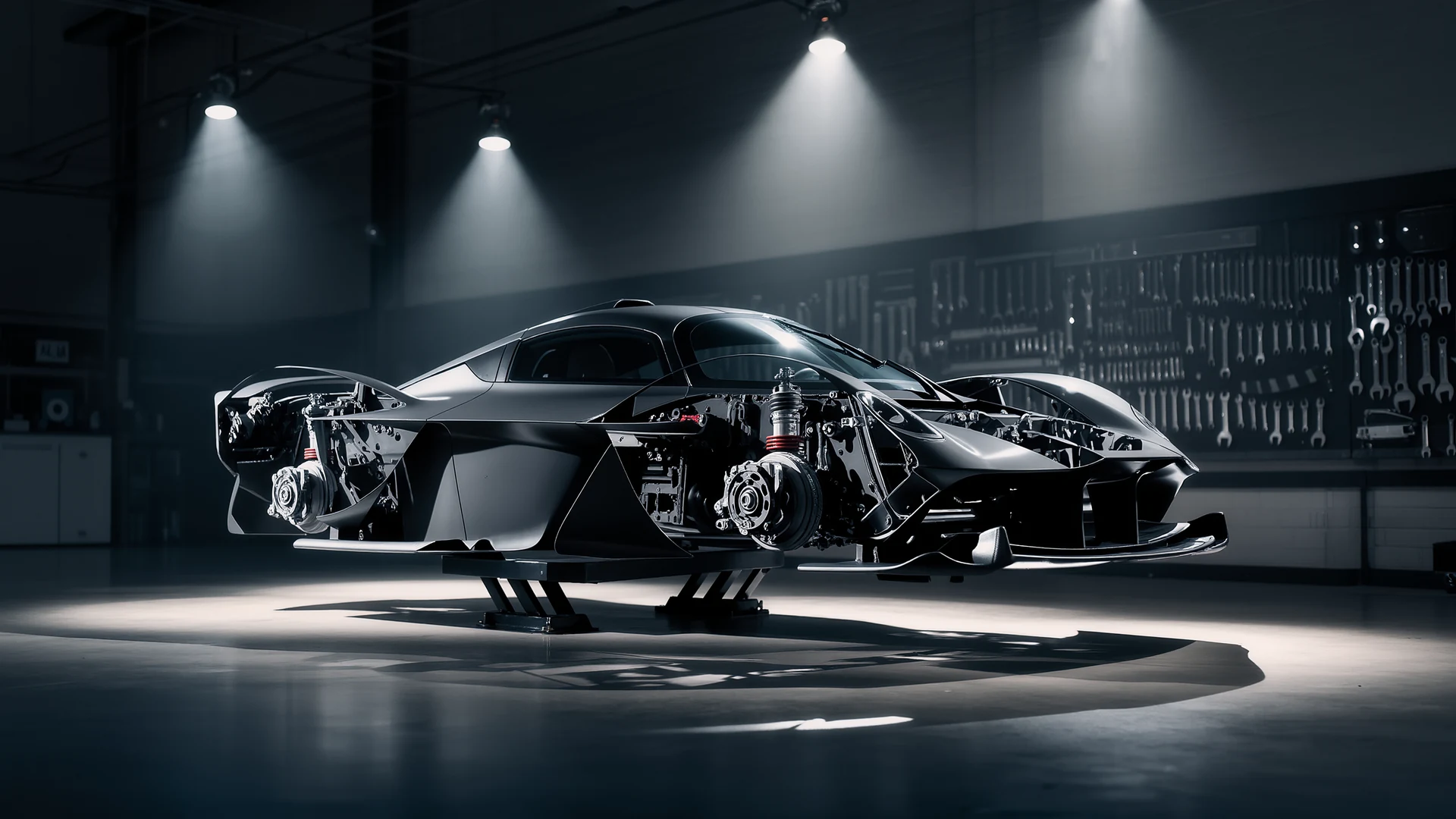
Hypercar maintenance demands a non-negotiable annual service regardless of mileage, ranging from about $8,000 for a Rimac Nevera to $30,000-$40,000 for a Bugatti Chiron.
Key Takeaways
- Every hypercar manufacturer mandates an annual service regardless of mileage, because time degrades exotic fluids, seals, carbon-ceramic rotors and bespoke tires even when the car sits static.
- A Bugatti Chiron annual service costs roughly $30,000 to $40,000, covers more than 300 inspection points, requires about 72 hours of labor, and includes a 48-liter Castrol oil change for the W16 engine.
- Bugatti's factory-only major service at Molsheim costs $100,000 to $150,000 at the four- to five-year mark, plus $20,000 to $40,000 in transport from regions like North America, Asia or the Middle East.
- Annual service costs vary sharply by marque: Koenigsegg $25,000-$35,000, Pagani $15,000-$25,000, and the electric Rimac Nevera just $8,000-$12,000 (about 60-70 percent less than a Chiron).
- A complete, verifiable service history is essential; a missing service stamp can cut value by five to fifteen percent, and a Bugatti Chiron with one missed service sold roughly $200,000 below comparable examples at a 2023 auction.
- Bugatti tires last a maximum of five years or 2,500 miles and cost about $40,000 per set, and Bugatti requires wheel replacement every third or fourth tire change at roughly $100,000 per set.
- Carbon-ceramic brake rotors can last 80,000-120,000 km under street use but only 10,000-20,000 km on track, with a full four-corner replacement running $30,000 to $70,000.
Understanding the Hypercar Service Philosophy
Hypercar maintenance is a fundamentally different proposition from maintaining even the most expensive luxury or sports car. These machines operate at the absolute limits of materials science, thermodynamics, and mechanical engineering. Their service requirements are closer to those of a private jet or a racing prototype than a road car. Understanding the philosophy behind hypercar maintenance, the why, not just the how, is essential for any owner who wants to protect both their investment and their safety.
Annual Service: The Non-Negotiable Baseline
Every hypercar manufacturer specifies an annual service interval regardless of mileage. A Bugatti Chiron that has covered 200 miles since its last service requires the same comprehensive annual inspection as one that has covered 2,000 miles. This is not an arbitrary recommendation designed to generate service revenue, it is a recognition that time, not just use, degrades the exotic materials and fluids that make hypercar performance possible.
Why Annual Service Matters Regardless of Mileage
The engineering rationale is straightforward. Carbon-ceramic brake rotors, while extraordinarily durable in use, are sensitive to environmental factors during storage. Specialized hybrid system coolants degrade chemically over time even when static. High-performance tires, particularly the bespoke Michelin Pilot Sport Cup 2 R compounds developed for specific hypercars, age and harden regardless of tread wear. Seals, gaskets, and elastomers in engines operating with clearances measured in microns require regular inspection to catch degradation before it becomes catastrophic. A single failed seal in a Bugatti W16 engine, for example, could precipitate an engine-out service costing well over $100,000, an outcome that a $30,000 annual service is explicitly designed to prevent.
Manufacturer-Authorized Service Centers vs. Independent Specialists
The question of where to service a hypercar involves significant trade-offs. Manufacturer-authorized service centers provide factory-trained technicians, proprietary diagnostic equipment, and direct access to engineering support from the factory. They also maintain the digital service record that is essential for resale value. However, authorized centers are few in number. Bugatti operates approximately 40 service partners worldwide, Koenigsegg fewer than 20, and the logistics of transporting a hypercar to one can be substantial.
Independent specialists, such as BBR in the United Kingdom, Althorn Engineering in Germany, and Mike Ward in the United States, offer alternative options. These shops typically employ technicians who trained at hypercar manufacturers and have decades of experience with specific marques. Their labor rates are often lower than authorized centers, and they may be more willing to work on older models that manufacturers have stopped supporting. However, the risk of service gaps in the digital record, and the potential impact on resale value, must be carefully weighed.
The Service Book and Provenance
In the hypercar market, a complete and verifiable service history is not merely desirable, it is essential. A missing service stamp can reduce a hypercar’s value by five to fifteen percent, depending on the model and the gap. For limited-production cars like the McLaren F1, Ferrari F50, or Bugatti Veyron, a gap in the service record can render the car nearly unsellable at top-tier auctions.
How Missing Services Impact Resale Value
The auction market has become ruthless about documentation. When a Bugatti Chiron with 8,000 miles appeared at auction in 2023 with a single missed annual service, it sold for approximately $200,000 below comparable examples with complete histories. This price penalty reflects buyer uncertainty, if one service was missed, what else was neglected? For hypercars where an engine rebuild can cost more than a new Ferrari Roma, that uncertainty is expensive. The lesson is clear: budget for annual service as an ownership cost, not an optional expense. The person who saves $30,000 on a skipped service will lose multiples of that in diminished resale value.
Digital Service Records and Blockchain Verification
The hypercar industry is transitioning from paper service books to digital records. Ferrari, Lamborghini, and McLaren maintain their own proprietary databases, while Bugatti has partnered with technology providers to develop blockchain-verified service records that are tamper-proof and transferable across ownership. For buyers, a blockchain-verified service history provides certainty that paper records cannot match, there is no possibility of a forged stamp or a fabricated invoice. For sellers, it provides a selling point that differentiates their car in the market. Owners of newer hypercars should confirm that every service is recorded in the manufacturer’s digital system. For older cars with paper records, some manufacturers offer retrospective digitization services that verify and encode historical documentation.
Brand-by-Brand Service Overview
Each hypercar manufacturer has its own service philosophy, reflecting its engineering approach, production volume, and dealer network. Understanding the specific requirements of your marque is essential for budgeting and planning.
Bugatti: The Most Expensive Service Program in the Automotive World
Bugatti’s service program is designed for the W16 engine, which is effectively two VR8 engines sharing a single crankshaft. The complexity is staggering: four turbochargers, 64 valves, 16 cylinders, and a cooling system that circulates 40 liters of coolant through 10 radiators. The annual service is priced at approximately $30,000 to $40,000 and includes more than 300 discrete inspection points.
The $40,000 Annual Service: What It Covers
A Bugatti Chiron annual service typically includes: engine oil and filter change (the W16 holds 48 liters of specialized Castrol oil developed specifically for this engine); transmission oil change (the seven-speed dual-clutch requires a specific fluid specification); brake fluid flush and replacement; coolant system inspection and fluid analysis; tire inspection including removal, X-ray, and remounting (Bugatti tires have a maximum service life of five years regardless of tread depth); comprehensive fastener torque verification across the entire vehicle; suspension system inspection with damper dyno testing of the nitrogen-filled units; active aerodynamics system calibration; and full vehicle data log analysis. The service requires approximately 72 hours of technician labor and uses proprietary diagnostic equipment available only at authorized Bugatti service centers.
W16-Specific Procedures
The Bugatti W16 requires several procedures that have no equivalent in lesser automobiles. The engine’s 16 spark plugs, two per cylinder, must be accessed by removing intake system components and are replaced on a time-based schedule. The titanium exhaust system is inspected for cracking using borescope cameras. The carbon-fiber monocoque undergoes ultrasonic testing at specified intervals to verify structural integrity. And the fuel system, which must deliver enough fuel to support 1,500 horsepower while meeting global emissions standards, requires specialized testing that measures flow rates and pressure stability under load simulation.
The Factory-Only Major Service
At approximately the four- to five-year mark, Bugattis require a major service that can only be performed at the Molsheim factory in France. This service, costing $100,000 to $150,000, involves partial engine disassembly, turbocharger inspection, damper rebuild, and comprehensive chassis inspection. The car spends two to three weeks at the factory, during which Bugatti engineers can also perform any recommended upgrades or retrofits that have been developed since the car was built. The logistics of returning a car to Molsheim, particularly from North America, Asia, or the Middle East, add approximately $20,000 to $40,000 in transport costs.
Koenigsegg: Swedish Precision and Factory Focus
Koenigsegg’s service philosophy emphasizes the factory in Ängelholm, Sweden, where every car was built. Annual service costs approximately $25,000 to $35,000 and can be performed at one of Koenigsegg’s authorized service partners, a network that is expanding but remains small, with fewer than 20 locations worldwide.
Ängelholm Factory Service
Many Koenigsegg owners choose to return their cars to Ängelholm for major services, treating it as an automotive pilgrimage. The experience includes factory tours, meetings with the engineers who designed the car, and the opportunity to see the production line where future Koenigseggs, including the Jesko and Gemera, are being assembled. The factory has climate-controlled service bays, a chassis dynamometer capable of simulating 480 km/h, and direct access to the engineers who designed every component. For owners of older CCR, CCX, and early Agera models, factory service provides access to updates and modifications that have been developed through subsequent generations.
Authorized Partner Network
Koenigsegg’s authorized partner network provides a practical alternative to factory visits. Partners are selected based on technical capability, facility quality, and commitment to the marque. Each partner’s technicians receive factory training in Ängelholm and have access to Koenigsegg’s remote diagnostic platform, which allows factory engineers to analyze vehicle data in real time. The network currently covers the United States, United Kingdom, Switzerland, Germany, United Arab Emirates, Singapore, and China, with additional locations planned.
Pagani: Art Meets Engineering
Pagani’s maintenance philosophy reflects the company’s identity as much an atelier as an automaker. Annual service costs run $15,000 to $25,000, lower than Bugatti or Koenigsegg, but with unique considerations driven by the cars’ hand-built nature and the use of exotic materials like carbotanium (a carbon-fiber and titanium composite).
Mercedes-AMG V12 Expertise
Pagani has used Mercedes-AMG V12 engines exclusively since the original Zonda, and this long-standing relationship provides a significant maintenance advantage. Mercedes-AMG V12 expertise is widely available through select Mercedes-Benz service centers that have been certified for AMG V12 work. This broader service network means that Pagani owners have more options than Bugatti or Koenigsegg owners, and engine-related service costs are generally lower as a result. However, Pagani-specific components, the bespoke Xtrac transmission, the Öhlins suspension system, and the carbon-titanium chassis, still require specialized attention.
Carbon-Titanium Body Inspection
Pagani’s carbotanium bodywork requires inspection procedures that are unique to the marque. The material is extraordinarily strong but can suffer from delamination at the titanium-carbon interface if subjected to impacts or thermal stress. Pagani’s service protocol includes tapping tests, literally tapping the body panels with a specialized hammer and listening for changes in resonance that indicate delamination, and thermal imaging to detect subsurface irregularities. These procedures, which can only be performed by technicians trained in Pagani’s specific techniques, are critical for maintaining both safety and the car’s aesthetic perfection.
Rimac Nevera: Rewriting Electric Hypercar Maintenance
The Rimac Nevera has demonstrated that electric hypercars can match or exceed combustion-powered cars in performance, but its maintenance profile is fundamentally different. The absence of an internal combustion engine eliminates oil changes, spark plug replacements, and exhaust system maintenance. However, the Nevera introduces new maintenance categories centered on its 120 kWh battery pack, four electric motors, and complex thermal management system.
Annual service for the Nevera costs approximately $8,000 to $12,000 and focuses on battery health assessment, motor bearing inspection, coolant system analysis (the battery and motors are liquid-cooled through a sophisticated system), brake system service (the Nevera uses carbon-ceramic brakes), and software updates. The battery pack is designed for a service life exceeding 500,000 kilometers, but regular capacity degradation testing is part of the service protocol. Rimac’s service network is still developing, with factory service available in Croatia and authorized partners being established in key markets. For owners accustomed to combustion hypercar service costs, the Nevera represents a significant reduction in annual maintenance expenditure, approximately 60 to 70 percent less than a Bugatti Chiron.
Tire Management
Hypercar tires are among the most sophisticated automotive components in existence. They are developed in partnership between tire manufacturers and hypercar engineers, often taking two to three years of development for a single model. The costs and procedures associated with hypercar tires reflect this level of engineering investment.
Bespoke Tire Development
Most hypercars use tires developed specifically for that model. Michelin, which supplies tires for Bugatti, Ferrari, Porsche, and Koenigsegg, maintains dedicated development programs for each hypercar application. A Bugatti Chiron tire, capable of supporting 440 km/h operation, undergoes a development program involving computer modeling, laboratory testing, and high-speed testing at facilities like the Nardò Ring in Italy and the ATP Automotive Testing Papenburg in Germany. The tire’s construction, compound, and tread pattern are unique to that vehicle, which means there is no generic alternative. When a Bugatti Chiron owner needs new tires, they buy Bugatti Chiron tires, there is no “equivalent” product available.
Replacement Intervals and Costs
Hypercar tire replacement schedules are conservative, reflecting both performance considerations and legal liability. Bugatti specifies a maximum tire life of five years or 2,500 miles, whichever comes first, and a set of four tires costs approximately $40,000. Koenigsegg Jesko tires, developed specifically for the car’s 480 km/h+ top speed capability, are rumored to cost over $40,000 per set, though official pricing is not publicly disclosed. Ferrari LaFerrari tires run approximately $6,000 to $8,000 per set. The variation reflects both the level of bespoke development and the production volume. Bugatti tires are produced in much smaller quantities than Ferrari tires, driving up unit costs.
The Wheel Replacement Requirement
Bugatti imposes the most demanding, and expensive, tire-related requirement in the hypercar world. In addition to tire replacement, Bugatti requires wheel replacement every third or fourth tire change, at a cost of approximately $100,000 per set. The rationale is that the forged aluminum wheels, subjected to the extreme centrifugal forces generated at 400+ km/h, develop microscopic metal fatigue over time that cannot be detected through visual inspection. Replacement on a time or cycle basis is the only way to guarantee structural integrity. For a Bugatti owner who drives their car regularly, this requirement alone can add tens of thousands of dollars to annual ownership costs.
Tire Storage and Aging
The aging characteristics of hypercar tires mean that storage conditions matter. Tires should be stored in a climate-controlled environment, away from direct sunlight and sources of ozone (such as electric motors and welding equipment), and at temperatures between 15 and 25 degrees Celsius. Tires that have been mounted and demounted should be stored vertically rather than stacked to prevent deformation. Many hypercar storage facilities include dedicated tire storage rooms that maintain these conditions, and some owners purchase multiple sets of tires, one for street use, one for track use, rotating them according to the manufacturer’s age limits.
Track Day Tire Strategies
Owners who participate in track events face additional tire considerations. A single track day can consume 30 to 50 percent of a hypercar tire’s usable tread life, particularly on abrasive surfaces like the Nürburgring Nordschleife or Circuit of the Americas. Some owners maintain separate wheels and tires for track use, often opting for slightly different compounds optimized for high-temperature performance rather than the all-weather capability required for street tires. Track tires should be heat-cycled before aggressive use, a process that involves gradual warm-up, cooling, and re-warming to stabilize the compound, and should be inspected for irregular wear after every session.
Brake Systems: The Hidden Cost Center
Hypercar brake systems are capable of decelerating a 1,500+ kilogram vehicle from 300 km/h to a standstill repeatedly without fade, generating braking forces that exceed 2g. The components that enable this performance are expensive and have finite service lives that owners must budget for.
Carbon-Ceramic Rotors: Lifespan and Replacement
Carbon-ceramic brake rotors, standard on virtually all modern hypercars, offer enormous advantages over traditional iron rotors: they are approximately 50 percent lighter, they resist fade at temperatures that would destroy iron rotors, and under normal street use they can last the lifetime of the car. However, “normal street use” is a qualification that matters, track use accelerates carbon-ceramic wear dramatically, and when rotors do need replacement, the cost is significant.
Front rotors for a Bugatti Chiron cost approximately $15,000 to $20,000 each, with rears at $12,000 to $15,000. Ferrari LaFerrari rotors run $8,000 to $12,000 per corner. Porsche 918 Spyder rotors are approximately $10,000 each. A full rotor replacement, all four corners, typically runs $30,000 to $70,000 depending on the model. The good news is that under street use, rotors may last 80,000 to 120,000 kilometers. The bad news is that track use can reduce that to 10,000 to 20,000 kilometers. Owners should have rotor thickness measured at every annual service and budget for replacement when thickness approaches the minimum specified by the manufacturer.
Pad Compounds: Street vs. Track
Brake pads wear faster than rotors and cost less, typically $2,000 to $4,000 per axle, but the choice of compound involves performance trade-offs. Street-oriented compounds provide consistent cold bite and minimal noise but may overheat on track. Track-oriented compounds provide consistent high-temperature performance but may be noisy, dusty, and less effective when cold. Many hypercar owners maintain separate pad sets or work with their service center to select compounds matched to their driving patterns. Brake pad thickness should be checked before every track event and monitored throughout the day, hypercars can consume a set of pads in a single intensive track day.
Brake Fluid and Bleeding Procedures
Hypercar brake fluid specifications are typically DOT 4 or DOT 5.1 racing fluids with boiling points exceeding 300 degrees Celsius dry and 200 degrees Celsius wet. These fluids are hygroscopic, they absorb moisture from the atmosphere, which reduces their boiling point over time. Annual brake fluid replacement is standard, and additional bleeding before and after track events is recommended. The bleeding procedure on many hypercars requires proprietary diagnostic equipment to cycle the ABS pump and stability control system, meaning it cannot be performed by a general mechanic. Brake fluid service typically costs $500 to $1,500 depending on the complexity of the system.
Fluid and Consumable Lifecycles
Hypercars use specialized fluids throughout their systems, and the replacement schedules for these fluids represent a significant portion of annual maintenance costs.
Engine Oil: Specialized Formulations
Hypercar engine oils are developed in partnership between oil companies and manufacturers. Bugatti’s Castrol Edge 10W-60 formulation was developed over three years of testing at the Volkswagen Group’s Ehra-Lessien high-speed track. Koenigsegg specifies a unique 0W-40 formulation developed with a European oil manufacturer. Ferrari uses Shell Helix Ultra 5W-40 with specific additive packages for its V12 and hybrid V8 engines. These oils are not available at retail auto parts stores and must be sourced through the manufacturer’s service network. An oil change alone, just the fluid, can cost $500 to $1,500 depending on the volume required, and most hypercars require oil changes annually regardless of mileage. The Bugatti W16, with its 48-liter capacity, represents the extreme end of this spectrum.
Coolants and Thermal Management Fluids
Hypercar cooling systems are engineering marvels that manage thermal loads from engines producing over 1,000 horsepower in aerodynamically optimized engine bays with minimal airflow at low speeds. The Bugatti Chiron’s cooling system, with 10 radiators and 40 liters of coolant, is among the most complex in the automotive world. Coolant specifications are vehicle-specific and must not be substituted with generic alternatives, the chemical interaction between incorrect coolant and the exotic materials used in hypercar engines (titanium, magnesium, proprietary alloys) can cause corrosion. Coolant replacement is typically specified every three to five years, at a cost of $1,000 to $3,000 depending on volume and accessibility.
Transmission and Differential Oils
Dual-clutch transmissions in hypercars: the seven-speed Getrag unit in the Bugatti Chiron, the seven-speed Graziano in the Lamborghini Aventador, the eight-speed Xtrac in the Gordon Murray T.50, use specialized transmission fluids with friction modifiers designed for the specific clutch materials and gear metallurgy. These fluids are replaced on a time or mileage basis, typically every two to three years or 12,000 to 24,000 kilometers. A transmission fluid service costs $1,500 to $3,500, with the higher end reflecting vehicles where the transmission must be partially removed to access the fill and drain ports.
Hydraulic Fluids: Active Aero and Suspension
Active aerodynamics are standard on modern hypercars: the Bugatti Chiron’s air brake and rear wing, the McLaren P1’s adjustable rear wing (which extends by up to 300 millimeters), the Ferrari LaFerrari’s active diffuser flaps, and the Koenigsegg Jesko’s complex rear wing system all rely on hydraulic actuation. These hydraulic systems use specialized fluids with specific viscosity and thermal stability characteristics. Hydraulic fluid service is typically an annual procedure, costing $500 to $1,500, and is critical for the reliable operation of the aerodynamic systems that keep a hypercar stable at extreme speeds.
Battery and Hybrid System Care
The electrification of the hypercar segment has introduced new maintenance categories that are unfamiliar to owners of traditional combustion-powered cars.
High-Voltage Battery Conditioning
Hybrid hypercars, the Ferrari SF90, Lamborghini Revuelto, McLaren Artura, and Bugatti Tourbillon, incorporate lithium-ion battery packs that require specific care to maintain capacity and longevity. The most important rule is that these batteries should never be allowed to fully discharge. Manufacturers recommend keeping the battery at 20 to 80 percent state of charge during storage and connecting the vehicle to a manufacturer-supplied trickle charger when not in use for extended periods. A battery that becomes fully discharged can suffer permanent capacity loss, and replacement of a hybrid hypercar battery, typically $15,000 to $30,000, is a cost no owner wants to incur unnecessarily.
Charging Protocols for Plug-In Hypercars
Plug-in hybrid hypercars like the Ferrari SF90 Stradale and the Artura can be charged from external power sources. The charging protocol recommended by manufacturers typically limits charging to 80 percent capacity to preserve battery longevity, though the specific settings can be configured by the owner through the vehicle’s infotainment system. Owners should use the charging equipment supplied by the manufacturer, third-party chargers may not communicate correctly with the vehicle’s battery management system and can in some cases void warranty coverage for battery-related issues.
12V Auxiliary Battery Management
In addition to the high-voltage traction battery, hybrid and electric hypercars have conventional 12V batteries that power the lights, infotainment, and control electronics. These batteries are prone to discharge during storage because the vehicle’s electronic systems draw a small amount of power even when shut down. A battery maintainer, essentially a smart trickle charger that monitors voltage and adjusts its output, is essential equipment for any hypercar owner. These maintainers are typically supplied with the vehicle and connect through a dedicated port, often a magnetic connector integrated into the rear number plate area or the engine bay. They should be connected whenever the car will be stationary for more than two weeks.
Storage and Preservation
Hypercars spend a significant portion of their lives in storage, and the quality of that storage has a direct impact on the car’s condition and value. Professional hypercar storage has become a specialist industry with facilities worldwide dedicated to preserving these extraordinary machines.
Climate-Controlled Storage Specifications
Optimal storage conditions for a hypercar are: temperature between 18 and 22 degrees Celsius, relative humidity between 40 and 60 percent, and protection from ultraviolet light. Temperatures outside this range accelerate chemical degradation of tires, seals, fluids, and interior materials. Humidity below 40 percent can cause leather and natural materials to dry and crack, while humidity above 60 percent promotes corrosion and mold growth. UV exposure fades paint, carbon fiber finishes, and interior materials. Professional storage facilities maintain these conditions through industrial HVAC systems with humidity control, and many install filtered air systems to remove airborne contaminants.
Tire Flat-Spotting Prevention
When a hypercar sits stationary for extended periods, the tires develop flat spots at the contact patch. While modern radial tires recover their shape after a few miles of driving, prolonged stationary storage can cause permanent deformation, particularly on high-performance tires with stiff sidewall construction. The solution is tire cradles or flat-stopper ramps, which support the tire’s curvature rather than creating a flat contact patch. Some storage facilities rotate vehicles periodically, moving them a few feet to change the contact patch position. For electric hypercars and hybrids, periodic tire rotation is also recommended to prevent the additional weight of the battery pack from causing asymmetric tire deformation.
Professional Storage Facilities: Costs and Services
Professional hypercar storage facility costs range from $800 to $2,000 per month depending on location, space size, and service level. Premium facilities, such as Hangar 136 in the United Kingdom, Canepa in California, and The Vault in Dubai, offer additional services including battery maintenance, tire pressure monitoring, fluid condition checks, periodic engine starts and system cycling, and pre-event preparation. Some facilities operate as social hubs for car collectors, with lounges, simulators, and event spaces that make a storage visit an experience rather than a chore. For owners with multiple hypercars, storage facility costs can run $20,000 to $50,000 annually, a substantial but essential component of the ownership equation.
Insurance and Transport
Agreed-Value Policies
Hypercar insurance differs fundamentally from standard automotive insurance. The most important distinction is agreed-value coverage, a policy that guarantees a specific payout in the event of a total loss, rather than a market-value assessment at the time of the claim. For hypercars that may appreciate significantly over time, agreed-value policies ensure that the owner receives the car’s current market value rather than its depreciated book value. Specialized insurers, Chubb, AIG Private Client Group, Hagerty, and Hiscox, underwrite these policies. Annual premiums range from $30,000 to over $100,000 depending on the vehicle’s value, the owner’s driving and claims history, and the garaging location. A $5 million Bugatti Chiron might carry a $60,000 to $80,000 annual premium, while a $500,000 Lamborghini Huracán might cost $10,000 to $15,000.
Track Day and Event Coverage
Standard collector car policies typically exclude track use. Owners who participate in track days or driving events need supplemental coverage, which is available through specialist brokers but is expensive, often 1 to 3 percent of the vehicle’s value per event. Some manufacturer-organized track programs include insurance as part of the participation fee, but this should be confirmed in writing. Without proper coverage, an on-track incident could result in a total loss with no insurance payout, an outcome that has befallen hypercar owners who assumed their standard policy covered track driving.
Enclosed Transport Logistics
Transporting a hypercar to a service center or event requires specialist enclosed carriers with air-ride suspension, climate control, and liftgate systems capable of handling vehicles with extremely low ground clearance. Rates vary by distance and service level: local transport (within 100 miles) runs $500 to $1,500; cross-country transport in the United States costs $2,500 to $5,000; and international air freight between continents costs $10,000 to $25,000. Some owners contract with a single transport company on an annual retainer, ensuring priority scheduling during event season. For hypercars that require factory service in Europe, Bugattis returning to Molsheim, Koenigseggs returning to Ängelholm, transport is an annual cost that owners in North America, Asia, and the Middle East must factor into their maintenance budget.
The Annual Cost Equation
When all costs are tallied, service, tires, brakes, fluids, storage, insurance, and transport, hypercar ownership represents one of the most expensive hobbies in the world. The industry rule of thumb is that annual maintenance and ownership costs equal 10 to 15 percent of the vehicle’s value. For a $3 million Bugatti Chiron, that means $300,000 to $450,000 per year. For a $500,000 Ferrari SF90 Stradale, the range is $50,000 to $75,000.
Case Study: Bugatti Chiron, 3,000 Miles Per Year
Annual service: $35,000. Tire replacement (one set every two years, amortized): $20,000. Wheel replacement (one set every four tire changes, amortized): $12,500. Brake fluid: $1,000. Oil (consumed between services, the W16 can consume a liter per 1,000 miles): $500. Coolant service (every four years, amortized): $500. Insurance (agreed value $3.5 million): $70,000. Storage: $18,000. Transport (two event trips annually): $10,000. Total annual cost: approximately $167,500. This figure assumes no unexpected repairs, no track day brake wear, and diligent adherence to the maintenance schedule. An unplanned major repair, a transmission issue, a hybrid system fault on the Tourbillon, or accident damage, could easily double the annual figure.
Case Study: Ferrari SF90 Stradale, 5,000 Miles Per Year
Annual service: $5,000. Hybrid system service: $2,000. Tires: $7,000. Brake fluid: $800. Insurance (agreed value $600,000): $15,000. Storage: $14,400. Transport: $5,000. Total: approximately $49,200. The SF90’s relative affordability reflects the larger Ferrari service network, the availability of AMG-derived engine expertise, and the amortization of development costs across a larger production run. Ferrari built more SF90s in one year than Bugatti built Chirons in the entire production run.
Conclusion
Hypercar maintenance is expensive, but it is not arbitrary. Every cost reflects genuine engineering requirements developed through rigorous testing at the limits of performance. The owners who approach maintenance as an integral part of the ownership experience, rather than an unwelcome expense, are the ones who get the most from their cars. A well-maintained hypercar is safer, faster, more reliable, and more valuable than one that has been neglected. The question is not whether you can afford to maintain a hypercar, it is whether you can afford not to. Budget accordingly, build relationships with the best service providers in your marque’s network, and treat maintenance as an investment in your car’s performance, safety, and value. The machines deserve nothing less.
Frequently Asked Questions (FAQ)
How much does a Bugatti Chiron annual service cost?
A Bugatti Chiron annual service costs approximately $30,000 to $40,000. It includes more than 300 discrete inspection points and requires about 72 hours of technician labor, covering a 48-liter Castrol oil change for the W16 engine, transmission and brake fluid service, tire X-ray inspection, damper dyno testing, and active aerodynamics calibration.
Why do hypercars need an annual service even with very low mileage?
Time, not just use, degrades the exotic materials and fluids in a hypercar. Carbon-ceramic rotors are sensitive during storage, hybrid coolants degrade chemically when static, and bespoke Michelin Pilot Sport Cup 2 R tires harden regardless of tread wear. A single failed W16 seal could cause an engine-out service costing over $100,000, which the annual service prevents.
How much does Bugatti's major factory service at Molsheim cost?
Bugatti's major service at the Molsheim factory in France costs $100,000 to $150,000 and is required at roughly the four- to five-year mark. It involves partial engine disassembly, turbocharger inspection, damper rebuild and chassis inspection over two to three weeks. Transport from North America, Asia or the Middle East adds about $20,000 to $40,000.
How does a missing service record affect a hypercar's resale value?
A missing service stamp can reduce a hypercar's value by five to fifteen percent, depending on the model and gap. When a Bugatti Chiron with 8,000 miles appeared at a 2023 auction with one missed annual service, it sold for approximately $200,000 below comparable examples. For limited-production cars, a gap can render them nearly unsellable at top-tier auctions.
How much do Bugatti Chiron tires and wheels cost to replace?
A set of four Bugatti tires costs approximately $40,000, with a maximum life of five years or 2,500 miles, whichever comes first. Bugatti also requires wheel replacement every third or fourth tire change at roughly $100,000 per set, because the forged aluminum wheels develop undetectable metal fatigue from extreme centrifugal forces at over 400 km/h.
How much cheaper is the Rimac Nevera to maintain than a combustion hypercar?
The Rimac Nevera's annual service costs approximately $8,000 to $12,000, roughly 60 to 70 percent less than a Bugatti Chiron. Having no combustion engine eliminates oil changes, spark plugs and exhaust work. Service instead focuses on its 120 kWh battery health, four electric motors, liquid cooling, carbon-ceramic brakes and software updates.
How long do hypercar carbon-ceramic brake rotors last and what do they cost?
Under normal street use, carbon-ceramic rotors may last 80,000 to 120,000 kilometers, but track use can reduce that to 10,000 to 20,000 kilometers. Bugatti Chiron front rotors cost $15,000-$20,000 each, with a full four-corner replacement running $30,000 to $70,000 depending on the model. Thickness should be measured at every annual service.
Should I service a hypercar at an authorized center or an independent specialist?
Authorized centers offer factory-trained technicians, proprietary diagnostics and the digital service record vital for resale, but are scarce: Bugatti has about 40 partners worldwide, Koenigsegg fewer than 20. Independents like BBR in the UK, Althorn Engineering in Germany and Mike Ward in the US offer lower rates and older-model support, but risk gaps in the digital record that hurt resale value.
Why do hypercars need an annual service even if they are barely driven?
How much does a Bugatti Chiron's annual service cost and what does it include?
How does servicing an electric Rimac Nevera compare to a combustion hypercar?
More from Blog
The Future of Hypercars: Electrification, Autonomy, and the Next Performance Frontier
The future of hypercars: how electrification, solid-state batteries, hybrid V16 powertrains, 3D printing, active aero, autonomy and eFuels redefine pe…

Hypercar Events Worldwide: The Ultimate Calendar for Collectors and Enthusiasts
Hypercar events worldwide: a collector’s calendar from Monterey Car Week and Goodwood to Villa d’Este, Top Marques Monaco, elite rallies a…

Most Expensive Hypercars in the World: The Ultimate List of Automotive Opulence
The most expensive hypercars in the world, from the 28 million dollar Rolls-Royce Boat Tail to the F1-powered Mercedes-AMG ONE, with prices and the st…